
Side Dishes
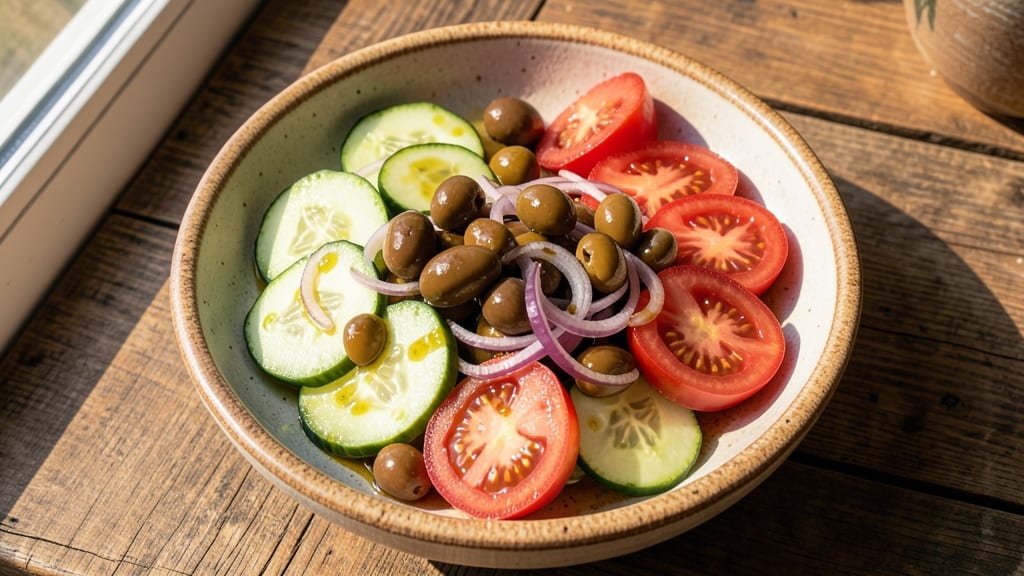
This Greek salad recipe with red wine vinegar delivers the bright, tangy bite that makes every bite refreshing and full of Mediterranean flavor. The secret lies in balancing crisp vegetables, briny olives, salty feta, and a dressing that's equal parts bold and balanced—no bland salads here.
I've perfected this version over years of summer gatherings, where it disappears faster than you can say "horiatiki."
The dressing is where the magic happens: red wine vinegar cuts through the richness of the feta and olives, while high-quality olive oil keeps everything luscious. Fresh parsley adds a pop of color and freshness, and a sprinkle of oregano ties it all together with authentic Greek flavor.
This isn't just a side dish—it's a complete meal in itself, packed with texture and taste.
What you'll end up with is a salad that's crisp, colorful, and bursting with Mediterranean flavors—perfect for summer picnics, lazy weeknight dinners, or as a starter for grilled meats.
The red wine vinegar dressing elevates ordinary ingredients into something extraordinary, with just the right balance of tang and richness. Every bite is a celebration of fresh, vibrant flavors.
For those who want to modernize the classic, adding avocado or quinoa transforms it into a heartier dish without losing its essence. The assembly is simple—just chop, toss, and let the flavors meld—but the result is anything but basic.
This is Greek salad the way it should be: bright, bold, and impossible to resist.
Ingredients for greek salad recipe red wine vinegar
Bright, crisp ingredients that come together in 15 minutes for a salad bursting with Mediterranean flavor.
| Ingredient | Amount | Notes |
|---|---|---|
| Red Wine Vinegar 🍷 | ¼ cup | High-quality, aged variety |
| Extra-Virgin Olive Oil 🫒 | ½ cup | Fruity, peppery, not bland |
| Fresh Cucumber 🥒 | 1 ½ lb | Seedless for easy slicing |
| Large Tomatoes 🍅 | 3 whole | Ripe, firm, Roma preferred |
| Red Onion 🧅 | 1 whole | Thinly sliced, white preferred |
| Kalata Olives 🫒 | ½ cup | Pitted, brined, not stuffed |
| Feta Cheese 🧀 | 6 oz | Block, crumbled, not pre-packaged |
| Fresh Parsley 🌿 | ¼ cup | Curly leaves, finely chopped |
| Dried Oregano 🍃 | 1 tsp | Mediterranean blend preferred |
| Diamond Crystal Kosher Salt 🧂 | 1 ½ tsp | For seasoning and brining |
| Freshly Ground Black Pepper 🌶️ | ½ tsp | Cracked peppercorns preferred |
| Garlic Cloves 🧄 | 2 cloves | Minced for dressing |
The feta is non-negotiable—block form only (pre-packaged gets soggy). Grab it from the deli counter at Whole Foods or Trader Joe's where they keep it cold. Kalata olives are the gold standard, but regular green olives in a jar work in a pinch. For tomatoes, Roma hold up better than beefsteaks. Cucumbers? Seedless means no bitter surprises. The red wine vinegar should be aged—Banyuls or Balzac if you want to splurge, but even the basic grocery store stuff works fine.
No red wine vinegar? Balsamic vinegar is a decent swap, though it's sweeter. Fresh parsley wilting? Dried oregano at half the amount keeps the Mediterranean vibe. The dressing ratio is key—1:3 vinegar to oil—so measure it right. Want extra crunch? Add 1/4 cup toasted pine nuts or 1/2 cup chopped bell pepper. The garlic can be roasted for a sweeter touch, but raw works too. If your olives are too briny, give them a quick rinse before adding.
This salad tastes even better the next day—2-3 days in the fridge, actually. Store dressing separately to keep everything crisp. For maximum freshness, assemble right before serving. The feta will soften, so add it last. Need to prep ahead? Chop all veggies and store in separate containers—toss everything together when ready. Leftovers? It reheats surprisingly well for a salad—30 seconds in the microwave with a splash of water revives the crunch.
Why You'll Love This Recipe
- No-Chop Nightmare: The red onion? I just slice it thin with a knife—no mandoline, no tears. The tomatoes and cucumber stay whole or in big chunks, so it’s basically a "toss and go" situation. Even my roommate, who burns toast, can handle this.
- Tangy Kick: That red wine vinegar and olive oil combo? It’s the secret weapon. The vinegar cuts through the richness of the tomatoes and cucumber while the olive oil keeps everything luscious. One taste and you’ll be reaching for the bottle again.
- Lunchtime Savior: I make a big bowl on Sunday, and it lasts me all week. Pack it in containers for work lunches or toss it with grilled chicken for dinner—it’s that adaptable. Plus, it’s one of those salads that actually gets better the next day.
- Budget Brightener: Fresh veggies don’t get fresher than this. Tomatoes and cucumbers are cheap, and a little vinegar and oil stretch far. It’s my go-to when I’m broke but still want something that feels fancy. (Yes, even on a Tuesday night.)
Step-by-step instructions for Greek salad with red wine vinegar
Here's how to assemble this vibrant salad with bold flavors in just 15 minutes.
Prep and Slice the Fresh Vegetables
Start with the 1.5 lb fresh cucumber—peel it if you prefer, then slice into ¼-inch thick half-moons. I like to use a sharp chef's knife for this because it gives you clean, even slices. Place them in a large mixing bowl as you work.
Next, cut the 3 whole large tomatoes into 8 wedges each, keeping the stems intact for easy handling. For the 1 whole red onion, slice it into ¼-inch thick half-moons—soak them in cold water for 5 minutes if you want to mellow their sharpness, then drain well. This prep keeps everything ready for quick assembly.
Make the Bright Red Wine Vinegar Dressing
In a small bowl, whisk together the 0.25 cup red wine vinegar, 0.5 cup extra-virgin olive oil, 2 cloves minced garlic, 1 tsp dried oregano, 1.5 tsp Diamond Crystal kosher salt, and 0.5 tsp freshly ground black pepper. The dressing should look emulsified but not separated—if it does, whisk harder for 10-15 seconds.
Here's the thing—let the dressing sit for 5 minutes before using. This gives the flavors time to meld, and the vinegar's acidity will mellow slightly, making the salad taste even brighter. Taste it now, and you'll notice how the vinegar cuts through the richness of the olive oil perfectly.
Assemble the Salad and Add Feta
Gently toss the sliced cucumbers, tomatoes, and onions in the bowl with the dressing. Be careful not to overmix—just enough to coat everything lightly. Now add the 0.5 cup Kalata olives and 0.25 cup fresh parsley, giving everything a final gentle toss.
Finally, crumble the 6 oz feta cheese over the top—don't stir it in yet. The feta should stay mostly whole at the bottom so it doesn't dissolve into the dressing. This keeps the salad's texture interesting with creamy, salty chunks throughout.
Chill and Serve for Maximum Freshness
Cover the salad and refrigerate for at least 15 minutes before serving. This chilling time lets the flavors meld beautifully, and the cucumbers will release some of their moisture, making the salad juicier without being soggy.
When ready to serve, give it one final gentle toss to distribute the dressing evenly. The salad should look vibrant with layers of red, green, and white, and the feta should be sprinkled attractively on top. Serve immediately with warm pita bread for dipping—this is where the salad truly shines.
Pro Tips For Making Greek Salad Recipe Red Wine Vinegar
- CHILL THE CUCUMBER: Toss your cucumbers in ice water for 10 minutes before slicing—it tightens the flesh and stops them from turning to mush in the dressing. I learned this the hard way when my salad turned into a sad, watery puddle by lunchtime.
- DICE THE ONION DRY: Pat the red onion slices completely dry with a paper towel before adding them to the salad. Wet onion releases bitter juices and dilutes the dressing, soaking everything into a sad, watery mess. Trust me, your salad will thank you.
- DRESS IT LAST: Toss the dressing with the salad just before serving—no earlier. The acid in red wine vinegar breaks down the tomatoes and cucumbers faster than you’d think, turning them into a sad, limp pile. Add it right when you’re ready to eat.
- USE COLD OIL: Chill your extra-virgin olive oil in the fridge for 10 minutes before mixing it with the vinegar. Cold oil emulsifies better with the dressing and keeps the salad from getting greasy or separating. I was skeptical until I tried it—now I never skip it.
Best sauces and condiments for greek salad recipe red wine vinegar
Classic Red Wine Dressing
The dressing is the star of this salad, and the red wine vinegar makes all the difference. I use ¼ cup high-quality red wine vinegar (like Banyuls) mixed with ½ cup fruity extra-virgin olive oil—the ratio is key.
Add 2 minced garlic cloves, 1 tsp dried oregano, 1.5 tsp kosher salt, and ½ tsp black pepper. Whisk vigorously until emulsified, then let it rest for 5 minutes—this lets the flavors meld and the vinegar mellow slightly.
Trust me, this simple dressing elevates everything. 🍷
Lemon-Tahini Twist
For a modern take, swap half the red wine vinegar for lemon juice and add 2 tbsp tahini to the dressing. The tahini adds a nutty richness that pairs perfectly with the tangy vinegar. I also include 1 tsp honey or maple syrup to balance the brightness.
This version works beautifully with grilled meats or as a standalone dish. The tahini gives it a creamy texture that feels luxurious. 💫
Garlic-Infused Olive Oil
Elevate the dressing by infusing the olive oil with 4 cloves roasted garlic for 10 minutes before whisking it into the vinegar mixture. The roasted garlic adds a sweet, mellow depth that complements the sharpness of the vinegar.
For extra flavor, add ½ tsp red pepper flakes or a pinch of smoked paprika to give it a subtle smokiness. This technique turns a simple dressing into something truly special. 🌶️
Herb-Forward Variations
Fresh herbs can take this dressing to the next level. Blend in 1 tbsp fresh dill or mint leaves with the dressing for a brighter, more aromatic profile. I also love adding 1 tsp finely chopped capers for a briny kick that mirrors the olives in the salad.
These additions keep the dressing fresh and vibrant, making each bite feel like a burst of summer. 🌿
Sweet and Tangy Balance
For a sweeter dressing, add 1 tsp honey or agave syrup to the vinegar before whisking in the olive oil. This balances the acidity beautifully and adds a subtle caramel note. I also include ½ tsp ground cinnamon for warmth, which pairs surprisingly well with the Mediterranean flavors.
This version is perfect for those who enjoy a touch of sweetness in their salads. 🍯
Nutrition facts
Frequently asked questions
Can I use balsamic vinegar instead of red wine vinegar?
While balsamic adds a sweeter, deeper flavor, it won't deliver the same bright acidity as red wine vinegar. For the classic Greek salad experience, stick with red wine vinegar—but if you must substitute, use only half the amount of balsamic and add 1 tsp lemon juice to sharpen the tang.
Why does my Greek salad get watery after adding dressing?
Cucumbers release moisture when cut, which is why you should always slice them last and toss gently. For extra crispness, pat cucumber slices dry with a paper towel before adding them. Also, let the salad sit uncovered in the fridge for 10 minutes before serving—this helps excess moisture evaporate.
What's the best way to store leftover Greek salad?
Store the dressing separately in a small container and keep the salad ingredients in an airtight container. This prevents sogginess. Reassemble right before serving by tossing everything together—add fresh parsley and feta last to keep them crisp. The salad keeps well for 2 days in the fridge.
Can I make this salad ahead of time?
Prep all ingredients separately and store them in individual containers. When ready to serve, combine everything and let it sit for 15 minutes before tossing with dressing. This method keeps the vegetables crisp and the feta from getting too soft.
What's the secret to keeping feta from dissolving?
Add feta last and avoid stirring it into the dressing. Use block feta (not crumbled) and break it into large chunks. For extra stability, place a small piece of parchment paper under the feta when serving—this catches any melted cheese and keeps the salad clean.