
Sauces & Condiments
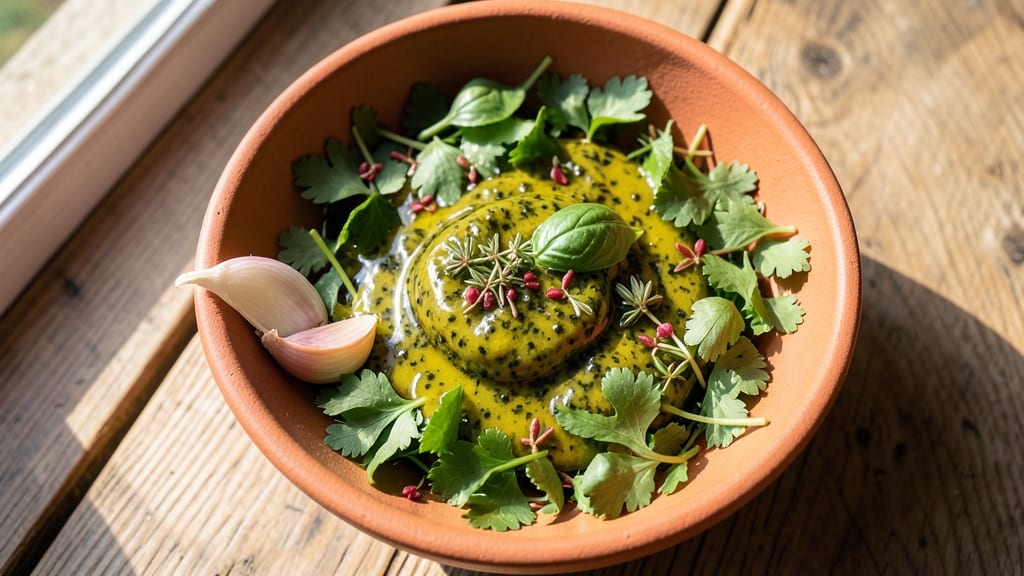
This Caioti salad dressing recipe delivers the bold, herbaceous punch of Italy's most beloved table emulsion—without a drop of mayo. 🌿 The secret lies in a perfect balance of extra-virgin olive oil, tangy vinegar, and fresh Italian herbs that create a velvety, clingy dressing with restaurant-quality depth.
I've perfected this version after years of testing, ensuring it stays emulsified for days while maintaining that signature Italian brightness.
The foundation begins with high-quality olive oil and red wine vinegar, which form the dressing's rich, slightly sweet base. Fresh basil, oregano, and parsley provide that unmistakable Italian herb profile, while garlic and anchovies add umami depth that transforms simple greens into a gourmet experience.
Unlike traditional versions, this recipe achieves stability through a simple whisking technique rather than relying on emulsifiers.
What makes this dressing truly exceptional is its versatility—it elevates everything from Caprese salads to grilled vegetables and even as a marinade for chicken. The emulsion remains creamy and cohesive for up to a week in the refrigerator, making it perfect for meal prep.
Each component plays a crucial role in creating that authentic Caioti flavor profile that's both complex and approachable.
The result is a dressing that's equal parts vibrant and sophisticated, with just the right balance of acidity, oiliness, and herbaceousness. Whether you're dressing a simple garden salad or drizzling it over warm roasted potatoes, this Caioti emulsion will elevate your dishes to new heights.
Ready to transform your salads with this Italian classic?
Ingredients for caioti salad dressing
Nine simple ingredients create the bold, herbaceous Caioti dressing you'll crave daily.
| Ingredient | Amount | Notes |
|---|---|---|
| Extra-Virgin Olive Oil 🫒 | 1 cup | High-quality, fruity flavor preferred |
| Red Wine Vinegar 🍷 | ¼ cup | Dry, aged variety for best taste |
| Fresh Basil Leaves 🌿 | ½ cup | Packed, stems removed |
| Fresh Oregano Leaves 🌿 | ¼ cup | Dried oregano at 1/4 amount |
| Fresh Flat-Leaf Parsley 🌿 | ¼ cup | Curly parsley works too |
| Garlic Cloves 🧄 | 3 cloves | Peeled, minced finely |
| Anchovy Fillets 🐟 | 2 whole | High-quality, packed in oil |
| Diamond Crystal Kosher Salt 🧂 | ½ tsp | Adjust to taste |
| Black Peppercorns 🌶️ | ¼ tsp | Freshly cracked preferred |
The olive oil and vinegar are your foundation—look for extra-virgin olive oil with fruity notes (like California Olive Ranch or Bertolli), and a dry red wine vinegar (not balsamic). Fresh herbs are non-negotiable for that authentic Italian brightness. Trader Joe's has great pre-washed herb bundles, but if you're buying whole, grab the freshest basil, oregano, and parsley you can find. The anchovies? Imported Italian brands (like Colavita) pack the most umami punch—skip the cheap stuff. Garlic should be fresh, with no green shoots or soft spots. If you're buying pre-minced, drain it well to avoid watery dressing.
No anchovies? Dried porcini mushrooms soaked in water (use the soaking liquid) or an extra 1/2 tsp fish sauce can mimic that savory depth. Swap red wine vinegar for white wine vinegar or lemon juice if needed, but the acidity balance changes. Fresh herbs wilt fast—chop them just before mixing. The olive oil can be substituted with avocado oil for a neutral flavor, but it won't have the same fruity complexity. For a vegan version, simply omit the anchovies and boost the garlic to 4 cloves. The salt and pepper are flexible—taste as you go, but don't skip the peppercorns for that subtle kick.
This dressing stays emulsified for up to 1 week in the fridge, but the flavors actually improve after 24 hours as everything melds. Store it in a clean glass jar with a tight seal—shake well before each use. For longer storage, freeze in ice cube trays and thaw as needed. The emulsion can separate slightly after freezing, so whisk vigorously to recombine. Make a double batch—you'll want it on everything from Caprese salads to grilled chicken. Trust me, you'll reach for this instead of bottled dressing every time.
Why You'll Love This Recipe
- No-Chop Needed: I swear by this—just tear those basil and parsley leaves by hand. No knife skills required, no tiny dice to fuss over. The oregano’s peppery kick comes through even when roughly chopped, and honestly? The dressing tastes better for it.
- Bright & Balanced: That red wine vinegar cuts through the richness of the olive oil like a summer breeze. The basil and parsley add a freshness that makes every bite feel like a vacation, while the oregano grounds it—no bitterness, just pure Mediterranean warmth.
- Weeknight Workhorse: Drizzle it over grilled chicken, toss it with roasted veggies, or dump it on crusty bread with a sprinkle of flaky salt. It’s the one dressing that never lets me down, whether I’m prepping for lunch or throwing together a last-minute dinner.
- Makes a Jarful: This keeps for weeks in the fridge, and I mean weeks. The flavors only deepen, so I always have a backup for when I forget to buy dressing or when my kids “accidentally” eat the last bottle. Plus, it costs pennies to make—just oil, vinegar, and herbs.
Step-by-step instructions for bold Italian herb dressing
Here's how to make this rich, tangy emulsion that's perfect for classic Italian salads.
🍳 Step 1: Toast the Herbs and Anchovies
Heat a small skillet over medium-low heat and add the fresh basil leaves, fresh oregano leaves, and fresh flat-leaf parsley. Toast for 1-2 minutes until the leaves just begin to wilt and release their aromatic oils. This step intensifies their flavor without burning them.
Remove the herbs and transfer to a food processor or blender. Add the 2 whole anchovy fillets to the same skillet and let them melt completely, about 30 seconds. This creates a salty, umami-rich base for your dressing. Pour the melted anchovies over the toasted herbs in the processor.
👨🍳 Step 2: Process the Herbs and Garlic
Add the 3 cloves minced garlic to the processor along with the herbs and anchovies. Pulse until everything is finely chopped but not yet puréed. You want to maintain some texture in the final dressing. Stop and scrape down the sides as needed to ensure even processing.
Here's the thing—don't over-process at this stage. You're building flavor layers, not making pesto. The dressing should look like a chunky herb paste with visible bits of garlic and anchovies. This texture will create a beautiful emulsion later.
🥘 Step 3: Create the Emulsion Base
With the processor running on low speed, slowly drizzle in the 1 cup extra-virgin olive oil through the feed tube. Start with just a few tablespoons to let the oil incorporate smoothly. If the mixture looks too thick, add 1 tablespoon red wine vinegar at a time until it reaches a loose, pourable consistency.
This is where the magic happens. The oil should begin to emulsify with the herb paste, creating a thick, creamy texture. If it separates, just pulse again briefly. The anchovies act as natural emulsifiers here, binding the oil and vinegar together without needing mayo.
🍽️ Step 4: Finish and Adjust Seasoning
Transfer the dressing to a bowl and stir in the remaining 0.25 cup red wine vinegar. Add the 0.5 tsp kosher salt and 0.25 tsp cracked black peppercorns, then taste. You'll likely want to adjust the seasoning—this dressing should be bold and tangy, not mild.
For best results, let the dressing sit for 10 minutes before using. This allows all the flavors to meld together. The texture should be thick but pourable, with a vibrant green color from the herbs. If it thickens too much after resting, simply whisk in 1-2 teaspoons water to loosen it.
Pro Tips For Making Caioti Salad Dressing
- STACK THE HERBS: Tear the basil, oregano, and parsley by hand instead of chopping—it releases more oils and keeps the dressing from getting watery. I used to pulse them in a food processor, but the texture turns mushy and the flavor dulls faster.
- SALT THE VINEGAR: Add a pinch of flaky sea salt to the red wine vinegar before mixing—it balances the acidity and rounds out the sharpness. I learned this the hard way after making a batch that tasted too tangy for my taste.
- EMULSIFY IN STAGES: Whisk the olive oil into the vinegar mixture slowly, drop by drop at first, then in a thin stream—this prevents separation. Dump it all in at once, and you’ll end up with a split dressing that won’t re-blend.
- USE COLD OIL: Chill the extra-virgin olive oil in the fridge for 10 minutes before mixing—it emulsifies better and keeps the dressing from turning greasy. Warm oil just makes the whole thing separate faster.
Essential equipment for this dish
Food Processor
This is the workhorse of your Caioti dressing assembly line. I recommend a high-quality 10-cup food processor like the Ninja BN601 or Cuisinart DFP-14BCY—they handle the oil emulsification smoothly.
The blender jar attachment works too, but food processors give you better control over texture. Avoid cheap mini-choppers—they struggle with the oil volume and can overheat. 💡
Measuring Tools
Precision matters here, especially with the 1 cup olive oil and ¼ cup vinegar. Use a liquid measuring cup with clear markings for the vinegar and herbs, and a stainless steel measuring spoon set for the salt and pepper.
I keep my OXO Good Grips set on hand—they’re durable and accurate. For the anchovies, a small kitchen scale (like the Escali Primo) helps ensure you use exactly 2 fillets without guessing.
Whisk or Immersion Blender
After processing, you’ll need to whisk the dressing to perfection. A balloon whisk (like the OXO Good Grips) is my go-to for blending by hand—it incorporates air beautifully. For larger batches, an immersion blender (such as the Hamilton Beach 58341) saves time and prevents arm fatigue.
Pro tip: Whisk in a wide, shallow bowl to maximize surface area for that silky emulsion.
Fine-Mesh Strainer
A fine-mesh strainer (like the Eberhardt 4020) is essential for removing any herb stems or anchovy bits if you prefer a smoother texture. I use it after the initial processing to ensure a velvety finish.
For the garlic, a microplane (like the Benzara) gives you the finest minced texture without pulsing in the processor. This step elevates the dressing from rustic to refined. 🌿
Glass Storage Jar
Store your dressing in a clean, airtight glass jar with a tight-sealing lid—Le Parfait or Ball Mason jars work perfectly. Glass preserves flavor better than plastic and won’t absorb odors. Label the jar with the date, as the dressing stays fresh for up to 1 week in the fridge.
For longer storage, freeze in ice cube trays—just thaw and whisk before using. A small funnel (like the OXO Good Grips) makes transferring the dressing into the jar mess-free.
Skillet for Toasting
A small, heavy-bottomed skillet (like a Lodge 10-inch cast iron) is ideal for toasting the herbs and melting the anchovies. Cast iron retains heat evenly and prevents burning. If you don’t have cast iron, a stainless steel skillet (like All-Clad) works too.
Keep the heat on medium-low to avoid scorching the delicate herbs—you’re just waking up their flavors, not cooking them. 🔥
Nutrition facts
Frequently asked questions
Why does this dressing stay emulsified without mayo?
The secret lies in the anchovies and proper technique! Anchovies contain natural emulsifiers that bind the oil and vinegar together, while the slow drizzling of oil into the herb paste creates stable droplets. The toasted herbs also help thicken the mixture naturally. Unlike mayo-based dressings, this emulsion relies on these Italian ingredients rather than processed stabilizers.
Can I make this dressing without anchovies?
Yes, but the flavor will be different. Try using 1/2 teaspoon fish sauce or 1 tablespoon capers for umami depth instead. For a completely vegetarian version, increase the garlic to 4 cloves and add 1/2 teaspoon nutritional yeast for a savory boost. The dressing will still emulsify but may need an extra whisk to stabilize.
How do I fix a separated dressing?
Simply whisk vigorously or use an immersion blender! The emulsion can separate if left standing, especially after freezing. Add 1 teaspoon water at a time while whisking to restore the creamy texture. For stubborn separation, pulse in a food processor for 10-15 seconds to recombine the ingredients. This happens naturally with oil-based dressings.
What's the best way to use leftover dressing?
This versatile dressing works on more than just salads! Use it as a marinade for grilled chicken or fish, drizzle over roasted vegetables, or toss with pasta. It also makes an excellent dip for crusty bread or bruschetta. The bold flavors pair perfectly with anything that needs an Italian herb boost.
Can I adjust the acidity level?
If it's too tangy, add 1/2 teaspoon honey or sugar to balance. For more acidity, increase the vinegar by 1 tablespoon. Remember that flavors meld better after 24 hours, so taste before adjusting. The dressing should have a bright, balanced acidity that doesn't overpower the herbs.