
Salads
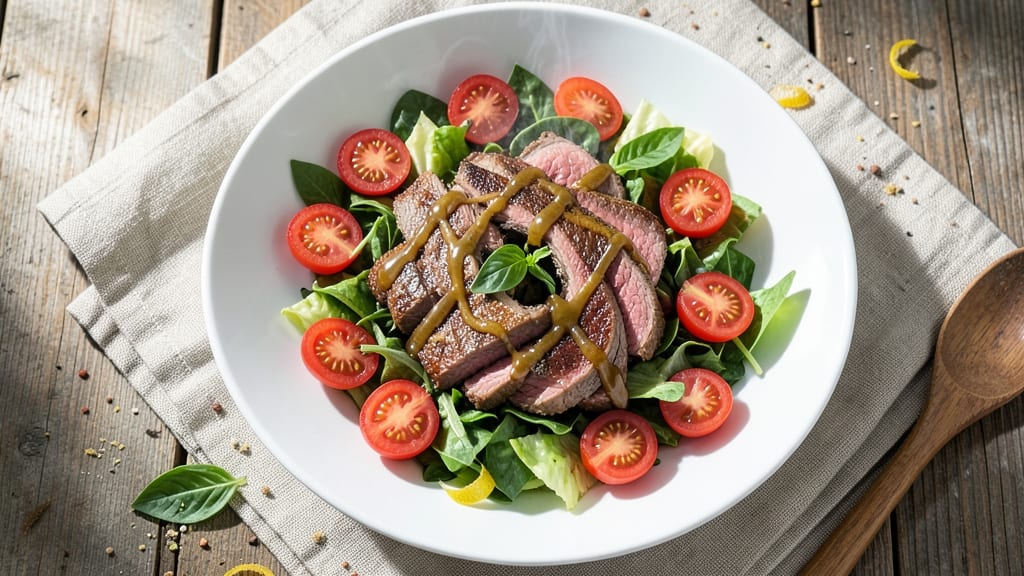
This beef tomato salad recipe delivers a perfect balance of savory, sweet, and tangy flavors in just 20 minutes. The secret lies in perfectly seared beef strips that maintain their tenderness while developing a rich crust, paired with juicy cherry tomatoes and a bright vinaigrette that ties everything together.
I developed this recipe after realizing how often salads lack protein depth—this version transforms a simple lunch into something truly satisfying.
What sets this salad apart is the technique: thinly sliced beef cooks quickly over high heat, ensuring it stays tender while developing flavor, while the cherry tomatoes add natural sweetness that contrasts beautifully with the savory beef.
The dressing—a blend of olive oil, red wine vinegar, Dijon mustard, and fresh herbs—elevates each component without overpowering them. This isn’t your typical wilted lettuce salad; it’s a hearty, protein-rich dish that holds up for lunch or dinner.
By the time you assemble everything, you’ll have a salad that’s vibrant, flavorful, and packed with texture—crisp tomatoes, tender beef, and a creamy dressing that coats every bite. The best part? It’s ready in under 20 minutes, making it ideal for busy weeknights when you still want something restaurant-worthy.
The combination of seared beef and sweet tomatoes creates a flavor profile that’s both unexpected and deeply satisfying.
Serve this salad with crusty bread or as a standalone meal, and don’t forget to garnish with fresh basil or crumbled feta for an extra layer of flavor.
The versatility of this recipe means you can adjust the ingredients to suit your taste—swap in arugula for lettuce or add avocado for creaminess. Here’s how to make it perfectly every time.
Ingredients for beef tomato salad
Here’s what you’ll need to create this restaurant-worthy beef tomato salad in just 20 minutes.
| Ingredient | Amount | Notes |
|---|---|---|
| Flank Steak 🥩 | ¾ lb | Thinly sliced against grain |
| Cherry Tomatoes 🍅 | 1 ½ pints | Heirloom or vine-ripened preferred |
| Red Wine Vinegar 🍷 | ¼ cup | Dry variety recommended |
| Extra-Virgin Olive Oil 🫒 | ½ cup | Fruity, not bitter |
| Dijon Mustard 🍯 | 1 tbsp | Mellow or strong variety |
| Fresh Basil Leaves 🌿 | ¼ cup | Chopped, stems removed |
| Garlic Cloves 🧄 | 2 cloves | Minced, not powdered |
| Crusty Bread 🍞 | 1 loaf | For serving, sliced |
| Crumbled Feta Cheese 🧀 | ½ cup | Optional, for garnish |
| Diamond Crystal Kosher Salt 🧂 | 1 ½ tsp | Fine grain preferred |
| Freshly Ground Black Pepper 🌶️ | ½ tsp | Cracked peppercorns |
| Arugula 🌱 | 2 cups | Baby leaves preferred |
The flank steak is non-negotiable here—it’s lean enough to sear quickly but still packs flavor. Look for a center-cut piece at the meat counter, and ask for it sliced thinly against the grain (or do it yourself with a sharp knife). Whole Foods or Trader Joe's usually carry pre-sliced flank steak, which saves time. Cherry tomatoes should be firm and vibrant—skip the mealy ones. The arugula adds that peppery bite that balances the richness of the beef, so grab baby leaves if you can. Fresh basil is a must for that bright finish, but dried oregano at half the amount works in a pinch.
No red wine vinegar? Balsamic vinegar works in a bind, though it’ll be slightly sweeter. The olive oil matters—skip the cheap stuff. California avocado oil or a high-quality Spanish olive oil will elevate everything. For the mustard, Maille is my go-to, but any good Dijon will do. Swapping in red onion slices or avocado chunks adds texture if you’re feeling experimental. The feta is optional but adds a salty contrast—crumbled fresh from a block tastes better than pre-shredded. If you’re serving this for a crowd, double the arugula and beef, but keep the dressing ratio the same.
Store the beef and tomatoes separately in the fridge for up to 2 days—the beef actually tastes better the next day as the flavors meld. The dressing keeps for 5 days in a sealed jar, and the bread should be toasted fresh before serving. For meal prep, assemble everything the night before and store in airtight containers, keeping the dressing separate until you’re ready to toss. This salad reheats poorly, so it’s best enjoyed fresh—but the leftovers make a killer sandwich filling the next day.
Why You'll Love This Recipe
- No Fuss, Big Payoff: I swear by this one—just sear the flank steak thin, slice it against the grain, and toss with halved cherry tomatoes. The real magic? That red wine vinegar and Dijon mustard dressing comes together in 2 minutes while the steak rests. Honestly, it’s the kind of recipe that makes me feel like a home cook and a chef.
- Tangy-Savory Magic: Between us, the dressing is what steals the show. The red wine vinegar cuts through the richness of the steak, while the Dijon mustard adds this deep, almost umami kick. And those juicy cherry tomatoes? They burst with every bite, like summer in a bowl. (Yes, even on a Tuesday night.)
- Lunch or Dinner: This salad holds its own as a light dinner, but it’s also my go-to packed lunch—no soggy lettuce here. I’ll bring it to picnics, potlucks, or even as a side for grilled chicken. The steak stays tender for hours, and the tomatoes? They just get sweeter as they sit. My daughter picks out the best slices, but still asks for seconds.
- Budget-Friendly Protein: Flank steak is affordable, and a single pound stretches across two servings. The rest of the ingredients? Pantry staples. I’ve made this for under $10 per serving, and it’s way more satisfying than takeout. Plus, leftovers keep well for 3 days—just toss with fresh basil if you’re feeling fancy. No waste, all flavor.
Step-by-step instructions for bold beef and sweet cherry tomatoes
Here's how to assemble this vibrant salad with perfectly seared beef and bright, juicy tomatoes.
Sear the Flank Steak to Medium Rare Perfection
Pat the 0.75 lb flank steak completely dry with paper towels—this ensures maximum browning. Season both sides generously with 1.5 tsp diamond crystal kosher salt and 0.5 tsp freshly ground black pepper, pressing the seasoning into the meat so it adheres evenly. Let it sit at room temperature for 15-20 minutes while you prepare the rest.
Heat a heavy skillet over high heat until it's smoking hot. Add the steak and sear for 3-4 minutes per side for medium-rare (internal temp 130-135°F). You'll know it's ready when it develops a deep brown crust and releases easily from the pan. Transfer to a cutting board and let it rest for 5 minutes before thinly slicing against the grain into ¼-inch strips. This resting time is crucial—it prevents the meat from drying out when sliced.
Prepare the Cherry Tomato and Arugula Base
While the steak rests, halve the 1.5 pints cherry tomatoes by making a small cut around each tomato and squeezing gently to release seeds (optional but recommended for cleaner presentation). In a large bowl, combine the halved tomatoes with the 2 cups arugula. Give it a gentle toss with your hands just until the arugula is wilted and coated with the tomatoes' juices—this keeps the leaves vibrant without over-mixing.
The arugula should look slightly massaged but still bright green. If it appears too dry, add a splash of 1 tablespoon extra-virgin olive oil to help distribute the juices. Here's the thing—this step builds the salad's foundation, so don't skip the tossing. The slight wilting from the tomatoes' acidity will make the final salad more flavorful and texturally balanced.
Whisk the Red Wine Vinegar Dressing
In a small bowl, whisk together the 0.25 cup red wine vinegar, 1 tbsp dijon mustard, 2 minced garlic cloves, and 0.25 cup chopped fresh basil leaves. Start with just 2 tablespoons of the extra-virgin olive oil and whisk vigorously until emulsified. This is the base of your dressing, and getting it smooth now prevents separation later.
Slowly drizzle in the remaining 0.25 cup extra-virgin olive oil while whisking continuously. The dressing should thicken slightly and coat the back of a spoon. Taste and adjust seasoning with more salt or pepper if needed—this is your chance to balance the acidity before it hits the salad. The dressing should be tangy but not overpowering, with a subtle garlic and basil brightness that complements the beef.
Assemble the Salad with Perfect Timing
Add the sliced flank steak to the tomato-arugula mixture and gently fold everything together. Drizzle the dressing over the top and toss lightly—you're looking for even distribution without breaking the tomatoes or bruising the beef. The steak should be warm but not hot, and the dressing should cling to every piece of meat and leaf.
This is where the magic happens: the warm beef releases its juices, which marry perfectly with the bright acidity of the tomatoes and dressing. If the salad seems too dry after tossing, add another splash of dressing. Serve immediately with slices of crusty bread on the side for scooping up the juicy goodness. The 0.5 cup crumbled feta cheese makes an excellent garnish if you're using it—sprinkle it on top just before serving to keep it from dissolving into the dressing.
Pro Tips For Making Beef Tomato Salad
- Slice Against the Grain: Flank steak’s tough when chewed against its grain—so take those 5 extra seconds to angle your knife perpendicular to the muscle fibers. No one wants to gnaw on a salad, and you’ll regret skipping this if you’re serving it cold.
- Halve Tomatoes Before Dressing: Cherry tomatoes burst like overripe grapes when tossed raw into acid—so split them in half first. Then, let them sit in the vinaigrette for 10 minutes before adding the beef. This keeps them intact and lets the flavors marry without turning the bowl into a soup.
- Sear Steak in Two Batches: Crowding the pan makes the steak steam instead of sear, leaving you with sad, gray edges. Cook half the steak first, then push it aside and crank the heat to medium-high for the second batch. The crust will be worth the extra minute of patience.
- Use Dijon as an Emulsifier: Skip the whisking—just mix the Dijon mustard into the olive oil before adding vinegar. The mustard’s fat molecules act like a natural emulsifier, so your dressing won’t separate. (Yes, even if you’re lazy like me, this works.)
Dietary considerations for beef tomato salad
Gluten-Free Adaptations
This salad is naturally gluten-free as long as you use certified gluten-free bread for serving. I always check labels on Dijon mustard and olive oil to ensure they’re processed in gluten-free facilities—brands like Maille and California Olive Ranch are typically safe.
The beef and tomatoes are inherently gluten-free, so no substitutions are needed there. For extra security, I serve the salad with gluten-free crackers like Simple Mills almond flour crackers on the side. 🌾
Dairy-Free Options
Skip the crumbled feta cheese or use a dairy-free alternative like cashew feta (blend soaked cashews with lemon juice and salt). The dressing remains dairy-free as written, but always double-check your Dijon mustard for hidden dairy additives.
I’ve found Annie’s brand to be consistently dairy-free. The salad’s richness comes from the beef and olive oil, so no dairy is truly needed for flavor. 🧀
Low-Carb Adjustments
To make this salad even lower in carbs, swap the crusty bread for lettuce wraps or serve with cheese crisps made from parmesan or mozzarella. The arugula and cherry tomatoes are already low-carb, and the beef provides all the protein you need.
For extra fat to keep you satisfied, add avocado slices or drizzle with tahini dressing instead of the vinaigrette. This version keeps net carbs under 10g per serving. 🥑
Protein Variations
For a lighter option, replace the beef with grilled chicken breast or shrimp, both of which cook just as quickly. If you’re vegetarian, swap the beef for marinated tofu or grilled halloumi cheese.
The key is maintaining the same searing technique to create that satisfying crust. I’ve had great success with seared tempeh—marinate it in soy sauce and garlic before cooking. 🍗
Allergen-Friendly Tips
For nut allergies, avoid cashew feta and opt for vegan feta made from coconut or tofu. Always store ingredients separately to prevent cross-contamination—keep the beef, tomatoes, and dressing in separate containers until assembly.
If someone has a tomato allergy, substitute with cucumber slices or bell pepper strips for crunch. The dressing remains safe as long as it’s made in a clean environment. 🚫
Nutrition facts
Frequently asked questions
Can I use regular tomatoes instead of cherry tomatoes?
You can, but cherry tomatoes add that perfect burst of sweetness and juiciness that makes this salad shine. If using regular tomatoes, choose firm, vine-ripened varieties and halve them for similar texture. For extra flavor, a quick broil for 3-4 minutes before adding to the salad enhances their natural sweetness.
How do I prevent the beef from drying out when slicing?
The key is letting the steak rest for 5 minutes after cooking and slicing it thinly against the grain. This breaks up the muscle fibers, keeping each bite tender. Never skip the resting time—it allows the juices to redistribute evenly throughout the meat.
Can I make the dressing ahead of time?
The dressing keeps well in an airtight container in the fridge for up to 5 days. Shake it before using, as the oil may separate slightly. For extra flavor, add a pinch of salt or a splash of red wine vinegar if it tastes too mild after storage.
What's the best way to store leftovers?
Store the beef and tomatoes separately in airtight containers for up to 2 days. Keep the dressing separate until ready to serve to maintain freshness. Reheat only the beef gently in a pan (never microwave) and toss with fresh tomatoes and dressing when ready to eat.
Can I use a different type of beef?
Flank steak works best because of its lean texture and flavor, but you could also use skirt steak or sirloin. Avoid tougher cuts like chuck—they won't sear as nicely. For a lighter option, try grilled chicken breast or shrimp, but adjust cooking times accordingly.