
Sauces & Condiments
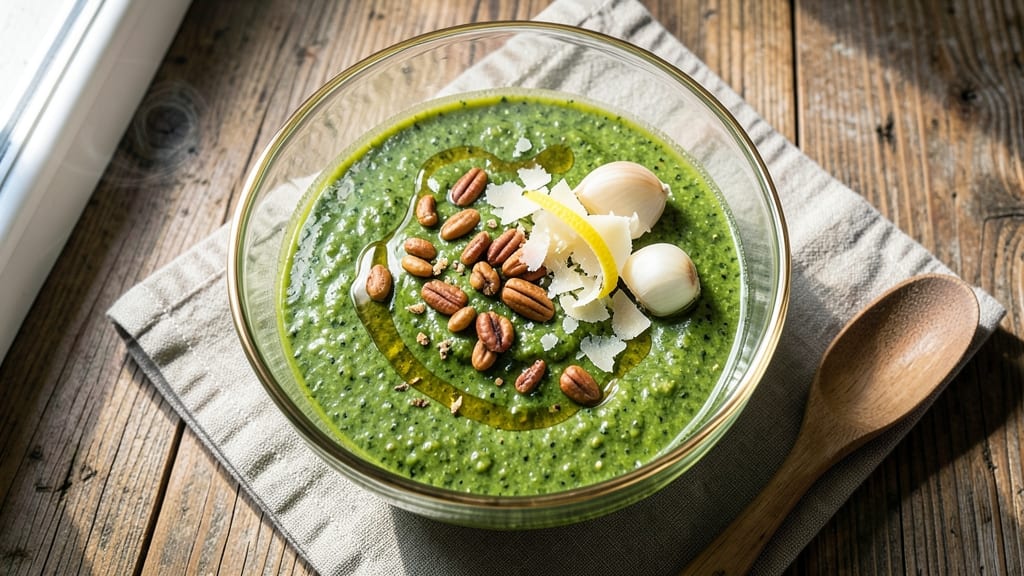
This basil pesto salad dressing recipe transforms fresh herbs and nuts into a rich, vibrant dressing that elevates any salad in minutes. The secret lies in balancing bright basil with creamy cheese and toasted pine nuts, creating a sauce that's both bold and versatile.
Perfect for vegans or vegetarians, this recipe delivers restaurant-quality flavor without the fuss.
What sets this dressing apart is the emulsification technique—blending ingredients until smooth ensures the dressing stays cohesive and clings beautifully to greens. A touch of lemon juice brightens the flavor, while garlic adds depth that makes every bite irresistible.
The result is a dressing that's creamy yet fresh, nutty yet tangy, and ready in just a few minutes.
This recipe is designed for flexibility—use it on mixed greens, grain bowls, or even as a marinade for grilled vegetables. The texture remains velvety for up to a week when stored properly, making it ideal for meal prep.
Whether you're dressing up a simple lunch or enhancing a gourmet dish, this basil pesto dressing delivers consistent, professional results.
For best results, adjust the lemon juice to taste—more for brightness, less for richness. If the dressing separates, simply re-blend with a splash of water or olive oil. The key to success is patience during blending and precise measurements, ensuring every batch turns out perfectly creamy and flavorful.
Ingredients for basil pesto salad dressing
Eight simple ingredients create a velvety dressing that transforms salads into gourmet meals.
| Ingredient | Amount | Notes |
|---|---|---|
| Fresh Basil Leaves 🌿 | 2 ½ cups | Packed, stems removed for maximum flavor |
| Pine Nuts 🥜 | ½ cup | Toasted lightly for enhanced nutty aroma |
| Garlic Cloves 🧄 | 4 cloves | Peeled and roughly chopped for deep flavor |
| Vegetarian Parmesan Cheese 🧀 | ¾ cup | Nutritional yeast for cheesy depth (vegan-friendly) |
| Extra-Virgin Olive Oil 🫒 | ¾ cup | High-quality, fruity variety for richness |
| Fresh Lemon Juice 🍋 | 2 tbsp | Freshly squeezed for bright acidity |
| Sea Salt 🧂 | ½ tsp | Fine grain for balanced seasoning |
| Freshly Ground Black Pepper 🌶️ | ¼ tsp | Enhances overall flavor profile |
The basil is non-negotiable—farmers market leaves pack the most flavor, but grocery store basil works too if it's fresh. Pine nuts can be pricey, but Trader Joe's and Costco offer the best bulk deals. For the cheese, nutritional yeast is essential for that signature umami punch, especially if catering to vegans. The garlic should be fresh—pre-minced jars lack intensity. If you're short on time, pre-toasted pine nuts from the bulk section save steps without sacrificing flavor.
No pine nuts? Walnuts or cashews work beautifully—just toast them first for that nutty depth. Running low on lemon juice? Lime juice at half the amount adds a tangy twist. The olive oil matters here—skip the cheap stuff; California Extra Virgin brands like Corto or Lucini elevate the dressing. For a smoother texture, blend the garlic first, then add the rest. If the dressing separates, simply re-blend with a splash of water or more olive oil—it's completely fixable.
Store in an airtight container with a thin layer of olive oil on top to preserve freshness. Keeps for up to 1 week in the fridge, though the flavor peaks within the first 3 days. For longer storage, freeze in ice cube trays—perfect for single-serving portions. The dressing thickens when chilled, so thin with a splash of water or lemon juice before using. Always taste and adjust seasoning before serving—this is where the magic happens.
Why You'll Love This Recipe
- I’ll be real: I used to dread chopping garlic and basil, but this dressing only needs a quick pulse in the food processor. Toss in the pine nuts and cheese, and you’re done—no knife skills required.
- No-Chop Hassle: I’ll be real: I used to dread chopping garlic and basil, but this dressing only needs a quick pulse in the food processor. Toss in the pine nuts and cheese, and you’re done—no knife skills required.
- Umami Bomb: That vegetarian parmesan and garlic combo with fresh basil? It’s the kind of flavor that makes you pause mid-bite. The olive oil ties it all together, rich and bright at the same time—like a hug for your taste buds.
- Weeknight Wonder: Drizzle it on pasta, toss it with roasted veggies, or use it as a marinade for grilled chicken. It’s my go-to for when I’m too tired to think but still want something that feels special.
Step-by-step instructions for basil pesto salad dressing
Transform fresh basil into vibrant salad dressing with this simple, foolproof method.
Toast the Pine Nuts for Enhanced Flavor
Heat a dry skillet over medium-low heat and add the 0.5 cup pine nuts. Toast them for 3-4 minutes, stirring constantly, until they turn a light golden brown and release their nutty aroma. Watch closely—they burn quickly and become bitter.
Remove the pine nuts immediately when they're golden and transfer them to a small bowl to cool. The toasting process enhances their flavor and prevents them from being raw and bland in the dressing. Let them cool completely before processing—they'll be hot to the touch.
Blend the Herb and Garlic Base
In a food processor, combine the 2.5 cups fresh basil leaves (packed tightly), 4 cloves garlic cloves (peeled), and 0.5 tsp sea salt. Pulse until the garlic is finely chopped and the basil is roughly minced—you want to preserve some texture, not puree it completely.
Stop occasionally to scrape down the sides of the processor bowl with a rubber spatula. This ensures even blending and prevents the motor from overheating. The mixture should look like finely chopped herbs with no large chunks remaining.
Incorporate the Vegetarian Parmesan and Olive Oil
Add the 0.75 cup vegetarian parmesan cheese and 0.75 cup extra-virgin olive oil to the food processor. Process on high speed for 30-45 seconds until the mixture becomes smooth and creamy, with no visible cheese chunks.
If the dressing appears too thick, add 1 tablespoon of water at a time until it reaches a pourable consistency. The texture should coat the back of a spoon smoothly without being watery. Taste and adjust the seasoning with more sea salt or freshly ground black pepper if needed.
Finish with Lemon Juice and Adjust Seasoning
Transfer the pesto to a bowl and stir in the 2 tablespoons fresh lemon juice. This brightens the flavors and balances the richness of the olive oil and cheese. Give it a final taste and adjust the seasoning—add more sea salt if it's too mild or more freshly ground black pepper for a subtle kick.
The dressing should be vibrant green, with a smooth yet slightly textured consistency. If you plan to store it, transfer it to an airtight container and cover the surface with a thin layer of olive oil to prevent oxidation. This dressing keeps well in the refrigerator for up to 5 days.
Pro Tips For Making Basil Pesto Salad Dressing
- Toast the pine nuts cold: Pulse them in your food processor first—just 10-15 seconds—before adding anything else. This prevents burning and gives them that nutty aroma without watching them like a hawk. (Yes, even if you’re impatient like me.)
- Use ice-cold garlic: Mash those cloves with a pinch of salt on a cutting board before adding them to the pesto. The cold slows down the garlic’s heat and keeps the dressing from turning bitter faster. Trust me, your taste buds will notice.
- Blend in stages: Start with just basil, garlic, and a splash of olive oil—about 2 tablespoons—to make a rough paste. Then add the pine nuts and cheese. This keeps the texture smoother and prevents the processor from overheating. (Your future self will thank you.)
- Store with a barrier: Press plastic wrap directly onto the surface of the pesto before sealing the jar. The oil rises fast, and this keeps it from turning rancid in the fridge. I learned this the hard way after coming home to a sad, greasy mess.
Flavor customization for these flavors
Spicy Kick Options
For a bold twist, add ½ teaspoon red pepper flakes or 1 teaspoon hot honey to the finished dressing. The heat from Calabrian chili paste (1 teaspoon) adds smoky depth, while fresh jalapeño (minced, 1 tablespoon) brings a bright, fruity spice.
Always taste first—adjust gradually to avoid overpowering the basil's delicate flavor. 🌶️
Citrus Variations
Swap lemon juice for orange juice (2 tablespoons) to create a sweeter, more complex dressing perfect for winter salads. For a tangy twist, mix 1 tablespoon lime juice with 1 tablespoon lemon juice.
If using grapefruit juice, reduce to 1 tablespoon—its bitterness is potent. Always balance with extra olive oil if needed to maintain creaminess.
Herb Swaps
Replace basil with cilantro (2.5 cups) for a zesty Mexican-inspired dressing, or use spinach (2.5 cups) for a milder, earthier flavor. For a Mediterranean touch, blend in 1 tablespoon fresh oregano with the garlic.
Each herb changes the dressing's character—adjust olive oil and lemon juice to compensate for flavor intensity differences.
Nutty Alternatives
Substitute pine nuts with walnuts (0.5 cup) for a heartier texture or cashews (0.5 cup) for creaminess. Toast pecans (0.5 cup) for a Southern-inspired twist with subtle sweetness.
If using sunflower seeds (0.5 cup), toast them until golden—they add a nut-free, budget-friendly crunch. Always toast nuts/seeds before blending for maximum flavor.
Cheese-Free Options
Skip the vegetarian parmesan and add 2 tablespoons nutritional yeast plus 1 tablespoon white miso paste for umami depth. For a dairy-free tang, stir in 1 tablespoon apple cider vinegar after blending.
These swaps maintain creaminess while keeping the dressing vegan-friendly. Taste frequently—these alternatives require careful balancing of acidity and richness.
Seasonal Brighteners
In summer, add 1 teaspoon honey to complement the lemon juice. For fall, blend in ½ teaspoon ground cinnamon with the garlic for warmth. Winter calls for 1 teaspoon maple syrup to round out flavors.
Spring variations might include 1 tablespoon fresh mint (chopped) for a refreshing twist. Adjust sweetness gradually—start with half the amount and taste before adding more.
Nutrition facts
Frequently asked questions
Can I make this dressing without a food processor?
Yes! Use a mortar and pestle for the basil and garlic first, then mix everything with a whisk in a bowl. Start with the herbs and garlic, then gradually add the olive oil while whisking vigorously. The texture will be slightly chunkier but still delicious. For extra creaminess, blend the cheese and nuts separately, then combine with the herb mixture.
How do I fix separated dressing?
Simply re-blend with 1 tablespoon of water or olive oil until smooth. If the oil separates, stir in a splash of lemon juice to help emulsify it. Separation often happens when the dressing sits too long—always store it in an airtight container with a thin layer of olive oil on top to preserve freshness.
What’s the best way to store leftovers?
Transfer to an airtight container and refrigerate for up to 5 days. Cover the surface with a thin layer of olive oil to prevent browning. For longer storage, freeze in ice cube trays—thaw overnight in the fridge before using. The texture may thicken when chilled, so thin with a splash of water or lemon juice before serving.
Can I use dried basil instead of fresh?
Not recommended—dried basil lacks the vibrant flavor and bright green color. If you must, use 1 tablespoon dried basil (not 2.5 cups) and add 1 extra tablespoon of lemon juice to compensate for the milder taste. The texture will also be less creamy. Fresh basil is key for that signature pesto flavor!
Is this dressing safe for meal prep?
This recipe is perfect for meal prep—it keeps well in the fridge for 5 days and freezes beautifully. Portion into small containers to use as needed. Just