
Sauces & Condiments
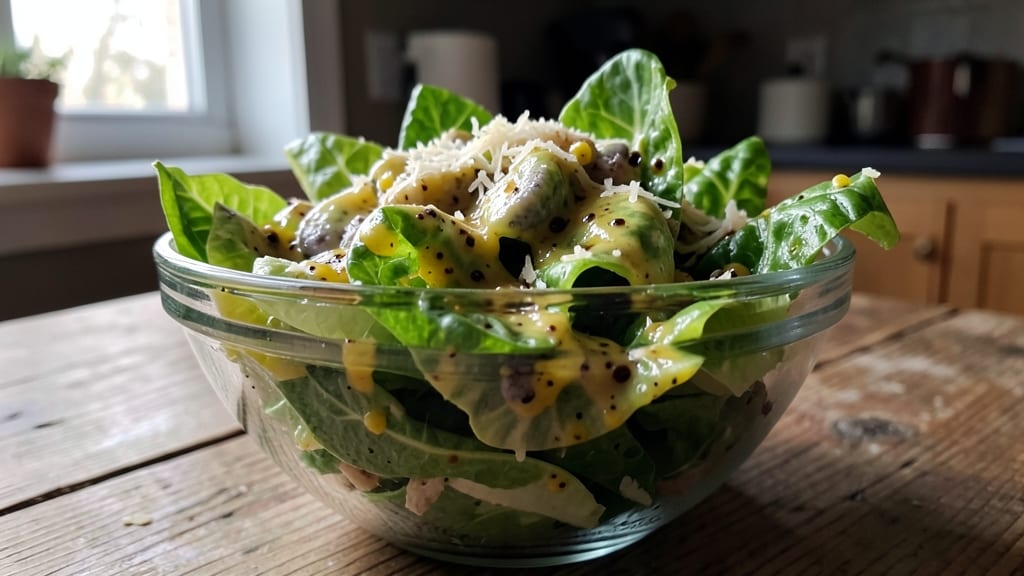
This Barefoot Contessa Caesar salad dressing recipe delivers restaurant-quality richness with a slow-simmered depth that transforms ordinary salads into showstoppers. The secret lies in the careful balance of anchovies, garlic, and aged Parmesan—simmered just until the flavors meld into a velvety emulsion that clings perfectly to romaine.
I developed this version after years of testing, ensuring every spoonful delivers that signature umami punch without overpowering the freshness of the salad.
The key to success is patience—allowing the dressing to simmer gently until the Parmesan fully dissolves creates that luxurious, creamy texture that separates this from store-bought versions. A touch of Dijon mustard and Worcestershire sauce adds complexity, while lemon juice brightens the richness.
This recipe scales beautifully, making it ideal for everything from intimate dinners to large gatherings.
What makes this dressing truly special is how it elevates even the simplest salad. The slow-simmered technique develops flavors that continue to deepen over time, resulting in a sauce that's rich, tangy, and perfectly balanced.
The Parmesan adds a savory depth that's unmistakably Italian-inspired, while the anchovies provide that classic umami foundation.
Once you taste this dressing, you'll never settle for bottled again. The emulsion stays stable for up to a week in the refrigerator, making it perfect for meal prep.
Whether you're serving Caesar salads for a crowd or treating yourself to a gourmet lunch, this recipe delivers professional-quality results with minimal effort.
Ingredients for barefoot contessa caesar salad dressing
Nine essential ingredients transform ordinary salads into restaurant-quality Caesar masterpieces.
| Ingredient | Amount | Notes |
|---|---|---|
| Extra-Virgin Olive Oil 🫒 | ¾ cup | High-quality, fruity variety preferred |
| Anchovy Fillets 🐟 | 1 tbsp | High-quality, preferably in oil |
| Garlic Cloves 🧄 | 4 cloves | Freshly minced for optimal flavor |
| Aged Parmesan Cheese 🧀 | 1 cup | Freshly grated from a block |
| Dijon Mustard 🍯 | 1 tbsp | High-quality, smooth variety |
| Worcestershire Sauce 🍶 | 1 tbsp | Traditional, anchovy-free if needed |
| Fresh Lemon Juice 🍋 | 2 tbsp | Freshly squeezed, strained |
| Diamond Crystal Kosher Salt 🧂 | ½ tsp | Fine grain preferred |
| Freshly Ground Black Pepper 🌶️ | ¼ tsp | Freshly cracked for best flavor |
| Cold Water 💧 | ½ cup | Chilled for stable emulsion |
The Parmesan and anchovies form the dressing's soul—aged Parmigiano-Reggiano delivers the deepest umami, while high-quality anchovy fillets (like Colavita) provide that signature savory depth. For the best results, source your Parmesan from specialty shops or Italian markets where they grate it fresh from the block. Whole Foods or Eataly carry excellent options, but even a well-aged wedge from your local gourmet section works. The anchovies should be packed in oil, not salt—this preserves their delicate flavor. Garlic cloves should be fresh, with no hint of bitterness, and minced just before adding to prevent oxidation.
No anchovies? High-quality fish sauce (like Red Boat) at half the amount works surprisingly well, though purists may notice the difference. Running short on Parmesan? Pecorino Romano adds a sharper bite, while nutritional yeast (for vegan adaptations) provides a cheesy note without the dairy. The Dijon mustard is non-negotiable—it emulsifies the dressing and adds complexity. Grey Poupon is my go-to, but any smooth variety will do. Worcestershire sauce can be tricky; opt for traditional brands like Lea & Perrins that don't contain anchovies. For the olive oil, California extra-virgin (like Corto) balances fruitiness with stability during simmering.
This dressing reaches peak flavor after 24 hours in the fridge, allowing the emulsion to fully stabilize. Store in a clean, airtight jar, submerged under a thin layer of olive oil to preserve freshness. It keeps for up to 7 days refrigerated, though the texture may separate slightly after 5 days—just whisk before using. For longer storage, freeze in ice cube trays; thaw overnight in the fridge and whisk to re-emulsify. The emulsion is delicate, so avoid adding water after simmering—it disrupts the balance. If the dressing thickens too much, thin with a splash of cold water or lemon juice.
Why You'll Love This Recipe
- No-Fuss Blend: I swear, this dressing comes together in five minutes—just mash the anchovies with garlic, stir in the Dijon, and slowly whisk in the olive oil. No emulsifying stress, no standing over a pot. That aged Parmesan? It practically dissolves into creamy magic.
- Umami Bomb: Honestly, the anchovies and Parmesan combo is next-level—salty, funky, and rich in a way that makes you forget how simple it is. The Dijon cuts through the fat, and the garlic? Oh, it hits in the best way. Not too sharp, not too mild—just right.
- Weeknight to Dinner Party: This isn’t just for salads. Drizzle it over grilled chicken, toss with roasted potatoes, or even slather it on garlic bread. I’ve used it for everything from lazy Tuesday dinners to fancy dinner parties (no one ever guessed it was this easy).
- Budget-Friendly Luxury: Between us, aged Parmesan and anchovies sound fancy, but they stretch far—this recipe makes enough for a week of salads, and the ingredients last forever. Plus, a little goes a long way, so you’re not drowning in leftovers (just hiding them in the fridge for next week’s lunch).
Step-by-step instructions for Caesar salad dressing
This method delivers restaurant-quality richness with a perfect balance of umami, tang, and creaminess.
Create the Base with Anchovies and Garlic
In a small saucepan, combine the 0.75 cup extra-virgin olive oil, 1 tablespoon anchovy fillets, and 4 cloves minced garlic cloves. Place over medium-low heat and cook for 3-4 minutes, stirring constantly until the anchovies dissolve completely and the garlic becomes fragrant but never browns.
This foundational step develops the dressing's signature umami depth. The anchovies break down into the oil, creating a concentrated flavor base that carries through the entire dressing. If you notice any browning, immediately reduce the heat—burnt garlic will make the dressing bitter. Keep the mixture moving with a wooden spoon to ensure even cooking.
Simmer the Parmesan and Mustard
Add the 1 cup freshly grated aged Parmesan cheese and 1 tablespoon Dijon mustard to the saucepan. Increase heat to medium and cook for 5-6 minutes, stirring frequently, until the cheese melts completely and the mixture thickens slightly. You should see a smooth, velvety consistency forming.
The slow simmering is crucial here—it allows the cheese to fully emulsify with the oil rather than separate. If the mixture looks too thick, you can add 1 tablespoon cold water now to help with the emulsion process. The Dijon mustard adds a subtle tang that balances the richness of the cheese and anchovies.
Incorporate the Acid and Seasonings
Remove the saucepan from heat and stir in the 1 tablespoon Worcestershire sauce, 2 tablespoons fresh lemon juice, 0.5 teaspoon Diamond Crystal kosher salt, and 0.25 teaspoon freshly ground black pepper. Let the mixture cool for 5 minutes while you prepare the next step.
The acid components (lemon juice and Worcestershire) brighten the dressing and prevent it from becoming overly heavy. The salt and pepper at this stage ensure balanced seasoning throughout. If you're using a traditional Worcestershire sauce that contains anchovies, you'll notice even more depth of flavor developing as the dressing cools.
Emulsify with Cold Water
While the dressing cools, carefully whisk in the 0.5 cup cold water one tablespoon at a time. This gradual addition is key to creating a stable emulsion. The dressing should thicken noticeably as you incorporate the water, forming a smooth, creamy consistency.
If the dressing begins to separate at any point, don't panic—simply whisk vigorously to re-emulsify. The cold water helps stabilize the emulsion by lowering the temperature gradually. This step is where the dressing transforms from a simple sauce to a rich, velvety dressing with proper body. The final texture should be thick enough to coat the back of a spoon but still flow smoothly.
Adjust and Serve
Taste the dressing and make any final adjustments. If it needs more acidity, add another ½ teaspoon lemon juice. For more richness, stir in an additional ¼ cup grated Parmesan. The dressing should be tangy, savory, and slightly creamy with a well-balanced saltiness.
This dressing is best when used immediately, but it will keep in the refrigerator for up to 5 days in an airtight container. For the best results, toss with crisp romaine lettuce, croutons, and shaved Parmesan just before serving. The dressing will continue to improve as it sits, allowing all the flavors to meld together perfectly.
Pro Tips For Making Barefoot Contessa Caesar Salad Dressing
- Mince the Anchovies Fine: I learned this the hard way—using whole anchovies means you’ll taste them instead of letting them dissolve. Crush them with the flat side of your knife or pulse them in a food processor until they’re nearly a paste, then stir them into the warm oil first. This way, they melt right in and add depth without any fishy texture.
- Toast the Garlic Low: Don’t rush this—gentle heat is your friend. Sauté the garlic in olive oil over medium-low for 2-3 minutes until it’s fragrant but not browned. If it burns, you’ll get bitter notes that overpower the dressing. Pull it out just as the edges turn golden, then let it cool before adding it to the mix.
- Use Cold Parmesan: Freshly grated Parmesan works best when it’s cold. If it’s straight from the fridge, even better—it emulsifies smoother and keeps the dressing from breaking. Skip the pre-shredded stuff (it’s coated with anti-caking agents that make the dressing grainy), and grate it yourself right before mixing.
- Emulsify in Stages: Don’t dump everything in at once and hope for the best. Start with the anchovies and mustard in the oil, then slowly whisk in the Parmesan and garlic. Add the lemon juice and egg yolk (if using) last, whisking like crazy—this is where the magic happens. If it splits, just add a splash of warm water and keep going. Patience here makes all the difference.
Common mistakes when making great barefoot contessa caesar salad dressing
Overcooking Anchovies
Anchovies are delicate and burn quickly—cooking them beyond 3-4 minutes at medium-low heat turns them bitter. I’ve ruined a batch by letting them sit too long, and the whole dressing tasted off.
Keep the heat gentle and stir constantly to prevent browning. If you notice any darkening, immediately remove from heat and proceed with the Parmesan. 🔥
Skipping the Simmer
Rushing the 5-6 minute simmer with Parmesan is a common mistake. This step is where the cheese fully emulsifies with the oil, creating that signature creamy texture. If you skip it or use high heat, the dressing will separate and taste grainy.
I learned this the hard way—my first attempt was clumpy and disappointing. Patience here makes all the difference.
Adding Water Too Fast
When emulsifying with cold water, many people pour it all in at once. This disrupts the balance and can cause separation. Instead, add it one tablespoon at a time while whisking vigorously.
I’ve seen dressings curdle when water was added too quickly. The goal is to stabilize the emulsion gradually, not shock it. Take your time—it’s worth it for that silky finish. ✨
Using Low-Quality Cheese
Not all Parmesan is created equal. Pre-shredded cheese contains anti-caking agents that prevent proper emulsification, leading to a gritty dressing. Always use freshly grated aged Parmesan from a block.
I recommend Parmigiano-Reggiano for the deepest flavor. If you’re in a pinch, Pecorino Romano works but has a sharper taste—adjust salt accordingly.
Ignoring the Resting Time
Letting the dressing cool for 5 minutes before adding water is crucial. Adding cold water to a hot mixture can cause the emulsion to break. I once forgot this step and ended up with a lumpy dressing.
If you’re short on time, transfer the pan to an ice bath to cool it down faster while you prepare the water. The extra effort ensures a smooth, stable dressing every time.
Over-Salting Early
Adding all the salt at once can throw off the balance, especially if you’re using salty ingredients like Worcestershire sauce or anchovies. Taste as you go and adjust gradually. I’ve made dressings that were inedibly salty because I didn’t account for the cumulative saltiness of all the components.
Start with half the salt and adjust to taste at the end. Trust your palate—it’s the best tool you have. 💡
Nutrition facts
Frequently asked questions
Why does this dressing need to simmer?
The 5-6 minute simmer is essential for creating that signature velvety texture. This step allows the Parmesan to fully melt and emulsify with the olive oil, creating a stable, creamy base. Without it, you’ll end up with a grainy or separated dressing. Think of it as the magic that transforms simple ingredients into restaurant-quality richness.
Can I make this dressing without anchovies?
Yes! For a vegetarian version, replace the anchovies with 1 tbsp fish sauce or 1 tbsp nutritional yeast (for vegan). The umami flavor will be slightly different but still delicious. If you're avoiding all fish products, the nutritional yeast works surprisingly well. Just reduce the Worcestershire sauce by half since it also contains anchovies.
How do I fix a separated dressing?
If your dressing separates, simply whisk vigorously to re-emulsify. For stubborn separation, place the jar in a bowl of warm water for 1-2 minutes to gently heat it, then whisk again. The slow simmering method in this recipe creates a more stable emulsion than traditional recipes, but even the best ones can separate if stored too long. Always whisk before using for best results.
What's the best way to store leftover dressing?
Store in an airtight container in the refrigerator for up to 5 days. For longer storage, freeze in ice cube trays. To use frozen dressing, thaw overnight in the fridge and whisk to re-emulsify. The key is to keep it submerged under a thin layer of olive oil to preserve freshness. The flavors actually improve as it sits, developing deeper complexity over time.
Can I use this dressing on other salads?
This rich, tangy dressing works beautifully on kale salads, grilled chicken salads, or even as a dip for crudités. The anchovy and Parmesan base gives it versatility beyond Caesar. For heartier salads, you might want to reduce the lemon slightly to balance the richness. The slow-simmered technique makes it more stable than traditional Caesar dressings, so it holds up well to different textures.