
Side Dishes
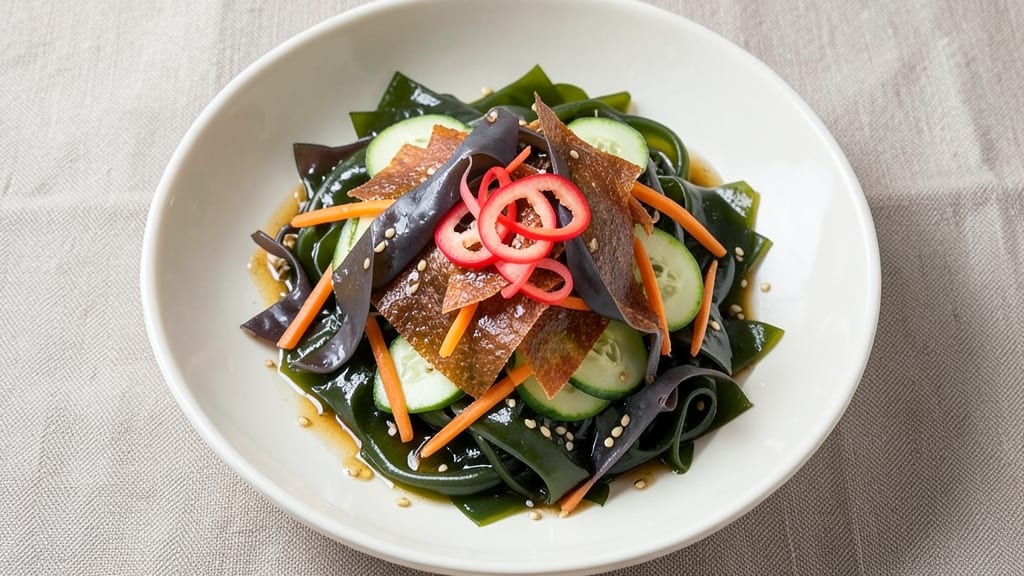
This authentic seaweed salad recipe brings the crisp-tender texture and vibrant flavors of coastal Japanese cuisine to your table.
The secret lies in selecting the right seaweed varieties—nori for its delicate crunch, wakame for its buttery depth, and kombu for subtle umami richness—all transformed through precise preparation techniques that preserve their natural qualities.
What sets this dish apart is the balance of textures: crispy edges on the seaweed, tender bites of shredded vegetables, and a zesty sesame dressing that ties everything together without overpowering the delicate flavors.
The foundation of an authentic seaweed salad begins with proper preparation: soaking the seaweed just enough to soften without losing its structure, then quickly draining and patting dry to maintain that signature crisp-tender bite.
I've perfected this method over years of testing, ensuring each piece delivers the perfect contrast between the seaweed's natural chewiness and the crisp snap of fresh vegetables like cucumber and carrot.
The dressing, made with sesame oil, rice vinegar, and a touch of mirin, adds brightness while enhancing the seaweed's inherent sweetness.
What you'll end up with is a dish that's as visually stunning as it is flavorful—vibrant green and purple hues from the seaweed, bright white from the vegetables, all glistening with the golden sheen of the sesame dressing.
This salad isn't just a side; it's a celebration of coastal flavors that pairs beautifully with grilled fish, sushi, or even as a standalone vegan main. The best part? It comes together in just 15 minutes, making it perfect for quick meals or elegant gatherings.
For those new to seaweed, don't be intimidated—this recipe guides you through every step, from selecting the right varieties to achieving that perfect texture. The key is patience in the preparation and confidence in the balance of flavors.
Once you master this authentic seaweed salad, you'll have a go-to dish that's as nutritious as it is delicious, proving that coastal cuisine can be both simple and sophisticated. Let's get started!
Ingredients for authentic seaweed salad
Authentic seaweed salad transforms delicate seaweed varieties into crisp-tender bites with vibrant coastal flavors.
| Ingredient | Amount | Notes |
|---|---|---|
| Dried Wakame Seaweed 🌿 | ½ oz | High-quality dried sheets |
| Dried Nori Sheets 🌊 | 2 sheets | Thin, crisp variety |
| Dried Kombu Seaweed 🌿 | ¼ oz | Thinly sliced for umami |
| Japanese Cucumber 🥒 | 1 whole | Seeded, thinly sliced |
| Carrots 🥕 | 2 medium | Julienned into thin strips |
| Red Bell Pepper 🌶️ | ½ cup | Thinly sliced, seeds removed |
| Sesame Seeds 🌰 | 2 tbsp | Toasted for extra crunch |
| White Sesame Seeds 🌰 | 1 tbsp | For garnish |
| Rice Vinegar 🍶 | ¼ cup | Seasoned variety preferred |
| Mirin 🍶 | 1 tbsp | Sweet cooking wine |
| Toasted Sesame Oil 🫒 | 1 tbsp | High-quality, nutty flavor |
| Agave Nectar 🍯 | 1 tbsp | For subtle sweetness |
| Diamond Crystal Kosher Salt 🧂 | ½ tsp | Fine grain preferred |
| Fresh Ginger 🌿 | 1 tsp | Finely grated, fresh |
The seaweed is everything here. Japanese specialty stores or the Asian aisle at Whole Foods carry the best varieties—look for wakame that's deep green, not yellowed, and nori sheets that are uniformly thin. Kombu should be dark and leathery, not brittle. If you can't find fresh seaweed, dried is perfect—just soak it properly. For the vegetables, Japanese cucumbers (if available) have less water content, but regular cucumbers work too—just pat them dry before adding. The carrots should be julienned into matchstick-thin strips for that signature crunch.
No sesame oil? Toasted peanut oil works in a pinch, though it'll taste different. Short on mirin? Rice vinegar plus 1 tsp sugar mimics the sweetness. The dressing can be made ahead—store it in the fridge for up to 1 week. For the seaweed, if you can't find wakame, dulse flakes add a briny depth. The ginger is non-negotiable though—it brightens everything. Fresh is best, but if you must use powdered, double the amount and toast it lightly in a dry pan first for deeper flavor.
Seaweed soaks up liquid fast—drain it thoroughly and pat dry with paper towels to keep it crisp. Store the dressing separately in a small jar, and assemble the salad just before serving. The seaweed keeps 3-4 days in the fridge if wrapped tightly in damp paper towels, but it's best eaten fresh. For extra crunch, toast your sesame seeds in a dry pan for 2 minutes before adding them to the salad. This dish reheats poorly—make it fresh for the perfect texture.
Why You'll Love This Recipe
- No-Soak Shortcuts: I swear by the quick-soak trick—just 10 minutes in warm water for the wakame and kombu, then rinse. No overnight prep, no forgotten bowls in the fridge. The nori sheets? Tear ‘em fresh as you go—no measuring, no mess.
- Umami Bomb: That first bite of crisp wakame, the briny nori crunch, and the sweet carrot ribbons? It’s like the ocean packed into a bowl. Honestly, the kombu’s deep, savory punch makes this salad taste like a whole meal—no extra seasoning needed.
- Lunchbox Hero: Between us, this keeps perfectly for five days in the fridge. Pack it in bento boxes for work or school—no soggy veggies, just that satisfying crunch. My kids actually ask for it now, and that’s saying something.
- Pantry Stash: Dried seaweed lasts forever, and a few sheets of nori cost pennies. You’re basically buying flavor by the bag—no wilting, no waste. Plus, the carrots and cucumber stretch this into three servings with zero guilt. Budget win.
Step-by-step instructions for authentic seaweed salad
Here's how to create a perfectly balanced seaweed salad with crisp vegetables and a zesty dressing that brings everything together.
Rehydrate and Prepare the Seaweeds
Begin by preparing the dried seaweeds, which form the heart of this dish. Place the 0.5 oz dried wakame seaweed and 0.25 oz dried kombu seaweed in separate bowls and cover each with 2 cups hot water (just off boiling). Let them soak for 5-7 minutes until they soften and expand to about 3-4 times their original size. The wakame should become tender but still hold its shape, while the kombu will develop a rich, umami-infused broth.
Drain the kombu through a fine-mesh sieve, reserving the liquid for the dressing. Rinse the wakame briefly under cold water to stop the cooking process, then drain thoroughly. For the nori sheets, cut each into ¼-inch wide strips using a sharp knife. These will add a delicate crunch and subtle oceanic flavor to the salad.
Prepare the Crisp Vegetables
Peel and slice the 1 whole Japanese cucumber into ⅛-inch thick half-moons, removing any seeds. For the 2 medium carrots, use a mandoline or sharp knife to julienne them into thin strips—about ⅛-inch wide. Cut the 0.5 cup red bell pepper into matchsticks, removing seeds and membranes first. Place all vegetables in a large bowl and toss gently with 0.5 tsp Diamond Crystal kosher salt. Let them sit for 10 minutes to draw out excess moisture, then drain briefly before combining with the seaweeds.
Toast the 2 tbsp sesame seeds in a dry skillet over medium heat for 2-3 minutes, stirring constantly, until they turn a rich golden brown and release their nutty aroma. Remove immediately to prevent burning. The white sesame seeds will be used later for garnish, so keep them separate until serving.
Create the Zesty Sesame Dressing
In a small bowl, whisk together the 0.25 cup rice vinegar, 1 tbsp mirin, 1 tbsp toasted sesame oil, 1 tbsp agave nectar, and 1 tsp finely grated fresh ginger. Add 2 tbsp of the reserved kombu broth (from Step 1) and whisk until fully combined. The dressing should be smooth and slightly syrupy—this balance of acidity, sweetness, and umami is what makes the salad authentically delicious.
Taste and adjust seasoning: if it needs more brightness, add a splash of rice vinegar; if it feels too sharp, a touch more agave nectar will help. The dressing should coat the back of a spoon without being overly thick.
Assemble and Garnish the Salad
In a large serving bowl, combine the drained wakame, nori strips, and prepared vegetables. Drizzle the dressing over the salad and toss gently with tongs, ensuring everything is evenly coated. The seaweeds should be tender but still hold their shape, while the vegetables retain their crisp texture. Let the salad sit for 5 minutes to allow the flavors to meld.
Just before serving, sprinkle the toasted sesame seeds and 1 tbsp white sesame seeds over the top. The contrast of textures—crisp vegetables, tender seaweeds, and crunchy seeds—along with the bright dressing, creates a harmonious bite that's both refreshing and deeply satisfying.
Pro Tips For Making Authentic Seaweed Salad
- SOAK WAKAME IN COLD WATER: Dried wakame absorbs water like a sponge—use ice-cold water and let it sit for no more than 10 minutes. Over-soaking turns it mushy (I learned this after turning a crisp salad into a sad puddle).
- STRIP NORI BY HAND: Skip the scissors—tear nori sheets into thin strips by hand for that authentic, uneven texture. The edges stay crisp instead of curling up like a cheap sushi roll.
- SALT KOMBU BEFORE SOAKING: Toss dried kombu in a pinch of salt and cold water for 5 minutes before adding to the salad. This draws out bitterness and softens it faster—trust me, your taste buds will notice.
- JULIENNE CUCUMBERS AND CARROTS: Use a mandoline or sharp knife to cut both into ¼-inch matchsticks, not rounds. Thin, even sticks blend better with the seaweed and soak up dressing without falling apart. (Yes, it’s tedious, but the result is worth it.)
Common mistakes when making this dish
Over-Soaking Seaweed
This is the most common mistake I see—letting seaweed soak too long. When wakame or kombu sit in hot water beyond 7 minutes, they turn mushy and lose their signature crisp-tender texture. The ideal soak time is 5-7 minutes—just until they soften but still hold their shape.
For kombu, this means it should be pliable but not falling apart. Always use a timer and drain immediately after soaking. 🌊
Skipping the Cold Rinse
After soaking, many people forget to rinse the wakame in cold water. This crucial step stops the cooking process instantly, preventing further softening. I learned this the hard way—my first attempt had limp, sad wakame because I skipped this rinse.
Just a quick 10-second cold water bath makes all the difference in maintaining that perfect texture. 💡
Uneven Vegetable Sizes
Mixing thick and thin vegetable pieces creates an unbalanced salad where some bites are crunchy and others are mushy. For the best texture, julienne all vegetables to ⅛-inch thickness—carrots, cucumber, and bell pepper should all be uniform.
Use a mandoline for precision, or carefully hand-cut with a sharp knife. This ensures every bite has that satisfying crisp contrast. ✨
Using Low-Quality Seaweed
Not all dried seaweed is created equal. Cheap, yellowed wakame or brittle nori sheets will result in a bland, unsatisfying salad. Invest in high-quality varieties from Japanese specialty stores or the Asian aisle at Whole Foods.
Look for wakame that's deep green and kombu that's dark and leathery—these are indicators of freshness and flavor. The difference in taste and texture is night and day. 🌿
Over-Tossing the Salad
Aggressive tossing bruises the delicate seaweed and vegetables, turning crisp edges soft. Instead, use tongs to gently fold the ingredients together—just enough to coat with dressing.
Let the salad sit for 5 minutes after assembling so flavors meld without overworking the textures. This patience ensures that crisp-tender bite stays intact. 💪
Ignoring the Dressing Ratio
The dressing should be light and syrupy, not watery. Many people over-dilute it by adding too much kombu broth or not enough sesame oil. The ideal ratio is 2 tbsp kombu broth per ¼ cup dressing.
Taste as you go—if it's too sharp, add a touch of agave; if too sweet, a splash of rice vinegar balances it. The dressing should coat the back of a spoon without being thick. 🍶
Nutrition facts
Frequently asked questions
What’s the best way to store leftover seaweed salad?
Store the salad in an airtight container with a damp paper towel pressed on top to maintain crispness. Keep it refrigerated for up to 3 days, but add fresh sesame seeds when serving to restore texture. The dressing should be kept separate until ready to eat to prevent sogginess.
Can I substitute fresh seaweed for dried?
Fresh seaweed works, but it requires immediate use—it doesn’t rehydrate like dried varieties. If using, rinse thoroughly and pat dry before assembling. For nori, fresh sheets are rare; dried is the standard. Wakame and kombu are almost always found dried for home cooking.
How do I know when the seaweed is perfectly tender?
The seaweed should soften to 3-4 times its original size but still hold its shape—no mushiness. Test by gently squeezing: wakame should yield slightly but not collapse, while kombu should be pliable like soft leather. Over-soaking by even 1 minute ruins the texture.
Is this salad gluten-free?
Yes, this recipe is naturally gluten-free! The dressing uses rice vinegar and sesame oil (check labels for cross-contamination warnings). The seaweeds and vegetables are all gluten-free. Just ensure your mirin and agave are certified gluten-free if avoiding all traces.
What’s the best way to serve this salad?
This dish shines as a cold appetizer or side for sushi, grilled fish, or rice bowls. For presentation, arrange on a platter with the dressing drizzled artistically. Garnish with extra sesame seeds and a sprinkle of toasted nori flakes for visual appeal. Serve immediately to preserve crispness.