
Appetizers
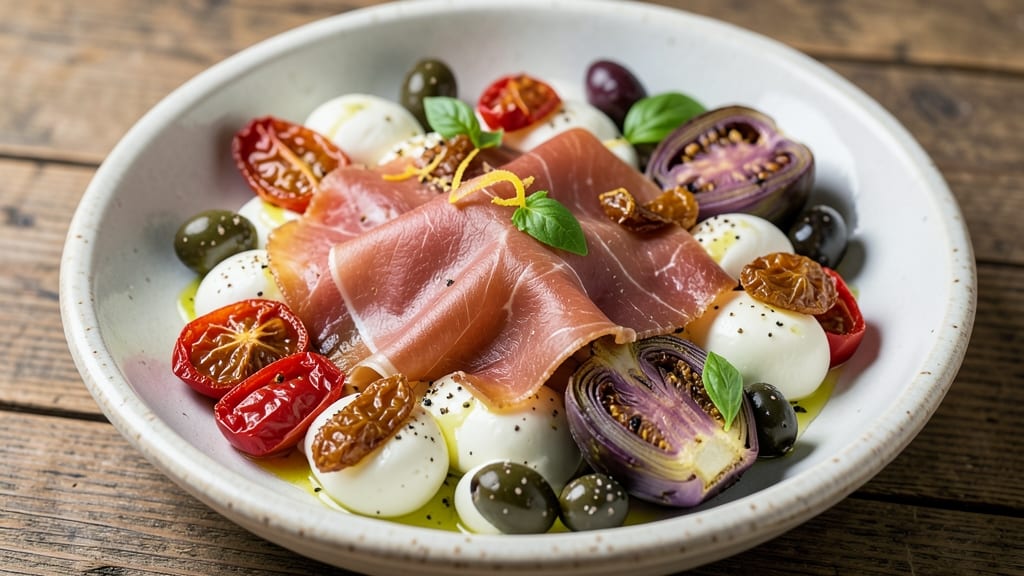
This antipasto salad platter recipe transforms Mediterranean flavors into a stunning, bite-sized feast that takes just 20 minutes to assemble. 🌟 The secret lies in balancing salty cured meats, briny olives, creamy cheeses, and vibrant marinated vegetables—each element carefully chosen to create harmony in every bite.
What makes this recipe special is its versatility; it works equally well as a showstopping party appetizer or a satisfying light meal for two.
Unlike traditional antipasto spreads that overwhelm with too many ingredients, this curated platter focuses on quality over quantity—think prosciutto so thin it melts on the tongue, marinated artichokes with a tangy kick, and fresh mozzarella that stays creamy even when sliced.
The assembly process is simple: arrange components in a visually pleasing pattern, drizzle with olive oil, and finish with fresh herbs for a pop of color. This isn’t just food; it’s an experience that brings the flavors of Italy to your table with minimal effort.
By the time you’re done, you’ll have a platter that’s as beautiful as it is delicious—golden crusty bread for dipping, glossy marinated vegetables, and cheeses that range from mild to bold. The best part? Every ingredient plays a role, ensuring each bite delivers a perfect balance of textures and flavors.
Whether you’re hosting a gathering or simply craving a taste of the Mediterranean, this antipasto salad platter delivers restaurant-quality results without the fuss.
The real magic happens in the presentation—think of it as edible art. Arrange ingredients in concentric circles or scatter them freely for a rustic look, then finish with a sprinkle of flaky sea salt or cracked black pepper.
This platter isn’t just a dish; it’s a conversation starter that turns any occasion into a celebration. Let’s get started!
Ingredients for antipasto salad platter
Curated Mediterranean ingredients that shine individually but play even better together.
| Ingredient | Amount | Notes |
|---|---|---|
| Prosciutto di Parma 🥓 | 6 oz | Thinly sliced, high-quality preferred |
| Fresh Mozzarella 🧀 | 8 oz | Bocconcini or pearl variety |
| Marinated Artichoke Hearts 🍈 | 1 cup | Drained, jarred or homemade |
| Kalata Olives 🫒 | 1 cup | Pitted, briny flavor preferred |
| Roasted Red Peppers 🍅 | 1 cup | Jarred, drained and chopped |
| Sun-Dried Tomatoes 🍅 | ½ cup | Oil-packed, chopped |
| Extra-Virgin Olive Oil 🫒 | ½ cup | For drizzling, fruity variety |
| Crusty Baguette 🍞 | 1 whole | Sliced for dipping |
| Fresh Basil Leaves 🌿 | ¼ cup | Chopped, for garnish |
| Fresh Arugula 🌱 | 2 cups | Baby leaves, for bedding |
| Pecorino Romano 🧀 | ½ cup | Shaved or grated |
| Flaky Sea Salt 🧂 | 2 tbsp | For finishing |
| Freshly Cracked Black Pepper 🌶️ | 1 tsp | For garnish |
| Balsamic Glaze 🍷 | 2 tbsp | For drizzling |
The prosciutto is non-negotiable—Prosciutto di Parma if you can find it, otherwise high-quality Italian dry-cured ham from the deli counter. Costco or Whole Foods usually have the best selection, but even your grocery store’s pre-sliced prosciutto works in a pinch. Look for slices that are pale pink with just a hint of white fat—those are the ones that’ll melt in your mouth. The mozzarella should be fresh, milky, and slightly springy to the touch. Bocconcini or pearl mozzarella from the Italian market section is ideal, but any fresh mozzarella will do if you can’t find those. For the olives, Kalata or Castelvetrano are the briny stars here—avoid the big, meaty Manzanilla olives unless you love them.
No sun-dried tomatoes? Dried tomatoes in oil from a jar work perfectly—just chop them finely. Swapping artichokes? Marinated mushrooms add a meaty texture. The arugula can be subbed with baby spinach if you’re in a hurry, but fresh basil is non-negotiable for that bright pop of color. For the olive oil, avoid the cheap stuff—this is where you taste the difference. A good Puglian or Greek olive oil from Trader Joe’s or Whole Foods will elevate everything. The balsamic glaze can be store-bought (like Giovanni Rossi) or homemade by reducing balsamic vinegar with a pinch of sugar. And if you’re feeling fancy, add a few drops of truffle oil to the olive oil drizzle—trust me, it’s worth it.
Most of these ingredients keep well in the fridge for 5-7 days, but the prosciutto and mozzarella are best used within 3 days for peak freshness. Store the prosciutto wrapped in parchment paper in the coldest part of your fridge, and keep the mozzarella submerged in water in a sealed container. The marinated vegetables and olives will last up to 2 weeks once opened. For the basil, wrap it in a damp paper towel and store it in a plastic bag—it’ll stay fresh for at least 5 days. This platter tastes even better the next day once the flavors meld, so make it ahead if you can. Portion out the components into small containers for easy assembly later.
Why You'll Love This Recipe
- No-Chop Necessary: The prosciutto and mozzarella come pre-sliced, and the artichokes and olives are already marinated—just arrange them on a platter. Honestly, I’ve made this while chatting on the phone because there’s no prep work to distract me.
- Salty-Sweet Magic: That first bite of salty prosciutto with the briny olives and creamy mozzarella? It’s the kind of flavor combo that makes you pause mid-bite. The roasted peppers add a smoky depth that ties everything together—no fancy seasoning needed.
- Party-Ready in Minutes: Bring it to potlucks, game days, or even a last-minute dinner for guests. It holds up beautifully at room temp, so you can prep ahead and let others serve themselves. My in-laws always ask for the recipe after tasting—no pressure to overcook or underseason.
Step-by-step instructions for Mediterranean antipasto salad platter
This Mediterranean spread comes together faster than you can say "bruschetta." Here's how to assemble it like a pro.
👨🍳 Step 1: Prepare the Fresh Components
Start by draining the 1 cup marinated artichoke hearts and 1 cup roasted red peppers thoroughly, patting them dry with paper towels. This removes excess moisture that can make your platter soggy. Chop the roasted red peppers into ½-inch pieces if they're not already pre-chopped—they should be bite-sized for easy grabbing.
Next, arrange the 2 cups fresh arugula on a large platter as the base. I like to spread it out in an even layer so every bite gets that peppery freshness. Keep it separate from the other components for now—we'll assemble everything together at the end.
🥘 Step 2: Arrange the Cured and Preserved Elements
Create a visual feast by arranging the cured components in distinct sections. First, lay out the 6 oz prosciutto di Parma in overlapping strips—this creates a beautiful cascade effect. Then, scatter the 1 cup Kalata olives and 0.5 cup sun-dried tomatoes around the prosciutto, alternating their placement for color contrast.
For the mozzarella, I use the 8 oz fresh mozzarella bocconcini whole or halved—just nestle them among the other components. The round shapes add a nice visual break from the linear prosciutto strips. If using pearl mozzarella, arrange them in small clusters to mimic a mini cheese course.
🍳 Step 3: Add the Finishing Touches
Drizzle the 0.5 cup extra-virgin olive oil in an artistic zigzag pattern over the entire platter. I use about 2 tablespoons for the drizzle and reserve the rest for serving on the side. Then, sprinkle the 0.5 cup pecorino romano shavings evenly, followed by the 0.25 cup chopped fresh basil leaves—this adds that signature Italian freshness.
For the final flourish, lightly dust with the 2 tablespoons flaky sea salt and 1 teaspoon freshly cracked black pepper. I like to use a fine-mesh sieve for the salt to create an even, snowy effect. The pepper adds just enough heat to balance the richness of the cured meats and cheeses.
🍞 Step 4: Prepare the Baguette and Balsamic
Slice the 1 whole crusty baguette into ½-inch thick pieces and arrange them on a separate platter or at the side of your main platter. Toast them lightly in the oven at 375°F for 3-4 minutes until just warm and crisp—this prevents them from getting soggy when dipped.
Warm the 2 tablespoons balsamic glaze slightly (just enough to make it pourable) and drizzle it over the platter in elegant swoops. I like to do this last so the glaze doesn't pool on the arugula. The warm balsamic enhances all the flavors and ties everything together beautifully.
⏰ Step 5: Final Assembly and Serving
Just before serving, gently toss the 2 cups fresh arugula with a tiny bit of the reserved olive oil and a pinch of salt. Then, carefully transfer it to the center of your platter, creating a bed for the other components. Arrange the cured meats, cheeses, and preserved vegetables around it, keeping the presentation balanced and inviting.
Serve immediately while everything is at its peak—cold prosciutto, creamy mozzarella, and vibrant arugula. The contrast of temperatures and textures makes this platter truly special. For extra flair, offer the toasted baguette slices with a small bowl of the remaining olive oil for dipping.
Pro Tips For Making Antipasto Salad Platter
- DRY THE MOZZARELLA: Pat that fresh mozzarella with paper towels until it’s almost dry—just a whisper of moisture left. I learned this the hard way when my salad turned into a soggy mess after 20 minutes. The goal isn’t to make it bone-dry, but to remove enough liquid so the cheese holds its shape and doesn’t turn into a watery puddle on your plate.
- CUT PROSCIUTTO THIN: Use a sharp knife and slice the Prosciutto di Parma paper-thin—less than 1/8-inch thick. Thicker slices get chewy fast, and nobody wants rubbery cured meat on their antipasto. If you’re nervous, lay the knife flat and gently rock it through the meat like you’re shaving.
- DRAIN ARTICHOKE HEARTS: Don’t just grab the jar—drain those marinated artichoke hearts twice. First, dump them into a colander and let the liquid run off. Then, pat them dry with a clean towel. The extra step keeps your salad from turning into a briny, watery disaster, especially if you’re using a lot of them.
- ROOM TEMPERATURE OLIVES: Take the Kalata olives out of the fridge 30 minutes before assembling. Cold olives make the whole platter feel dull and clammy—trust me, your guests will notice. Warm them up just enough so they’re comfortable to eat, not icy. Same goes for the roasted peppers if they’re straight from the jar.
Perfect pairings for this antipasto salad platter
Drink Pairings
An Italian white wine like Pinot Grigio or Vermentino complements this platter beautifully—its crisp acidity cuts through the richness of the cured meats and creamy cheeses. I love a chilled glass of Sardinian Vermentino from La Giustiniana for its bright citrus notes that refresh your palate between bites.
For a lighter option, a Sparkling Prosecco adds effervescence that cleanses the palate. 🍷
Beverage Alternatives
If wine isn’t your thing, try a dry sparkling water with a splash of San Pellegrino and a lemon twist for a refreshing contrast. For beer lovers, a crisp Italian lager like Peroni or Moretti works perfectly—its subtle maltiness doesn’t overpower the antipasto flavors.
A light lager from Birra del Borgo is another great choice. 🍺
Non-Alcoholic Options
For a non-alcoholic pairing, a blood orange soda (like San Pellegrino Aranciata Rossa) adds a sweet-tart balance to the salty and savory components. I also love a chilled hibiscus iced tea with a hint of mint—its floral notes echo the fresh basil in the platter.
Serve it in a tall glass with ice for an elegant touch. 🌿
Olive Oil Infusions
Elevate your platter further by offering infused olive oils on the side. A drizzle of garlic-infused olive oil (simmer 3 garlic cloves in ½ cup olive oil for 5 minutes) adds depth to crusty bread.
For a bolder flavor, try chili-infused olive oil—just mix 1 tsp crushed red pepper flakes into ¼ cup olive oil and let it sit for 10 minutes. 🫒
Digestif Pairings
After the platter, serve a small espresso or cappuccino to balance the richness. For a more robust option, a limoncello or amaro like Aperol adds a sweet or bitter finish. A small glass of sweet vermouth (like Martini Rosso) also pairs wonderfully with the cured meats and cheeses. 💛
Nutrition facts
Frequently asked questions
Can I make this antipasto platter ahead of time?
This platter actually tastes better the next day as flavors meld. Store components separately in airtight containers—keep cured meats and cheeses in the fridge for up to 3 days, while marinated vegetables last 5-7 days. Assemble just before serving to maintain crisp textures on fresh elements like arugula and basil.
What if I can't find prosciutto di Parma?
Don't worry! Any high-quality Italian dry-cured ham works—look for Prosciutto di Modena or even coppa from your deli counter. For a budget option, thinly sliced salami or genoa salami adds great flavor. Just ensure it's not too fatty, as excess grease can make the platter soggy.
How do I prevent the arugula from wilting?
Fresh arugula is delicate, so handle it gently. Pat it dry thoroughly before arranging, and only toss it with olive oil and salt right before serving. Keep the platter chilled until the last minute—this helps maintain crispness. If using pre-washed arugula, give it a final rinse and spin dry in a salad spinner.
Can I add hot components to this cold platter?
While this is a cold antipasto, you can absolutely add warm elements like grilled shrimp or warm marinated mushrooms for contrast. Just arrange them separately on the platter so guests can choose their preferred temperature. The temperature contrast creates an exciting culinary experience!
What's the best way to serve this for a large group?
For parties, double the recipe and use multiple platters to keep portions manageable. Arrange components in small bowls or ramekins instead of one giant platter—this makes it easier for guests to serve themselves. Offer extra bread, olive oil, and balsamic glaze in separate bowls for customization.