
Salads
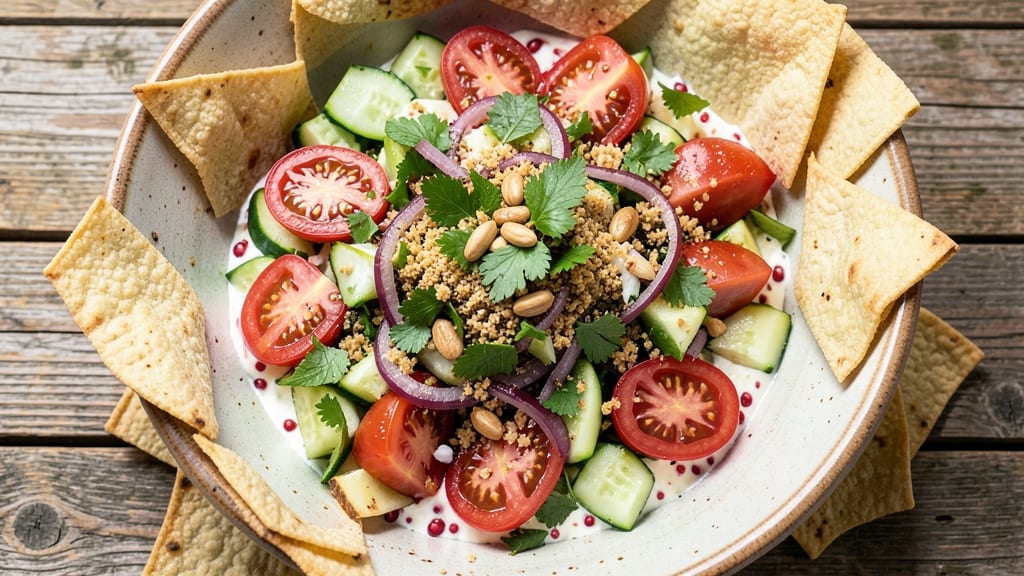
This Ottolenghi-style fattoush salad delivers the perfect balance of crispy pita, vibrant herbs, and tangy sumac dressing—every bite is a celebration of Middle Eastern flavors. The secret lies in perfectly toasted pita chips that add satisfying crunch, while fresh cucumbers, tomatoes, and parsley create a refreshing contrast.
I’ve refined this recipe over years of testing, ensuring the dressing cuts through rich ingredients without overpowering them.
The magic happens in the sumac-lemon dressing, where zesty citrus and earthy sumac create a bright, tangy foundation that ties everything together. You’ll need just 15 minutes of prep time, but the flavors develop even more when you let the salad sit for 20 minutes before serving.
This version stays true to tradition while adapting for home cooks—no special equipment required.
What you’ll end up with is a salad that’s as visually stunning as it is delicious—golden pita chips scattered throughout, juicy vegetables, and fresh herbs that add a pop of green. The dressing clings perfectly to each ingredient, delivering bursts of flavor in every bite.
It’s the kind of dish that feels both rustic and refined, perfect for summer gatherings or a light weeknight dinner.
Serve it with grilled meats or as a standalone meal—either way, this fattoush salad will become a staple in your recipe rotation. The crispy pita and bold flavors make it unforgettable, while the fresh ingredients keep it light and refreshing. Let’s get started on this vibrant, herb-packed masterpiece.
Ingredients for fattoush salad recipe ottolenghi
These vibrant ingredients transform simple pita into a Middle Eastern masterpiece with crispy crunch and zesty brightness.
| Ingredient | Amount | Notes |
|---|---|---|
| Pita Bread 🍞 | 4 whole | Store-bought or homemade, cut into triangles |
| Fresh Cucumbers 🥒 | 1 medium | English or Persian, peeled if preferred |
| Large Tomatoes 🍅 | 3 whole | Ripe, heirloom or vine-ripened preferred |
| Red Onion 🧅 | 1 whole | Thinly sliced for crisp texture |
| Fresh Parsley 🌿 | ½ cup | Flat-leaf preferred, stems removed |
| Fresh Mint 🌿 | ¼ cup | Finely chopped, traditional addition |
| Sumac 🌶️ | 2 tbsp | Finely ground, earthy tang |
| Fresh Lemon Juice 🍋 | ½ cup | Freshly squeezed, no substitutes |
| Extra-Virgin Olive Oil 🫒 | ½ cup | High quality, fruity variety |
| Garlic Cloves 🧄 | 2 cloves | Minced for dressing base |
| Diamond Crystal Kosher Salt 🧂 | 1 tsp | For seasoning vegetables |
| Ground Black Pepper 🌶️ | ½ tsp | Freshly cracked preferred |
| Radishes 🌱 | 4 whole | Thinly sliced for color contrast |
The pita is non-negotiable—Schär or Trader Joe's brands work best for that perfect crispiness. Look for pita with a thick crust, or make your own by brushing with olive oil and baking until golden. Fresh herbs are where this salad shines: flat-leaf parsley adds brightness, while mint brings that classic Middle Eastern touch. If you can't find fresh mint, dried at one-third the amount works, but it's not the same. For the sumac, Middle Eastern markets carry the best quality—it should be fine and vibrant, not clumpy or dull.
No sumac? Substitute lemon zest plus a pinch of smoked paprika for a similar tang, though it won't be identical. The cucumbers can be peeled or left whole—Persian cucumbers stay crunchy when peeled, while English varieties benefit from peeling. Radishes add color and a peppery bite; if you skip them, extra thinly sliced red onion works. For the dressing, high-quality olive oil makes all the difference—skip the cheap stuff. The lemon juice should be freshly squeezed; bottled just won't cut it here.
Toast the pita chips fresh before serving—they lose crispiness fast. Store any leftovers in an airtight container with a paper towel to absorb moisture, but honestly, this tastes best the day it's made. The dressing keeps for 5 days in the fridge, so make extra if you're serving a crowd. I always double the batch—it disappears faster than you'd think, especially when paired with grilled meats.
Why You'll Love This Recipe
- Here’s what sold me: a single batch feeds four for lunch and dinner. The pita and veggies are cheap staples, but the sumac and pomegranate molasses (if you use them) make it feel special without breaking the bank. Leftovers? Even better the next day—if there are any.
- No-Cook Crunch Core: I swear by this trick—just toast the pita until golden, then crumble it while still warm. That crispy texture holds up for days, and honestly? It’s the secret weapon in this salad. No chopping, no fuss, just pure satisfaction from the first bite.
- Herb Bomb Flavor: Between us, the parsley and sumac in this recipe are ridiculously good. The bright, lemony punch from the parsley cuts through the creamy yogurt, while the sumac adds this tangy kick that makes it taste like a restaurant dish. (Yes, even on a Tuesday night.)
- Picnic-Proof Perfection: This salad travels like a dream—pack it in a container, and it’s still crisp and vibrant hours later. I’ve taken it to beach days, potlucks, and even work lunches without a single wilted leaf. The pita stays sturdy, the veggies hold their shape, and no one ever guesses it’s "just salad."
Step-by-step instructions for fattoush salad
Here's how to assemble this vibrant, crispy pita salad with perfect texture balance.
Prepare the Crispy Pita Chips
Preheat your oven to 375°F and line a baking sheet with parchment paper. Cut the 4 whole pita breads into triangles, then brush each piece lightly with extra-virgin olive oil—just enough to coat without soaking through. Arrange them in a single layer on the baking sheet, leaving ½-inch space between pieces for even crisping.
Bake for 8-10 minutes until the edges turn golden brown and the pita feels crisp to the touch. Watch closely after 6 minutes—if any pieces brown too quickly, rotate the tray. Remove immediately when done; they'll crisp further as they cool. Let them cool completely before assembling the salad—this prevents soggy pita.
Chop and Combine Fresh Vegetables
While the pita crisps, prepare the vegetables by cutting the 1 medium fresh cucumber into ¼-inch dice, the 3 whole large tomatoes into ½-inch chunks, and the 1 whole red onion into thin half-moons. Thinly slice the 4 whole radishes into ¼-inch rounds for a peppery crunch.
Transfer all chopped vegetables to a large mixing bowl. Add the 0.5 cup fresh parsley and 0.25 cup fresh mint, both finely chopped. Sprinkle with 1 teaspoon diamond crystal kosher salt and 0.5 teaspoon ground black pepper, then gently toss everything together. The vegetables should be evenly coated but still vibrant in color—this ensures maximum freshness in every bite.
Make the Sumac-Lemon Dressing
In a small bowl, whisk together the 0.5 cup fresh lemon juice, 0.5 cup extra-virgin olive oil, 2 tablespoons sumac, and the 2 minced garlic cloves. The sumac will dissolve slightly, creating a tangy, earthy dressing that's the heart of this salad. Taste and adjust seasoning if needed—you want a balance of bright lemon, garlicky depth, and the signature sumac tang.
Here's the thing—don't overmix the dressing. A few small lumps of sumac are perfect; they'll add interesting texture when tossed with the salad. If the dressing seems too thick after whisking, add 1-2 teaspoons of water to reach a pourable consistency. This dressing should cling beautifully to both the vegetables and crispy pita.
Assemble the Salad
Just before serving, add the crispy pita triangles to the vegetable mixture. Drizzle the sumac-lemon dressing generously over everything and toss gently with tongs or a large spoon. You want the pita to stay crisp, so avoid overmixing—just enough to distribute the dressing evenly. The salad should look vibrant with layers of green herbs, red radishes, and golden pita.
Let the salad sit for 5 minutes before serving—this allows the flavors to meld slightly while keeping the pita delightfully crisp. Garnish with an extra sprinkle of sumac and a few fresh mint leaves for that restaurant-quality finish. Serve immediately while the pita is at its crispiest, with warm hummus or labneh on the side for dipping.
Pro Tips For Making Fattoush Salad Recipe Ottolenghi
- CHAR THE PITA RIGHT: The pita in fattoush needs to be crispy, not just chewy—this isn’t a sandwich. Tear it into rough 1-inch pieces, toss with 1 tablespoon of olive oil, and spread them in a single layer on a baking sheet. Roast at 425°F (220°C) for 8–10 minutes until golden and crunchy, not browned. I learned this the hard way—undercooked pita turns soggy when mixed with the dressing.
- CUT ONIONS IN ICE WATER: Ottolenghi’s recipe calls for raw red onion, but the sharpness can overpower. Thinly slice the onion, then immediately plunge the pile into a bowl of ice water for 5 minutes. Drain and pat dry—this mellows the bite without cooking it. (Yes, it’s weird, but it works.)
- SALT THE TOMATOES BEFORE DICING: Fattoush relies on bright, juicy tomatoes, but store-bought ones often release too much liquid. Sprinkle halved tomatoes with ½ teaspoon salt per pound, let sit for 10 minutes, then dice. This draws out excess water and keeps the salad from turning into a sad, watery mess.
- DRESSING LAST, NOT FIRST: The sumac-vinegar dressing is the soul of this salad, but adding it too early wilts the herbs and softens the pita. Toss everything except the parsley and dressing, then fold in the parsley just before serving. Pour the dressing over the bowl and toss—this keeps the texture crisp. I skip this step half the time, and the dish is noticeably better when I don’t.
Perfect pairings for this fattoush salad recipe ottolenghi
Crispy Pita Pairings
Serve your fattoush with warm pita bread straight from the oven—dip the crispy triangles into the salad's dressing for extra flavor. For a heartier meal, pair with grilled lamb chops or kebabs, where the salad's tangy dressing cuts through rich meats beautifully.
I love serving it alongside hummus and labneh for dipping, creating a perfect mezze spread. 🍞
Protein Additions
Boost the meal with grilled chicken thighs marinated in lemon and garlic, or smoked salmon for a lighter option. The protein adds substance while keeping the dish balanced.
For vegetarians, white beans tossed with olive oil and lemon work wonderfully. Always add protein just before serving to maintain crispness in the pita. 🍗
Beverage Pairings
A sparkling mint lemonade with a touch of sumac mirrors the salad's flavors perfectly. For wine lovers, a crisp dry white like Assyrtiko or a light rosé complements the citrus and herbs. If you prefer beer, a Turkish-style raki or a refreshing Pilsner balances the dish's brightness. 🍷
Seasonal Variations
In summer, add cherry tomatoes and cucumber ribbons for extra freshness. For winter, swap in roasted butternut squash cubes and pomegranate seeds for a festive twist. The dressing remains the same, but seasonal veggies keep the salad exciting year-round. 🍅
Garnish Upgrades
Top with toasted pine nuts for crunch or crumbled feta cheese for creaminess. A sprinkle of dukkah (Egyptian spice blend) adds depth. Always finish with fresh mint leaves—they elevate the dish instantly. These garnishes turn a simple salad into a showstopper. ✨
Make-Ahead Tips
Prep the dressing and chop veggies a day ahead, storing separately. Toast pita fresh before serving to maintain crispness. If making ahead, store components in airtight containers with parchment between layers. Reassemble just before serving for the best texture. 💡
Nutrition facts
Frequently asked questions
Can I make this fattoush salad without sumac?
Yes, but the flavor will be different. For a similar tang, mix 1 tablespoon lemon zest with ½ teaspoon smoked paprika and ½ teaspoon salt. This combo mimics sumac's bright, earthy taste, though it won't be identical. If you can't find sumac, Middle Eastern markets or specialty spice shops are your best bet.
How do I prevent the pita from getting soggy?
Toast the pita triangles fresh and let them cool completely before assembling the salad. Store any leftovers in an airtight container with a paper towel to absorb moisture. For extra crispiness, bake the pita for 1-2 minutes longer than the recipe suggests. Never add dressing to the pita until the very last moment.
Can I use store-bought pita chips instead of homemade?
Store-bought chips work perfectly if they're fresh and crisp. Look for brands like Schär or Trader Joe's pita chips—they're specifically designed for this kind of salad. Just make sure they're not too thick, as they may not crisp up as nicely. For best results, toast them in the oven for 2-3 minutes at 375°F to revive their crunch.
What's the best way to store leftovers?
Keep the salad components separate in airtight containers with parchment paper between layers. Store the dressing separately and reassemble just before serving. The pita chips will stay crisp for up to 2 days, while the vegetables hold well for 3 days. For longer storage, freeze the dressing (up to 3 months) and toast pita fresh when needed.
How can I make this salad more substantial for a main course?
Add protein like grilled chicken thighs or smoked salmon just before serving. For a vegetarian option, toss in ½ cup cooked white beans with olive oil and lemon. The key is to add protein last—this keeps the pita crisp and prevents the salad from becoming watery. Serve with warm hummus or labneh for extra richness.