
Salads
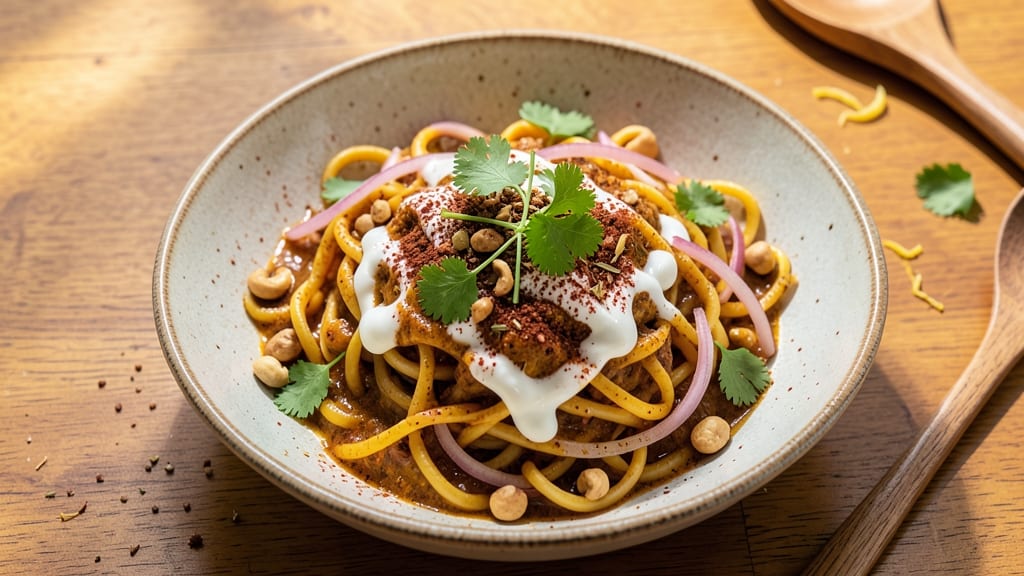
This South African curry noodle salad transforms traditional flavors into a satisfying, warm-cool dish perfect for any meal. The aromatic curry base—spiced with turmeric, coriander, and a touch of South African bobotie-inspired cinnamon—coats tender noodles while a tangy tamarind dressing balances the richness.
Fresh vegetables like cucumber and carrot add crunch, and optional protein like grilled chicken or crispy tofu keeps it hearty.
The recipe starts with a quick curry paste simmered in coconut milk, creating a fragrant, slightly sweet base that clings to the noodles. While the curry cooks, you’ll prepare the dressing using tamarind paste, lime juice, and a hint of honey for depth.
The contrast between warm, spiced noodles and the cool, zesty dressing makes every bite exciting—ideal for summer lunches or picnics.
What sets this dish apart is the South African twist: bobotie-inspired spices give the curry warmth, while peanuts or chutney add texture and a familiar tang. It’s adaptable for vegetarians (swap chicken for tofu or chickpeas) and can be prepped ahead, making it a go-to for busy weeknights.
The result is a vibrant, flavor-packed salad that feels both comforting and refreshing.
Serve it with a side of warm naan or crusty bread to soak up the remaining dressing. The combination of textures—creamy curry, crunchy veggies, and nutty garnishes—makes this more than just a salad; it’s a complete, satisfying meal. Ready to try it? Let’s get started.
Ingredients for curry noodle salad recipe south africa
These vibrant ingredients blend South African warmth with cool, tangy dressing for a satisfying salad.
| Ingredient | Amount | Notes |
|---|---|---|
| Egg Noodles 🍜 | 8 oz | Fresh or dried, uncooked |
| Coconut Milk 🥥 | 1 can | Full-fat, 13.5 oz can |
| Curry Powder 🌶️ | 2 tbsp | Mild or medium blend |
| Ground Turmeric 🌿 | 1 tsp | Freshly ground preferred |
| Ground Cinnamon 🍃 | ½ tsp | Bobotie-inspired warmth |
| Ground Coriander 🌿 | 1 tsp | Freshly ground for depth |
| Tamarind Paste 🍋 | 2 tbsp | For tangy dressing |
| Fresh Lime Juice 🍋 | 3 tbsp | Freshly squeezed |
| Honey 🍯 | 1 tbsp | For dressing balance |
| Cucumber 🥒 | 1 medium | Seeded, sliced thin |
| Carrots 🥕 | 2 medium | Julienned or shredded |
| Red Bell Pepper 🌶️ | 1 whole | Diced, any color |
| Peanuts 🥜 | ¼ cup | Chopped, toasted |
| Fresh Cilantro 🌿 | ¼ cup | Chopped, for garnish |
| Salt 🧂 | 1 tsp | Kosher or sea salt |
The coconut milk is non-negotiable here—full-fat gives the curry that creamy richness. Thai Kitchen brand is my go-to for consistency, but any canned full-fat works. For the curry powder, Penzeys or Spicewalla have great blends, but the grocery store stuff is fine if it's labeled 'mild.' The tamarind paste? Trader Joe's has a great jarred version—no need to make it from scratch unless you're feeling ambitious. Look for bright, vibrant spices; if your curry powder smells musty, toss it. Fresh turmeric and coriander make a difference, but the ground versions work in a pinch.
No tamarind paste? Lime juice plus 1 tsp sugar gets you close. Swap peanuts for crushed cashews or almonds if you prefer. The carrots can be baby carrots if that's what's in the fridge—no need to peel them. For the noodles, egg noodles work best, but rice noodles add a lighter texture. If you're vegetarian, skip the optional protein or use crispy baked tofu. The dressing can be made ahead and stored for up to 5 days—just stir before using. The curry base keeps for 3 days in the fridge, so make extra if you're feeding a crowd.
Store the cooked noodles and curry base separately in airtight containers for 3-4 days. The dressing stays fresh for 5 days in the fridge. To reheat, warm the curry noodles gently with a splash of water or coconut milk—microwave 1-2 minutes or stovetop on low. The peanuts and veggies are best added fresh when serving. This dish tastes even better the next day as flavors meld. For meal prep, assemble everything in a container with a tight lid—just shake before eating to redistribute the dressing.
Why You'll Love This Recipe
- One-Pot Magic: I swear by this recipe when I’m too tired to wash dishes. Just toss the egg noodles, coconut milk, and spices into one pot—no chopping, no fuss—while the curry powder and cinnamon work their golden magic together. The turmeric gives it that warm glow, and honestly? I’ve made it with just a handful of ingredients when my pantry was bare.
- Creamy Heat Fix: Between us, this is the only curry noodle salad that doesn’t taste like it’s missing something. The coconut milk makes it rich but not heavy, while the curry powder and cinnamon add layers of warmth that hit different. That first bite? The egg noodles soak up the flavor like a sponge, leaving you wanting more.
- Lunchbox Superstar: I pack this cold or at room temp, and it’s still a hit—whether it’s for my kids’ school lunches or a picnic. The noodles hold up better than you’d think, and the spices keep it interesting. Pro tip: Add a boiled egg or some chopped veggies for extra protein, and it becomes a full meal. My daughter even asks for it on weekends.
- Budget Buster: This recipe costs me pennies but feels like a fancy takeout. A can of coconut milk, a bag of noodles, and a few spices—no fancy ingredients, just bold flavor. Plus, it stretches easily for leftovers. I’ll make a big batch on Sunday, and by Wednesday, I’m still eating it, still loving it. No waste, all satisfaction.
Step-by-step instructions for curry noodle salad
This South African-inspired dish balances warm spices with cool tang—here's how to assemble it perfectly.
🍳 Step 1: Cook the Spiced Noodles
Bring a pot of water to a rolling boil and add the 8 oz egg noodles along with 1 tsp salt. Cook according to package instructions until al dente—about 8-10 minutes for fresh noodles or 5-6 minutes for dried. Drain immediately and rinse briefly under cold water to stop cooking.
While still warm, transfer the noodles to a large mixing bowl. In a small saucepan over medium-low heat, combine the 1 can coconut milk, 2 tbsp curry powder, 1 tsp ground turmeric, 0.5 tsp ground cinnamon, and 1 tsp ground coriander. Simmer for 3-4 minutes until the spices bloom and the mixture thickens slightly. Pour this fragrant coconut mixture over the warm noodles and toss gently to coat evenly. The residual heat will help the spices adhere perfectly.
🥘 Step 2: Prepare the Tangy Dressing
In a separate bowl, whisk together the 2 tbsp tamarind paste, 3 tbsp fresh lime juice, and 1 tbsp honey until smooth. The tamarind paste will thicken slightly as it incorporates—this is normal. Taste and adjust the balance between sweet and tart; you want a bright, complex dressing that cuts through the richness of the coconut.
Slowly drizzle this dressing over the spiced noodles while tossing continuously. The acidity will help break down any remaining starch on the noodles, creating a silky, cohesive texture. Let the salad sit for 5 minutes to allow the flavors to meld completely.
👨🍳 Step 3: Assemble the Vegetable Components
While the noodles marinate, prepare the fresh vegetables. Thinly slice the 1 medium cucumber into half-moons, julienne the 2 medium carrots into fine matchsticks, and dice the 1 whole red bell pepper into small, even pieces. The goal is to create a textural contrast—crisp cucumber, tender carrots, and slightly chewy bell pepper.
Lightly toast the 0.25 cup peanuts in a dry skillet over medium heat for 2-3 minutes until fragrant and golden. This step enhances their nutty flavor and adds a satisfying crunch. Chop the 0.25 cup fresh cilantro finely and set aside for garnish.
🥘 Step 4: Combine and Garnish
Gently fold the prepared vegetables into the spiced noodles, reserving about ¼ cup of the dressing for later if needed. The salad should be vibrant with colors—deep reds from the bell pepper, bright orange carrots, and pale green cucumber. Taste and add a splash of reserved dressing if the noodles feel dry.
Transfer the salad to serving bowls and top with the toasted peanuts and chopped cilantro. The peanuts add a textural contrast while the cilantro brings a fresh finish. Serve immediately while the noodles are still warm and the dressing is bright, or chill for 30 minutes to let the flavors deepen if you prefer a cooler salad.
Pro Tips For Making Curry Noodle Salad Recipe South Africa
- Boil Noodles Till Al Dente: I learned this the hard way—overcooked egg noodles turn mushy in the salad, no matter how much you dress them. Pull them out when they’re still slightly firm (about 2 minutes less than package instructions) and finish cooking in the curry sauce—this keeps them from falling apart and soaks up all those rich flavors.
- Toast Spices Before Mixing: Skip the pre-mixed curry powder and toast your spices instead. Heat a dry pan over medium for 30 seconds until the cinnamon smells sweet and the turmeric glows—this deepens their flavor without burning. Let them cool before adding to the coconut milk, or you’ll end up with a bitter, off-tasting sauce.
- Strain Coconut Milk First: The trick to a silky sauce is removing the thick, starchy bits from the coconut milk. Line a fine-mesh sieve with cheesecloth, pour the milk through, and wring out every last drop—this prevents a grainy texture in your salad. (Yes, it’s extra work, but your taste buds will notice.)
- Chill Before Serving: Serve this salad cold, not room temp. After tossing the noodles with the curry sauce, refrigerate for at least 30 minutes—this lets the flavors meld and the noodles soften just enough. If you’re impatient, pop it in the freezer for 10 minutes, but don’t skip the chill step entirely.
Common mistakes when making your curry noodle salad recipe south africa
Overcooking Noodles
One of the biggest mistakes is overcooking the noodles, which turns them mushy and ruins the texture. Egg noodles should be al dente—firm to the bite—when cooked. For fresh noodles, aim for 8-10 minutes in boiling water, while dried noodles need just 5-6 minutes.
Rinse them briefly under cold water after draining to stop the cooking process immediately. I’ve learned this the hard way—overcooked noodles absorb too much dressing and lose their bite. 🍜
Skipping Spice Bloom
Many people pour the coconut milk and spices directly into the noodles without simmering first. This means the spices won’t fully bloom, leaving your curry flavor flat and underdeveloped. Always heat the coconut milk with the spices for 3-4 minutes to let the aromatics release their full potential.
The difference is night and day—your curry will be vibrant and fragrant instead of dull. 🌶️
Ignoring Dressing Balance
The tamarind dressing is the star of this dish, and getting the balance right is key. If you skip adjusting the sweetness or tartness, the dressing can taste either cloying or overly sour. Taste as you go and adjust with more lime juice for brightness or honey for sweetness.
I often start with 1 tbsp honey but add another ½ tsp if the tamarind is too sharp. The goal is a complex, well-rounded flavor that complements the curry, not overpowers it. 🍋
Adding Veggies Too Early
Tossing in the raw vegetables while the noodles are still hot can make them wilt before you even serve the dish. Always let the spiced noodles cool slightly for 5 minutes before adding crisp veggies like cucumber and bell pepper.
This keeps them crunchy and vibrant, adding the perfect textural contrast to the creamy noodles. Pro tip: Reserve some dressing to drizzle over the veggies just before serving for extra freshness. 🥕
Not Toasting Peanuts
Using raw peanuts instead of toasted ones means missing out on their full nutty flavor and satisfying crunch. Toasting them for just 2-3 minutes in a dry skillet enhances their aroma and texture dramatically.
I’ve made this mistake—raw peanuts just don’t cut through the richness of the curry like toasted ones do. Plus, they’ll stick to your teeth if not properly toasted. 🥜
Underestimating Resting Time
Rushing to serve the salad right after mixing everything can leave it uneven in texture and flavor. Let the dish sit for 5-10 minutes after combining the noodles, dressing, and veggies. This gives the flavors time to meld and the dressing to fully coat the noodles.
I’ve served it too soon, and the result was a disjointed mouthful. Patience here makes all the difference! ⏳
Nutrition facts
Frequently asked questions
Can I make this curry noodle salad vegetarian?
Simply omit the optional protein or swap it for crispy baked tofu or chickpeas. The dish already has plenty of plant-based elements like peanuts, veggies, and the coconut-curry base. For extra protein, add ½ cup cooked lentils or crumbled tempeh. The tamarind dressing works perfectly with these alternatives too!
How do I store leftovers?
Store the cooked noodles and curry base separately in airtight containers for 3-4 days in the fridge. Keep the dressing in a separate jar for up to 5 days. When reheating, warm the noodles with a splash of water or coconut milk—microwave 1-2 minutes or heat gently on the stovetop. Add fresh veggies and dressing when serving for the best texture.
What if I don't have tamarind paste?
No problem! Mix 3 tbsp lime juice with 1 tsp sugar for a similar tangy effect. For extra depth, add ½ tsp grated ginger or a pinch of chili powder. The honey will still balance the acidity, though the flavor will be slightly less complex than tamarind. This works especially well if you're short on time!
Can I use this as a meal prep dish?
Yes, it's perfect for meal prep! Assemble everything in a container with a tight lid, but keep the dressing separate until ready to eat. Shake well before serving to redistribute the dressing. The flavors actually improve after 24 hours as the spices meld. Store the dressing separately for up to 5 days and add fresh veggies when serving to maintain crunch.
What makes this South African-inspired?
The South African twist comes from the bobotie-inspired cinnamon and coriander in the curry base, plus the tamarind dressing that echoes flavors from Cape Malay cuisine. The peanuts and warm spices create that familiar South African comfort feel while keeping the dish light and fresh. It's like a fusion of bobotie's warmth with a refreshing salad texture!