
Sauces & Condiments
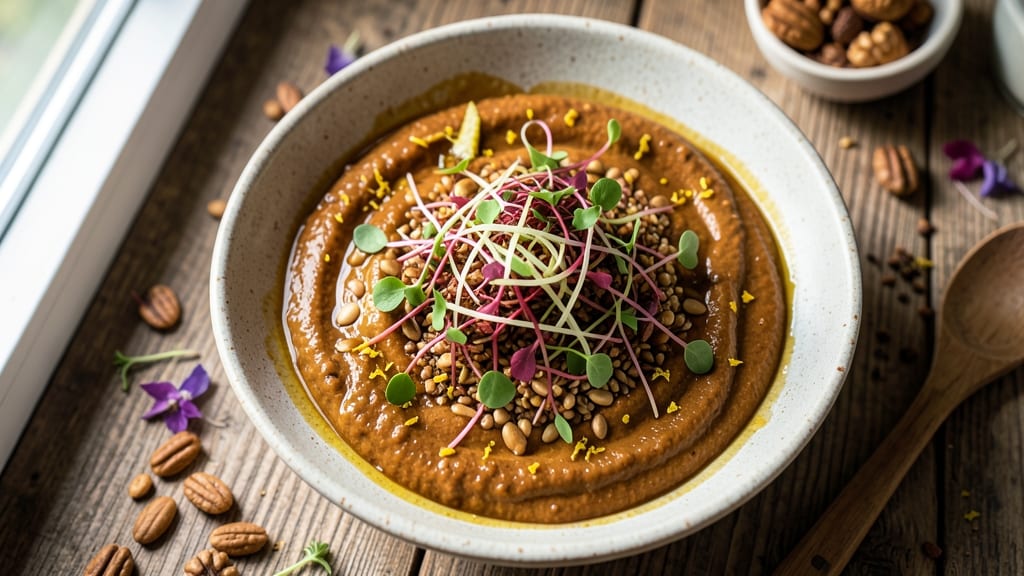
This vegan butternut squash salad dressing transforms simple ingredients into a rich, roasted-squash-infused sauce that elevates every dish. The secret lies in pureeing roasted squash with tahini and citrus for a velvety texture that's both creamy and tangy—perfect for salads, bowls, or dips.
I developed this recipe after craving a dressing with depth that wasn't heavy or overly sweet, and it quickly became a pantry staple.
The base combines roasted butternut squash puree with tahini for creaminess, balanced by bright lemon juice and apple cider vinegar for tang. A touch of maple syrup adds subtle sweetness, while smoked paprika and cinnamon infuse warmth without overpowering.
The dressing stays stable in the fridge for up to a week, making it ideal for meal prep.
What sets this apart is the optional toasted seed crunch—pumpkin or sunflower seeds add texture and nutrition, turning each drizzle into a flavor experience. It works equally well on kale salads, grain bowls, or as a dip for roasted vegetables.
The roasted squash flavor deepens over time, so leftovers taste even better.
With just 8 ingredients and 10 minutes of active time, this dressing delivers restaurant-quality results at home. Store it in an airtight jar, and you’ll always have a versatile, plant-based sauce ready to elevate your meals. Let’s make it!
Ingredients for butternut squash salad dressing
Eight simple ingredients create restaurant-quality vegan dressing with roasted squash depth.
| Ingredient | Amount | Notes |
|---|---|---|
| Medium Butternut Squash 🎃 | 1 whole | Peeled, seeded, cubed small |
| Tahini 🥜 | ½ cup | Sesame paste, unsweetened |
| Fresh Lemon Juice 🍋 | ¼ cup | Strained for clarity |
| Apple Cider Vinegar 🍶 | 2 tbsp | Raw, unfiltered preferred |
| Pure Maple Syrup 🍯 | 1 ½ tbsp | Grade B for depth |
| Smoked Paprika 🌶️ | 1 tsp | Sweet or hot variety |
| Ground Cinnamon 🌿 | ½ tsp | Freshly ground preferred |
| Toasted Pumpkin Seeds 🥜 | ¼ cup | Crushed for crunch (optional) |
| Filtered Water 💧 | ¼ cup | For thinning consistency |
| Sea Salt 🧂 | ½ tsp | Fine grain preferred |
The butternut squash is the heart of this dressing. Cubed small and roasted until caramelized, it develops a natural sweetness that forms the creamy base. For best results, roast at 400°F until tender—about 25 minutes. Trader Joe's and Whole Foods carry organic squash with vibrant color, which translates to richer flavor. If using pre-cut squash, look for pieces with smooth skin and no soft spots. The tahini should be 100% sesame paste—avoid brands with added oils or sweeteners, as they can alter the balance.
No tahini on hand? Substitute with equal parts cashew butter, though the flavor will be milder. Fresh lemon juice can be swapped for lime juice at half the amount, but the dressing will have a slightly different brightness. For the seeds, sunflower seeds work equally well—toast them in a dry pan until golden for maximum crunch. If you prefer a smoother texture, simply omit them. The smoked paprika adds depth without heat, but regular paprika at double the amount works in a pinch. Always taste before thinning with water—sometimes the roasted squash releases enough moisture on its own.
Store the dressing in an airtight glass jar in the fridge for up to 1 week. The flavor actually improves over time as the roasted squash notes meld. For longer storage, transfer to a sealed container and freeze for 3 months. Shake well before using, especially if it separates. The toasted seeds, if added, should be sprinkled fresh before serving to maintain their crunch. This dressing pairs beautifully with kale salads, roasted Brussels sprouts, or grain bowls—drizzle generously for maximum flavor impact.
Why You'll Love This Recipe
- No Roasting Required: I’ll admit, I used to dread roasting squash—peeling, cubing, watching it burn. This dressing skips all that. Just blend raw butternut squash (peeled, of course) with tahini and lemon, and boom—creamy, nutty richness without the oven. (Yes, even on a Tuesday night.)
- Tahini’s Magic Touch: Between us, tahini makes everything better. Here, it turns sweet squash into something dangerously addictive—thick, velvety, with that deep umami kick. The maple syrup balances it perfectly, so it’s not too heavy, but honestly? You’ll want to drizzle it on everything.
- Meal Prep MVP: This keeps for a week in the fridge, and honestly, it only gets better with time. Toss it with greens for a quick lunch, swirl it into grain bowls, or even use it as a marinade. I make a big batch on Sundays and forget it’s even there until I need it.
- Budget-Friendly Luxury: Butternut squash is cheap, tahini lasts forever, and maple syrup stretches far. For what tastes like a fancy restaurant drizzle, you’re spending way less than store-bought dressings. Plus, no weird preservatives—just real, simple ingredients that actually work.
Step-by-step instructions for roasted butternut squash dressing
This method transforms humble squash into a velvety dressing with deep caramelized notes and nutty crunch.
Roast the Butternut Squash Until Caramelized
Preheat your oven to 400°F. Line a baking sheet with parchment paper and arrange the cubed butternut squash in a single layer, leaving space between pieces. Drizzle lightly with olive oil (not included in ingredients) and sprinkle with 0.25 tsp of the sea salt.
Roast for 25-30 minutes, stirring halfway, until the edges are deeply caramelized and the squash yields slightly when pressed with a fork. The squash should smell sweetly nutty and develop a golden-brown crust. Remove from oven and let cool completely before processing - this prevents a watery dressing.
Blend the Base Ingredients Until Silky
Transfer the cooled roasted squash to a high-speed blender. Add the 0.5 cup tahini, 0.25 cup fresh lemon juice, 2 tbsp apple cider vinegar, 1.5 tbsp pure maple syrup, 1 tsp smoked paprika, 0.5 tsp ground cinnamon, and remaining 0.25 tsp sea salt.
Blend on high speed for 1-2 minutes until completely smooth. Scrape down the sides as needed. The mixture should be thick but pourable. If it's too thick after blending, add 1-2 tbsp of the filtered water at a time until you reach a creamy consistency that coats the back of a spoon.
Incorporate the Toasted Pumpkin Seeds
While the dressing cools slightly, lightly crush the 0.25 cup toasted pumpkin seeds in a separate bowl using a rolling pin or mortar and pestle. This creates a textural contrast without overpowering the smooth base.
Stir the crushed seeds into the dressing just before serving to maintain their crispness. The seeds should be evenly distributed but still visible throughout. For best results, serve immediately while the seeds retain their crunch and the dressing maintains its velvety texture.
Adjust Consistency and Seasoning
Taste the dressing and adjust seasoning if needed. Add more apple cider vinegar for tang or maple syrup for sweetness. If the dressing has thickened while standing, thin it with additional filtered water one tablespoon at a time until it reaches your preferred consistency.
For optimal flavor, let the dressing sit for 10-15 minutes before using. This allows the spices to fully infuse and the tahini to emulsify completely. The finished dressing should have a rich, caramelized squash flavor with balanced sweetness, tang, and subtle spice notes.
Pro Tips For Making Butternut Squash Salad Dressing
- ROAST THE SQUASH FIRST: Peel and cube the butternut squash, then roast it at 400°F (200°C) for 25-30 minutes until fork-tender—this makes blending the dressing later a breeze. Cold, raw squash turns the dressing grainy no matter how much you pulse.
- WHISK THE TAHINI: Before adding any liquid, whisk the tahini with a splash of warm water (about 1 tablespoon) until smooth—this prevents clumps in your dressing. I learned this the hard way after scraping globs out of my blender for the third time.
- BALANCE THE ACIDITY: Start with equal parts lemon juice and apple cider vinegar, then adjust based on taste—too much vinegar makes it harsh, too little and the dressing flops. Add the maple syrup gradually; you can always sweeten, but you can’t unsour.
- STRAIN THE DRESSING: After blending, strain the mixture through a fine-mesh sieve to remove any fiber or chunks—yes, even roasted squash can be stubborn. It’s not the prettiest step, but it guarantees a silky texture that actually coats greens instead of sitting in clumps.
Make-ahead tips for this butternut squash salad dressing
Prep Ahead Components
Roast the butternut squash up to 3 days in advance and store it in an airtight container in the fridge. The flavors deepen as it sits, developing richer caramelized notes.
I like to roast a batch on Sunday so I can quickly blend dressings throughout the week without last-minute prep. 🎃
Long-Term Storage Tips
This dressing keeps beautifully in the freezer for up to 3 months—just portion it into ice cube trays before transferring to a freezer bag. Thaw overnight in the fridge and stir well before using.
The texture remains creamy, though you may need to add 1 tsp water per serving to restore pourability. 🧊
Seed Prep Shortcut
Toast and crush your pumpkin seeds the same day you plan to use the dressing. Store them in a small mason jar with the lid sealed tightly—they stay fresh for 2 weeks at room temperature.
I keep a jar on my pantry shelf so I can quickly add crunch whenever I want. 🥜
Batch Blending Strategy
Double the recipe and store the blended base (without seeds) in a glass jar with a tight lid. This makes it perfect for meal prep—simply add seeds and stir when ready to serve.
The base stays stable for 5 days in the fridge, while the seeds maintain their crunch when added fresh. ✨
Flavor Development Timeline
The dressing tastes best after 24 hours of resting in the fridge. The spices and roasted squash flavors meld beautifully, creating a more complex profile. I always make a double batch on Sunday so it's fully developed by Wednesday—this is my secret to restaurant-quality results at home. 💫
Freezer-Friendly Adjustments
If freezing, add 1 extra tablespoon of water to the blended base before storing. This prevents separation when thawed. When reheating, warm gently in a small saucepan over low heat for 2-3 minutes—never microwave, as it can break the emulsion. Stir constantly until smooth. 🔥
Nutrition facts
Frequently asked questions
Can I make this dressing without tahini?
Yes! For a nut-free version, replace the tahini with ½ cup cashew butter or ¼ cup almond butter. The texture will be slightly less creamy, but the flavor remains rich. If you prefer a lighter base, blend ¼ cup silken tofu with 1 tbsp lemon juice first to mimic tahini's thickness.
How do I fix a dressing that's too thick or too thin?
For thickening, blend in 1 tbsp roasted squash puree at a time until smooth. If too thin, simmer the dressing gently in a saucepan for 3-5 minutes to reduce liquid. For quick fixes, stir in 1 tsp cornstarch mixed with 1 tsp water and heat until thickened. Always taste before adjusting!
What are the best salads to pair with this dressing?
This creamy dressing shines on kale salads, quinoa bowls, and roasted beet salads. It also works beautifully with shredded Brussels sprouts, warm grain salads, or even as a dip for crudités. The caramelized squash flavor complements earthy greens and hearty vegetables perfectly.
Can I make this dressing ahead of time?
Store the blended base (without seeds) in an airtight jar in the fridge for up to 5 days. The flavors actually improve as it rests. For longer storage, freeze the base for 3 months—thaw overnight in the fridge and stir well. Add seeds fresh before serving to maintain crunch.
Why does my dressing separate?
Separation usually happens when the emulsion breaks due to too much water or sudden temperature changes. To fix it, whisk vigorously or blend again until smooth. For prevention, always blend ingredients at room temperature and avoid adding water until absolutely necessary. The tahini acts as a natural emulsifier, so using high-quality sesame paste helps maintain stability.