
Salads
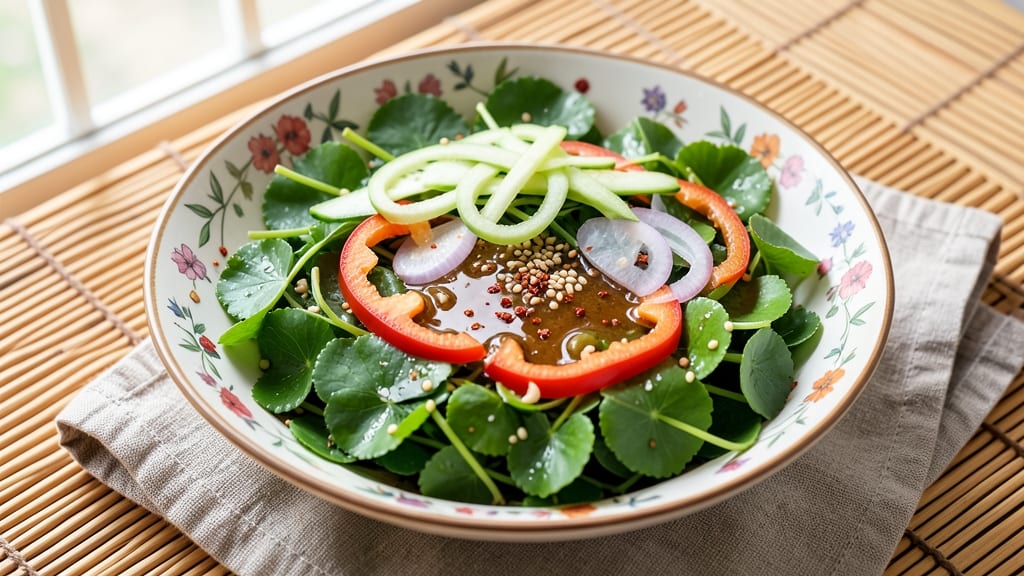
This Burmese pennywort salad recipe brings vibrant Southeast Asian flavors to your table with a perfect balance of tangy, herbal, and crunchy elements. The secret lies in the tamarind-lime dressing—a zesty blend that brightens the earthy pennywort leaves while preserving their natural freshness.
I’ve perfected this dish over years of experimenting with traditional Burmese techniques, ensuring every bite delivers authentic taste without compromising simplicity.
The salad combines tender pennywort leaves with crisp vegetables, aromatic herbs, and a dressing that marries tamarind’s deep tang with lime’s refreshing bite. Unlike typical Western salads, this dish relies on bold, layered flavors rather than heavy creams or dressings.
The result? A refreshing, vegetarian-friendly meal that’s as satisfying as it is visually striking.
What makes this recipe stand out is its versatility—serve it as a light lunch, a side dish, or even a refreshing appetizer. The tamarind-lime dressing can be adjusted to your taste, and the pennywort’s mild bitterness pairs beautifully with chili, garlic, or toasted peanuts.
Each ingredient plays a crucial role, transforming simple produce into a dish that feels both rustic and refined.
The key to success is proper preparation: washing the pennywort thoroughly and letting the dressing mellow for at least 15 minutes before tossing. This ensures the flavors meld seamlessly, creating a salad that’s as delicious as it is easy to prepare.
Ready to experience Burmese cuisine in a fresh, modern way?
Ingredients for burmese pennywort salad
Fresh pennywort and crisp veggies meet a tangy tamarind-lime dressing for a Burmese-inspired salad bursting with herbal crunch and bold flavors.
| Ingredient | Amount | Notes |
|---|---|---|
| Fresh Pennywort Leaves 🌿 | 5 oz | Washed thoroughly, stems trimmed |
| Red Bell Pepper 🧅 | ½ whole | Thinly sliced, seeds removed |
| Cucumber 🥒 | 1 whole | English or Persian, thinly sliced |
| Shallots 🧅 | 3 cloves | Minced finely for dressing |
| Garlic Cloves 🧄 | 3 cloves | Minced for dressing |
| Tamarind Paste 🍯 | 2 tbsp | Unsweetened, high quality |
| Fresh Lime Juice 🍋 | ¼ cup | Strained for smooth texture |
| Fish Sauce Substitute 🍶 | 1 tbsp | Soy sauce or vegan fish sauce |
| Toasted Peanuts 🥜 | ¼ cup | Crushed for garnish |
| Fresh Thai Basil 🌿 | ¼ cup | Chopped for garnish |
| Red Chili Peppers 🌶️ | 2 whole | Thinly sliced, optional heat |
| Sesame Oil 🫒 | 1 tbsp | Toasted for aroma |
| Coconut Aminos 🥄 | 1 tbsp | For umami depth |
| Iceberg Lettuce 🥬 | 4 cups | Shredded for crunch base |
| Sesame Seeds 🌾 | 1 tbsp | Toasted for garnish |
Pennywort is the star here—look for vibrant green leaves at Asian markets or well-stocked grocery stores. The fresher, the better; avoid any leaves with yellowing or wilted spots. For the tamarind paste, Thai Kitchen brand is my go-to—it's unsweetened and packed with authentic flavor. If you can't find tamarind paste, substitute 1 tbsp lemon juice plus 1 tsp maple syrup, but it won't be exactly the same. The Thai basil adds that signature Burmese aroma, so don't skip it if you can find it—Asian grocery stores usually carry it fresh.
No fish sauce? Soy sauce or vegan fish sauce works perfectly—just remember it'll be slightly saltier, so adjust other seasonings accordingly. The red chili peppers are optional but recommended; if you want to dial back the heat, reduce to 1 chili or use half a chili. For the peanuts, toast them in a dry pan for 3-4 minutes until fragrant—this brings out their nuttiness. The coconut aminos adds that umami kick that makes this salad taste restaurant-quality; Trader Joe's sells it in a bottle if you can't find it at Asian markets.
This salad keeps best for 2 days in the fridge, but the dressing separates after that, so plan to eat it fresh. Store the pennywort and veggies separately from the dressing—they'll stay crisp longer. For serving, toss everything together right before eating so the leaves stay vibrant. The dressing can be made 1 day ahead and stored in a sealed jar; just give it a good shake before using. Garnish with toasted sesame seeds and crushed peanuts right before serving—that's when it looks most impressive.
Why You'll Love This Recipe
- No Knife Skills Needed: I swear, this salad takes zero fancy chopping. Tear the pennywort leaves by hand—no precision required—and slice the cucumber and bell pepper into thick, uneven pieces. The shallots and garlic? Just mince them fast or use a food processor if you’re in a rush. Honestly, it’s the kind of recipe where you can still make it taste amazing even if your knife work looks like a toddler’s.
- Tangy Crunch Perfection: That bright, almost citrusy bite from the pennywort leaves? It’s ridiculously good with the crisp cucumber and sweet red bell pepper. The minced shallots add a sharp little punch, and the garlic—when toasted just until fragrant—ties it all together with warmth. Between us, it’s the kind of flavor combo that makes you want to eat it straight from the bowl with your hands.
- Lunchbox or Party Table: This salad holds up everywhere. Pack it in a jar for work—it’ll still taste fresh by afternoon—or serve it at a potluck where it’ll disappear faster than the chips. I’ve even used it as a base for wraps when I’m lazy, or tossed it with grilled fish for a no-fuss dinner. It’s the kind of dish that works just as well in a bento box as it does on a big platter.
- Pantry-Friendly & Frugal: You’re not hunting for obscure ingredients here—the pennywort might be the star, but everything else is basic. Shallots, garlic, cucumbers, bell peppers? Stuff you already have or can grab for pennies. And the leftovers? They keep brilliantly in the fridge for days, so you’re not stuck tossing food. I’ll be real: this is my go-to when I’m trying to eat healthy without breaking the bank.
Step-by-step instructions for Burmese pennywort salad
Here's how to assemble this vibrant, tangy salad with perfect texture and balance.
Prepare the Base Ingredients
Start by washing the 5 oz fresh pennywort leaves thoroughly and trimming any thick stems. Lay them on a clean kitchen towel to dry completely—this prevents a soggy salad. Next, thinly slice the 0.5 whole red bell pepper and 1 whole cucumber, removing seeds from the pepper first. For the lettuce, shred the 4 cups iceberg lettuce into bite-sized pieces and place them in a large bowl.
If using the 2 whole red chili peppers, slice them thinly and set aside. The heat is optional but adds wonderful depth to the dish. I like to taste one slice first to gauge the spice level—adjust as needed. Keep all prepared ingredients separate until ready to assemble.
Make the Tangy Tamarind-Lime Dressing
In a small bowl, combine the 2 tbsp tamarind paste, 0.25 cup fresh lime juice, 1 tbsp fish sauce substitute, and 1 tbsp coconut aminos. Whisk vigorously until the tamarind paste dissolves completely—this creates a smooth, cohesive dressing. The mixture should be thick but pourable, with a vibrant golden hue.
Next, add the 1 tbsp toasted sesame oil and mix well. The oil adds richness and helps emulsify the dressing. Taste and adjust seasoning—you want a perfect balance of sweet, sour, salty, and umami. If needed, add a splash more lime juice or a pinch of salt to refine the flavor. Set the dressing aside while you prepare the remaining ingredients.
Create the Herbal Crunch Topping
In a separate small bowl, finely mince the 3 cloves shallots and 3 cloves garlic cloves using a sharp knife or microplane. Add these to a mortar and pestle with the 0.25 cup toasted peanuts and crush lightly to create texture. This step adds depth and crunch to every bite—don't over-crush or the peanuts will turn to paste.
Stir in the 0.25 cup fresh Thai basil, chopped finely, and set aside. The basil's bright aroma will infuse the salad as you assemble it. If you're using the sliced red chili peppers, add them to this mixture now. The combination of peanuts, basil, and chili creates a perfect textural and flavor contrast to the crisp salad base.
Assemble the Salad
Gently toss the shredded iceberg lettuce with half of the prepared dressing, reserving the rest for later. Add the pennywort leaves and thinly sliced red bell pepper and cucumber to the bowl. Toss lightly just until everything is evenly distributed—you want to preserve the crispness of the vegetables.
Divide the salad among 4 serving plates or a large platter. Spoon the remaining dressing over the top, then sprinkle with the peanut-basil-chili mixture. Finish with the 1 tbsp toasted sesame seeds for added crunch and visual appeal. The contrast of textures—crisp lettuce, tender pennywort, crunchy peanuts—makes this salad truly special.
Pro Tips For Making Burmese Pennywort Salad
- STRIP THE STEMS: Pennywort leaves have thick stems that stay bitter and chewy—no one wants that. Use kitchen shears or a sharp knife to slice off the main stem at the base, then stack leaves and roll them tightly before slicing into thin ribbons. This keeps your salad tender and uniform, not a mouthful of tough fibers.
- SWEAT SHALLOTS LOW: I learned this the hard way—crisping shallots in oil turns them bitter. Instead, cook them in a dry pan over medium-low heat for 5-6 minutes, stirring often, until they’re soft and golden. Add a splash of water if they start sticking; they’ll caramelize just enough to add depth without overpowering the freshness.
- SAVE THE SEEDS: Red bell pepper seeds are bitter, but the membranes? They’re where the heat hides. Scoop out seeds first, then slice the membrane away from the inner wall before dicing. Your salad stays bright and crisp, not muddled with a sneaky burn. (Yes, even if you’re impatient like me.)
- CHILL THE GARLIC: Raw garlic cloves can taste sharp and harsh straight from the jar. Toss them in ice water for 10 minutes before mincing—it mellows the flavor and keeps them from turning bitter when mixed with acidic ingredients. Trust me, your salad’s dressing will thank you.
Essential equipment for great burmese pennywort salad
Must-Have Tools
Start with a sharp chef's knife—I use a Wüsthof 8-inch—for cleanly slicing cucumbers, bell peppers, and shallots. A microplane is perfect for finely grating garlic and shallots without overpowering the dressing.
For the peanut-basil topping, a mortar and pestle creates the ideal texture, but a small bowl and fork work in a pinch. 🔪
Dressing Essentials
Whisking the tamarind-lime dressing requires a small mixing bowl and a whisk—I prefer OXO Good Grips for its sturdy handle. A measuring spoon set ensures precise amounts of tamarind paste and sesame oil.
For straining lime juice, a fine-mesh strainer removes pulp and keeps the dressing smooth. A small jar with a lid stores leftovers perfectly.
Prep Work Station
A large mixing bowl (at least 8-quart capacity) holds all salad components without crowding. A kitchen towel dries pennywort leaves efficiently, while a cutting board with a non-slip mat prevents ingredients from sliding during prep.
I keep a small bowl nearby for the peanut-basil topping to avoid cross-contamination with raw ingredients.
Garnish Tools
Toast sesame seeds in a small non-stick skillet over medium-low heat for 1-2 minutes until fragrant. A spoon or spatula helps distribute them evenly. For crushed peanuts, a rolling pin works well if you don’t have a mortar and pestle.
A small serving spoon makes plating the peanut-basil mixture effortless and precise. ✨
Storage Containers
Store leftovers in airtight glass containers—I love Le Parfait 16-ounce jars—to keep ingredients fresh for up to 2 days. Keep the dressing separate until ready to serve.
For long-term storage, freeze the dressing in ice cube trays and transfer cubes to a freezer bag for single-serving convenience. Label everything clearly to avoid mix-ups!
Nutrition facts
Frequently asked questions
What's the best way to find fresh pennywort leaves?
Look for vibrant green pennywort at Asian markets or well-stocked grocery stores with fresh produce sections. The leaves should be crisp with no yellowing or wilted spots. If you can't find it fresh, some specialty stores sell it pre-packaged in the refrigerated section near other leafy greens.
Can I substitute tamarind paste in the dressing?
Yes! For a quick substitute, mix 1 tbsp lemon juice with 1 tsp maple syrup to mimic tamarind's tangy-sweet profile. However, the flavor won't be identical—tamarind adds a unique depth that's hard to replicate. If you love the dressing, invest in a small block of tamarind pulp to make your own paste.
How spicy should the chili be in this salad?
The recipe suggests 2 whole red chili peppers, but you can adjust based on preference. For mild heat, reduce to 1 chili or half a chili. Taste a slice first to gauge spice level—this helps balance the dressing's tanginess with your desired heat level. Remember, the peanuts and coconut aminos will mellow the overall spiciness.
Is this salad gluten-free?
Yes, this recipe is naturally gluten-free! All ingredients—pennywort, vegetables, tamarind, lime, coconut aminos, peanuts, and sesame—are gluten-free. Just double-check your tamarind paste and fish sauce substitute labels to ensure they don't contain hidden gluten. The salad's base ingredients are completely safe for gluten-sensitive diets.
Can I make this salad ahead of time?
Prepare the dressing 1 day ahead and store it in a sealed jar. Keep the pennywort and vegetables separate until ready to serve to maintain crispness. When ready to eat, toss everything together just before serving—this keeps the leaves vibrant and prevents sogginess. The peanut-basil topping can be made 2 days ahead and stored in an airtight container.