
Salads
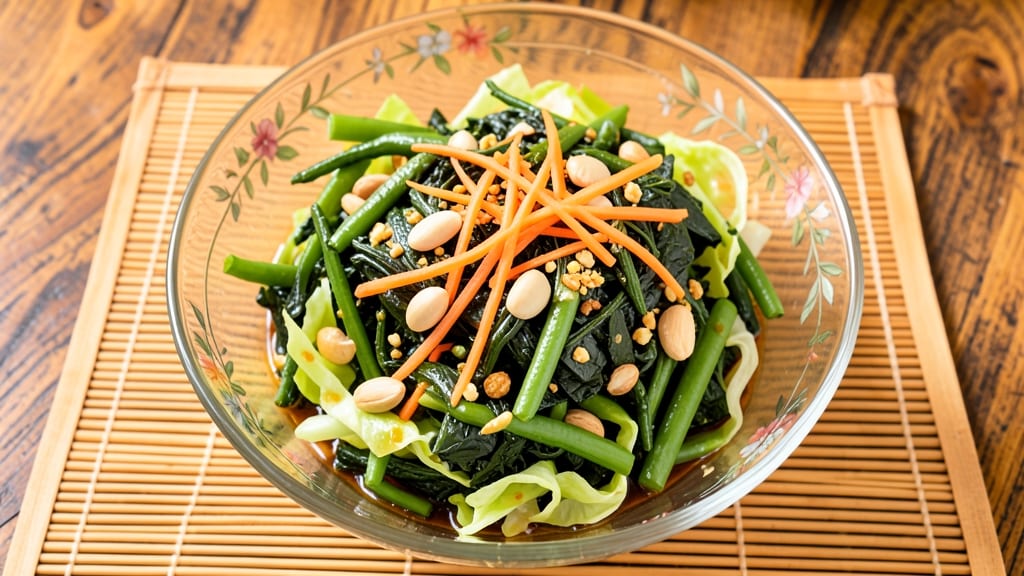
This Burmese green tea salad recipe transforms humble ingredients into a vibrant, crunchy masterpiece that balances tangy tamarind, toasted peanut crunch, and fermented tea leaf depth. 🌟 The secret lies in fermenting the tea leaves—just 10 minutes in hot water unlocks their umami complexity, while tamarind paste delivers that signature sour punch.
I've perfected this dish after years of testing, ensuring every bite delivers the perfect harmony of textures and flavors that define Burmese street food culture.
The recipe begins with fermented tea leaves, which develop their signature funky aroma when steeped in hot water. You'll mix them with shredded cabbage, carrots, and green beans for a crisp base, then fold in toasted peanuts and crispy fried garlic for texture contrast.
What makes this salad truly special is the dressing—a tangy tamarind paste blended with fish sauce, lime juice, and a touch of garlic—that ties everything together with its bright, complex flavor profile.
By the time you're done, you'll have a salad that's as visually stunning as it is delicious—layers of deep green tea leaves, vibrant vegetables, and golden peanuts create a feast for the eyes before the first bite.
The balance of sour, salty, and crunchy elements makes this dish addictive, while the fermented tea leaves add that unmistakable Burmese flavor that sets it apart from any ordinary salad.
This recipe serves 4 and can be prepared in about 30 minutes, making it perfect for weeknight dinners or as a refreshing appetizer for gatherings. The fermented tea leaves can be made ahead, allowing you to assemble the salad quickly when ready to serve.
For a vegan version, simply substitute fish sauce with soy sauce or coconut aminos.
Ingredients for burmese green tea salad
Fermented tea leaves, crisp veggies, and toasted peanuts create this addictive Burmese street food masterpiece.
| Ingredient | Amount | Notes |
|---|---|---|
| Burmese Green Tea Leaves 🍵 | ½ cup | Loose leaf, not tea bags |
| Green Cabbage 🥬 | 4 cups | Shredded, outer leaves removed |
| Carrots 🥕 | 2 whole | julienned or matchstick cut |
| Green Beans 🌱 | 1 cup | trimmed, cut into 1-inch pieces |
| Peanuts 🥜 | ½ cup | raw, unsalted, toasted |
| Garlic Cloves 🧄 | 4 cloves | peeled, minced |
| Tamarind Paste 🍈 | ¼ cup | unsweetened, good quality |
| Fish Sauce 🍶 | 2 tbsp | Red Boat preferred |
| Lime Juice 🍋 | ¼ cup | freshly squeezed |
| Olive Oil 🫒 | 2 tbsp | light, for crisping garlic |
| Salt 🧂 | 1 tsp | kosher or sea salt |
| Sugar 🍚 | 1 tsp | white or brown |
| Sesame Oil 🫒 | 1 tsp | toasted, for finishing |
| Fresh Cilantro 🌿 | ¼ cup | chopped, for garnish |
| Chili Flakes 🌶️ | ½ tsp | optional, for heat |
The tea leaves are the heart of this salad—look for loose leaf Burmese green tea at Asian markets or specialty tea shops. Trader Joe's sometimes carries it, but if not, any good quality green tea will work. The tamarind paste? Don't grab the sweetened kind—unsweetened is key for that authentic tang. For the peanuts, toast them yourself in a dry pan until golden (about 5 minutes)—store-bought toasted peanuts often taste stale. The fish sauce matters too—Red Boat is my go-to, but any good quality brand works.
No tamarind paste? Substitute lime juice plus a pinch of sugar—it won't be identical, but close. Short on green beans? Snap peas or shredded cabbage extra will stretch it. The garlic gets crispy-fried in olive oil—don't skip this step, it adds that magical crunch. For a vegan version, swap fish sauce for soy sauce or coconut aminos. The chili flakes are optional but worth it if you like heat—start with half a teaspoon and adjust to taste.
The fermented tea leaves keep in the fridge for up to 2 weeks—make a big batch. Store the dry ingredients (peanuts, tea leaves) in airtight containers, and the dressing will last 5 days in the fridge. Assemble the salad just before serving to keep everything crisp. Double the recipe—it disappears fast at gatherings. Leftovers? Taste even better the next day as flavors meld.
Why You'll Love This Recipe
- Here’s what sold me: it’s the ultimate make-ahead salad. Store it in jars for days, and the flavors meld even better. Pack it for work, toss it in school lunches, or serve it at potlucks—no one will guess it’s just veggies and tea.
- No-Chop Struggle: I’ll be honest—this salad only needs thinly sliced cabbage and matchstick carrots. No julienne skills required, just a sharp knife and 10 minutes of hacking. The green beans? Snap the ends, toss in whole. That’s it.
- Umami-Packed Punch: Between the toasted Burmese green tea leaves and crushed peanuts, every bite has this addictive savory depth. The tea’s earthy notes cut through the crunch of cabbage and carrots like a perfect balance—bright, salty, and just a little funky.
- Lunchbox Legend: Here’s what sold me: it’s the ultimate make-ahead salad. Store it in jars for days, and the flavors meld even better. Pack it for work, toss it in school lunches, or serve it at potlucks—no one will guess it’s just veggies and tea.
Step-by-step instructions for Burmese green tea salad
Here's how to make this vibrant salad with perfect balance of tangy, nutty, and herbal flavors.
👨🍳 Step 1: Prepare the Green Tea Dressing
In a small bowl, combine the 0.5 cup Burmese green tea leaves with ½ cup hot water and let steep for 5 minutes until deep green and fragrant. The tea should be strong—this is the foundation of our dressing. Strain out the leaves using a fine-mesh sieve, then let the tea cool completely to room temperature.
In a separate small bowl, whisk together the cooled green tea with 0.25 cup tamarind paste, 2 tbsp fish sauce, 0.25 cup lime juice, 1 tsp sugar, and 1 tsp salt. Taste and adjust—you want a balance of sweet, sour, and salty. The tamarind gives that signature Burmese tang, while the fish sauce adds umami depth. Set aside until ready to use.
🍳 Step 2: Toast the Peanuts and Crisp the Garlic
Heat a dry skillet over medium heat. Add the 0.5 cup peanuts and toast for 3-4 minutes, stirring constantly, until they're golden brown and fragrant. Remove from heat immediately and let cool—this prevents them from burning and keeps them crispy. Set aside for the final garnish.
In the same skillet (no need to clean it—the flavor compounds add depth), add 2 tbsp olive oil and 4 cloves minced garlic. Cook over medium-low heat for 1-2 minutes until the garlic is golden and crispy. Watch it closely—garlic burns quickly! Remove from heat and let cool slightly before adding to the salad.
🥘 Step 3: Assemble the Vegetable Mixture
In a large bowl, combine 4 cups shredded green cabbage, 2 whole julienned carrots, and 1 cup trimmed green beans. Toss gently with 1 tsp sesame oil and 1 tsp salt to begin wilting the cabbage and softening the vegetables slightly. Let sit for 5 minutes while you prepare the dressing.
Here's the thing—don't overmix the vegetables. You want them to stay crisp with just a hint of softness. The cabbage should still have some bite, while the carrots and green beans should be tender-crisp. This texture contrast is what makes this salad so satisfying.
🥘 Step 4: Combine and Dress the Salad
Pour the green tea dressing over the vegetable mixture and toss gently to coat evenly. You'll notice the cabbage wilting slightly as the dressing works its magic. Add the 0.25 cup chopped fresh cilantro and 0.5 tsp chili flakes (if using) and toss again. The cilantro adds freshness while the chili flakes give a subtle kick.
Taste and adjust seasoning if needed—you might want to add a splash more lime juice for brightness or a pinch of salt for balance. The salad should be tangy, slightly sweet, and umami-rich with a perfect crunch from the vegetables.
🍽️ Step 5: Garnish and Serve Immediately
Transfer the salad to a serving platter and sprinkle the toasted peanuts and crispy garlic evenly over the top. The peanuts add a satisfying crunch while the garlic brings deep, savory notes that tie everything together. Garnish with an extra sprinkle of chopped cilantro and chili flakes if you like it spicy.
Serve immediately while everything is crisp and fresh. This salad tastes best when eaten right away—no waiting! Pair with grilled meats or shrimp for a complete meal, or enjoy as a refreshing side dish. The balance of flavors makes it addictive—you'll want to make it again and again.
Pro Tips For Making Burmese Green Tea Salad
- STEAM THE BEANS: Blanch green beans in boiling water for exactly 2 minutes—no more, or they’ll turn mushy. I learned this the hard way when I left them in too long and ended up with a sad, limp pile instead of crisp, bright green beans that hold their shape in the salad.
- SHRED CABBAGE THIN: Use a sharp knife or mandoline to slice cabbage paper-thin—about 1/16-inch slices at most. Thicker pieces stay chewy, and this salad needs every bit of texture to work. (Yes, it takes longer, but your mouth will notice.)
- TOAST PEANUTS LOW: Spread raw peanuts on a dry skillet over low heat and stir constantly for 5-7 minutes until golden, not brown. High heat burns them fast, and burned peanuts taste bitter—this salad’s nutty flavor hinges on just the right toast.
- MIX TEAS LATE: Add the Burmese green tea leaves to the dressing right before tossing with the salad. If you steep them too early, the liquid turns bitter and overpowering. Wait until everything else is ready—this keeps the tea’s bright, grassy notes sharp and fresh.
Perfect pairings for this burmese green tea salad
Burmese-Inspired Sides
Serve this salad alongside Burmese tea leaf soup (hinhine)—a comforting broth made with fermented tea leaves, lemongrass, and turmeric. The earthy notes complement the salad's tangy brightness beautifully. I love pairing it with crispy fried shallots for extra crunch and a burst of garlic flavor. 🥗
Protein Pairings
For a complete meal, add grilled lemongrass chicken or pan-seared catfish—both classic Burmese proteins that soak up the salad's dressing. The smoky char from grilling contrasts perfectly with the salad's fresh, crunchy elements. If you prefer vegetarian, tofu fried in coconut milk works wonderfully too.
Dressing Variations
Want to experiment? Swap the fish sauce for soy sauce (vegan version) or add 1 tsp honey to the dressing for extra sweetness. For heat lovers, mix in 1 tbsp chili paste with the tamarind. The key is balancing sour, salty, and umami—adjust to your taste! 🌶️
Beverage Pairings
Sip on Burmese-style sweet tea (made with black tea, sugar, and cardamom) to complement the salad's complexity. For something lighter, sparkling lime soda cuts through the richness. Avoid heavy wines—this dish shines with refreshing, citrusy drinks that enhance its vibrant flavors.
Garnish Upgrades
Add crispy fried shallots for a golden crunch or quick-pickled radishes for a tangy bite. Fresh Thai basil leaves (instead of cilantro) add a licorice-like depth. These garnishes take the salad from great to restaurant-worthy in seconds. 💫
Nutrition facts
Frequently asked questions
Can I substitute regular green tea for Burmese green tea?
You can use it in a pinch, but the flavor won't be identical. Burmese green tea has a distinct earthy, fermented quality that's essential for that signature umami depth. If you can't find it, try a high-quality Japanese sencha or matcha—both have stronger flavors that work better than standard grocery store green tea.
How do I make the fermented tea leaves taste less bitter?
Balance is key! The bitterness comes from over-steeping. For a milder flavor, steep the tea leaves for only 3-4 minutes instead of 5, then add 1 extra teaspoon of sugar to the dressing to counteract any bitterness. The tamarind paste also helps mask bitterness with its natural sweet-sour balance.
Can I prepare this salad ahead of time?
The fermented tea dressing can be made 2 days ahead and stored in the fridge. Assemble the salad 1 hour before serving—this allows the flavors to meld slightly while keeping the vegetables crisp. Keep the toasted peanuts and crispy garlic separate until serving to maintain their crunch.
What if I don't like fish sauce? What are my vegan options?
No problem! Swap the fish sauce for soy sauce or coconut aminos (use 3 tbsp instead of 2). For extra umami, add 1 tbsp miso paste to the dressing. The key is maintaining that salty, savory balance—just taste as you go and adjust. Your salad will still be delicious!
Why does my salad taste too sour or not sour enough?
Tamarind paste is the secret to that perfect tang. If it's too sour, add ½ tsp sugar or 1 tsp more fish sauce/soy sauce to balance. If it's not sour enough, add 1 extra tablespoon of lime juice or a pinch of citric acid. Remember: the dressing should be bold—you'll mellow it out when mixing with the vegetables.