
Side Dishes
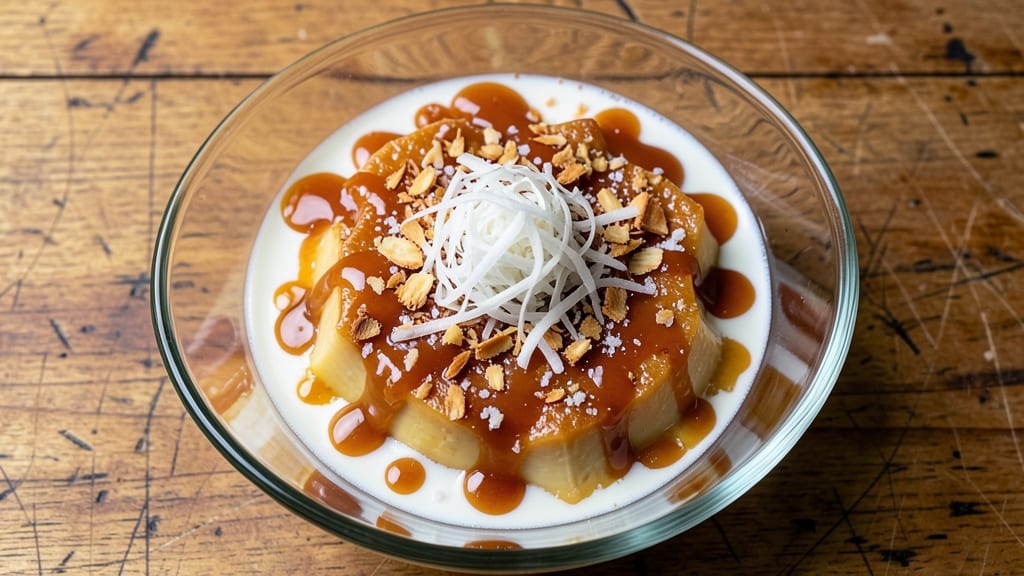
This Filipino-style buko salad delivers the perfect balance of creamy, chewy nata de coco and sweet coconut milk, a beloved dessert that transports you straight to the Philippines. 💛 The secret lies in soaking the buko (shredded coconut gel) just long enough to soften without losing its signature texture, then layering it with leche flan, latik (toasted coconut flakes), and a touch of evaporated milk for that signature creamy richness.
What makes this recipe special is the harmony of textures—chewy buko, crispy latik, and silky flan pieces all suspended in a sweet, coconut-infused cream. The dish is traditionally served chilled, making it ideal for hot afternoons or as a refreshing finale to Filipino feasts.
While classic versions use dairy, I've included a vegan adaptation using coconut milk for those who prefer plant-based options.
The assembly is where the magic happens: draining the buko thoroughly, mixing it with sweetened condensed milk, and topping it with the right balance of creamy leche flan and crunchy latik.
The result is a dessert that's both nostalgic and impressive—creamy, satisfying, and packed with that unmistakable Filipino comfort.
Perfect for gatherings, potlucks, or as a standalone treat, this buko salad is a crowd-pleaser that never fails to disappear quickly. Let's get started on creating this beloved Filipino classic in your own kitchen.
Ingredients for buko salad recipe filipino style
Six ingredients transform into this beloved Filipino dessert—creamy, chewy, and nostalgic in every bite.
| Ingredient | Amount | Notes |
|---|---|---|
| Nata de Coco (Coconut Gel) 🥥 | 14 oz | Pre-soaked, drained well |
| Sweetened Condensed Coconut Milk 🥥 | 1 ½ cups | Or sub 1 can (14 oz) sweetened condensed milk |
| Leche Flan (Caramel Custard) 🍮 | 2 cups | Store-bought or homemade, cubed |
| Latik (Toasted Coconut Flakes) 🥥 | 1 cup | Homemade or store-bought |
| Evaporated Coconut Milk 🥥 | 1 cup | Full-fat for creaminess |
| Granulated Sugar 🍚 | ½ cup | Adjust to taste |
| Vanilla Extract 🌿 | 1 tsp | Pure, high-quality |
| Coconut Cream 🥥 | ¼ cup | For extra richness |
| Lime Juice 🍋 | 1 tbsp | Freshly squeezed |
| Salt 🧂 | ¼ tsp | Fine sea salt |
| Gelatin (Vegetarian) 🍬 | 1 tsp | Agar-agar for vegan option |
| Water 💧 | ¼ cup | For gelatin mixture |
The nata de coco is the star—look for bright, translucent strands at Filipino markets or Asian grocery stores like 99 Ranch or H Mart. If you can't find pre-soaked, soak it in water for 15 minutes before using. For latik, homemade is ideal (toast fresh coconut flakes until golden), but store-bought works in a pinch. The leche flan should be silky—if making your own, use 2 egg yolks per 1 cup milk for that signature texture. Evaporated coconut milk adds depth, but full-fat coconut milk works if that's all you have.
No nata de coco? Shredded coconut soaked in coconut milk (drained well) mimics the texture. Running short on leche flan? Coconut pudding or custard blends seamlessly. The gelatin is optional but adds that signature jiggle—agar-agar makes it vegan-friendly. For extra sweetness, boost the sugar by 0.25 cup, but trust your taste buds. The lime juice brightens the coconut flavor, so don’t skip it. If you’re using store-bought latik, check for added sugar—some brands sweeten heavily, so adjust accordingly.
Assemble this dessert at least 4 hours ahead—the flavors meld beautifully when chilled. Store leftovers in an airtight container for up to 5 days in the fridge. For a vegan version, swap the gelatin for agar-agar and use coconut milk instead of evaporated milk. Double the batch for gatherings—this disappears fast, especially when topped with extra latik and a sprinkle of toasted coconut flakes right before serving.
Why You'll Love This Recipe
- No Chopping Needed: I swear by this—just drain the nata de coco, slice the leche flan, and fold in the laatik. The only "work" is stirring, and even my 10-year-old could handle it.
- Coconut Overload (Best Kind): That perfect chewy-crunchy nata de coco soaking in sweetened condensed milk? Heaven. Add the creamy leche flan and toasted laatik, and you’ve got a dessert that tastes like a tropical vacation in every bite.
- Party Dessert Zero Effort: Serve it chilled in a big bowl for birthdays or family gatherings—no plates, no mess, just scoop-and-enjoy. Honestly, it’s my go-to for lazy Sundays or last-minute celebrations.
- Leftovers? More Like Second Helpings: This stuff keeps for days in the fridge, tasting even better as the flavors meld. I’ll be real: I’ve eaten it straight from the fridge at 2 AM and never regretted it. Budget-friendly? Absolutely.
Step-by-step instructions for buko salad Filipino style
Here's how to create that perfect creamy texture and satisfying crunch everyone loves.
👨🍳 Step 1: Prepare the Coconut Cream Base
In a medium bowl, combine the 1 cup evaporated coconut milk, 1.5 cups sweetened condensed coconut milk, 0.25 cup coconut cream, and 0.5 cup granulated sugar. Whisk vigorously until completely smooth and well blended. This mixture forms the creamy foundation of your buko salad—don't skip the whisking as it ensures no lumps remain.
Next, add the 1 tsp vanilla extract and 1 tbsp lime juice, mixing well to incorporate. The lime juice brightens the naturally sweet flavors while the vanilla adds depth. Taste the mixture and adjust the sugar to your preference—Filipino buko salad balances sweetness with just enough tartness to keep it interesting.
🥘 Step 2: Dissolve the Gelatin for Silky Texture
In a small bowl, sprinkle the 1 tsp gelatin over the 0.25 cup water and let it sit for 5 minutes until it begins to absorb the liquid. This creates a gel-like consistency that will give your salad that signature smooth texture. Once softened, gently heat the mixture in the microwave for 10-15 seconds—just enough to fully dissolve the gelatin without cooking it.
Allow the dissolved gelatin to cool slightly (2-3 minutes), then stir it into the coconut cream mixture. This step is crucial for achieving that signature creamy, almost pudding-like consistency. The gelatin will thicken as it cools, so don't worry if it looks too thin now—it will set properly in the refrigerator.
🥘 Step 3: Combine All Ingredients for Perfect Layering
In a large mixing bowl, gently fold in the 14 oz nata de coco (pre-soaked and drained well) using a silicone spatula. Work carefully to avoid breaking the delicate strands—you want them to maintain their signature jelly-like texture. Next, add the 2 cups leche flan (cubed) and 1 cup latik (toasted coconut flakes), distributing them evenly throughout the mixture.
The leche flan adds rich caramel notes while the latik provides that satisfying crunch. For best results, fold these ingredients in just before serving to preserve their textures. If you prefer a more even distribution, give the mixture one final gentle stir to combine everything beautifully.
⏰ Step 4: Chill and Set for Optimal Texture
Transfer the buko salad to a serving bowl or individual glasses and refrigerate for at least 2 hours—this allows the gelatin to fully set and the flavors to meld together. The longer it chills (up to 4 hours), the creamier it becomes. I like to press down on the top with a spatula to ensure everything settles evenly.
When ready to serve, give the salad a gentle stir to redistribute the ingredients. The nata de coco should maintain its jelly-like texture, the leche flan cubes should be slightly softened but still hold their shape, and the latik should provide that delightful crunch with every bite. Serve chilled for the perfect creamy, refreshing experience.
Pro Tips For Making Buko Salad Recipe Filipino Style
- Drain Nata Properly: After soaking nata de coco, squeeze out every last drop of water with paper towels or a clean kitchen towel—don’t just shake it. Wet strands make your salad soggy, and nobody wants a mushy buko dessert. I learned this the hard way after serving a batch that turned into a puddle.
- Toast Latik Low: Toast your latik slowly over medium-low heat, stirring constantly, until it’s golden but not burnt—about 3-4 minutes. Rushing it turns it bitter, and you’ll taste the difference. Use a nonstick pan and keep a lid nearby to catch any stray flakes (they’re too good to waste).
- Chill Leche Flan First: Cut your leche flan into small cubes and refrigerate them for 15-20 minutes before adding to the salad. Cold flan melts slower, keeping your buko salad creamy and intact. Skip this, and you’ll end up with a runny, sad mess by the time you serve it.
- Mix Last Minute: Combine all ingredients just before serving—no earlier. The nata de coco absorbs liquid over time, so tossing everything together 30 minutes ahead turns your perfect texture into a watery disappointment. Stir gently, like you’re folding in a delicate cloud.
Wine and beer pairings for this dish
Filipino Dessert Wines
For a true taste of the Philippines, pair your buko salad with Lambanog—a local coconut vodka made from fermented coconut sap. While not a wine, its sweet coconut flavor complements the dish beautifully.
If you want a traditional wine pairing, try a Moscatel from Spain, which shares similar floral and honeyed notes that enhance the coconut and caramel flavors. 🍷
Coconut Milk Cocktails
Craft a Piña Colada with Malibu coconut rum, pineapple juice, and coconut cream for a refreshing sip that mirrors buko salad’s tropical essence. For a non-alcoholic option, blend coconut milk, mango puree, and lime juice into a creamy mocktail.
Both drinks highlight the dessert’s coconut-forward profile while keeping the experience light and refreshing.
Light Beer Pairings
Opt for a crisp Filipino lager like San Miguel Light or Red Horse—their clean, slightly sweet profiles won’t overpower the dessert’s delicate flavors. For a craft beer twist, try a Belgian Witbier (like Hoegaarden), whose coriander and citrus notes cut through the coconut’s richness.
Avoid heavy stouts or IPAs, as their bold flavors can clash with the salad’s creamy texture. 🍺
Coffee or Tea Finish
End your meal with a Filipino-style coffee like Barako or Espresso con Leche, which balances the dessert’s sweetness with a bold, slightly bitter finish. For tea lovers, hibiscus tea (sarsapilla) adds a tangy contrast that cleanses the palate.
Both options are traditional in Filipino dining and elevate the overall experience.
Vegan-Friendly Pairings
If serving the vegan version, pair it with coconut-infused white wine (like Viognier) or a sparkling cider to complement the coconut milk’s creaminess. For cocktails, a virgin piña colada or coconut mojito (made with coconut water and mint) keeps the tropical theme intact while staying alcohol-free. 🌿
Nutrition facts
Frequently asked questions
What's the secret to keeping nata de coco chewy instead of mushy? Never over-soak the nata de coco! Soak it for just 10-15 minutes in water before draining thoroughly. When mixing with the coconut cream base, use a silicone spatula to gently fold it in—never stir vigorously or the strands will break. Also,
Can I make buko salad without leche flan?
Swap the leche flan for coconut pudding, coconut custard, or even coconut jelly to maintain the creamy texture. For a tropical twist, try mango cubes or guava slices instead. The key is keeping the topping creamy and slightly chewy to complement the nata de coco. Just reduce the coconut cream base by 0.5 cup if using extra toppings.
Why did my buko salad turn out too watery? This usually happens when the gelatin isn't dissolved properly or the salad wasn't chilled long enough.
How do I make this recipe vegan?
Replace the gelatin with 1 tsp agar-agar (boiled in 0.25 cup water for 3 minutes), and use coconut milk instead of evaporated milk. Keep all other ingredients the same—this version will still be creamy and delicious! For extra richness, add 0.25 cup coconut cream to the base. The texture will be slightly firmer but equally satisfying.
Can I prepare buko salad ahead of time?
This dessert actually tastes better when made a day ahead! Store it in an airtight container in the fridge for up to 5 days. The flavors meld beautifully over time, and the textures become even more perfect. Just give it a gentle stir before serving to redistribute the ingredients. For parties, assemble it in individual glasses so guests can serve themselves.