
Salads
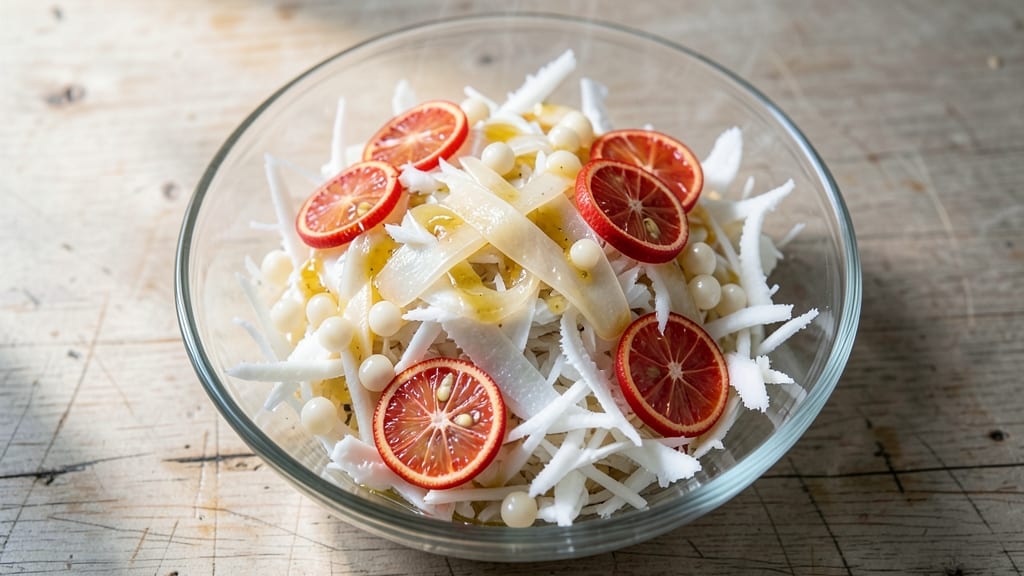
This buko sago gulaman salad recipe delivers the perfect balance of chewy gelatin bites, creamy sago pearls, and refreshing young coconut—all in one tropical masterpiece. The contrast between the jelly-like gulaman, tender sago, and crunchy buko creates a texture experience that’s impossible to resist.
I developed this recipe after years of perfecting the soak times and chilling techniques to ensure every bite is just right.
The secret to this salad’s success lies in the preparation: soaking the gulaman until it reaches that signature chewy texture, boiling the sago until it’s perfectly translucent, and chilling the mixture just enough to set without turning rubbery.
The addition of young coconut adds a natural sweetness that pairs beautifully with the tangy kick of calamansi or vinegar, balancing the overall flavor profile.
What you’ll end up with is a vibrant, refreshing salad that’s as visually stunning as it is delicious. The layers of texture—creamy sago, chewy gulaman, and crunchy buko—make every spoonful satisfying, while the tropical flavors transport you to a sunny afternoon by the beach.
This dish is perfect for gatherings, potlucks, or as a light yet filling dessert.
For an extra touch, top with latik (toasted coconut curls) or leche flan for added richness, or garnish with fresh fruit for a burst of freshness.
The possibilities are endless, but the foundation remains the same: a harmonious blend of textures and flavors that make this salad a crowd-pleaser every time.
Ingredients for buko sago gulaman salad
Sixteen ingredients for a tropical masterpiece that balances chewy gulaman, creamy sago, and refreshing coconut.
| Ingredient | Amount | Notes |
|---|---|---|
| Gulaman (Agar-Agar Strips) 🍬 | ½ lb | Cut into 2-inch pieces |
| Sago Pearls 🍡 | 1 cup | Rinsed and drained |
| Young Coconut (Buko) 🥥 | 2 cups | Diced, fresh or canned |
| Fresh Calamansi Juice 🍋 | ¼ cup | Or lime juice substitute |
| Granulated Sugar 🍚 | ½ cup | Adjust to taste |
| White Vinegar 💧 | 2 tbsp | For tangy balance |
| Water 💧 | 2 cups | For soaking gulaman |
| Latik (Toasted Coconut Curls) 🥥 | ¼ cup | Optional garnish |
| Shredded Coconut 🥥 | ¼ cup | Sweetened preferred |
| Fresh Pineapple Chunks 🍍 | 1 cup | Optional garnish |
| Light Coconut Milk 🥛 | ½ cup | For creaminess |
| Gulaman Powder (Agar-Agar) 🍬 | ½ tbsp | For extra chewiness |
| Salt 🧂 | ½ tsp | Fine sea salt |
| Vanilla Extract 🍃 | ½ tsp | Optional flavor enhancer |
The foundation of this salad lies in the quality of your gulaman and sago. Asian grocery stores carry pre-cut gulaman strips, but if you're using powdered agar-agar, soak it for 10-12 minutes in hot water to achieve that signature chewy texture. Sago pearls should be pre-washed to remove excess starch—most brands at Filipino markets or international aisles are pre-rinsed, but double-check. For young coconut, fresh is ideal, but canned buko in water works perfectly if you're short on time. The key is using ripe coconut
No calamansi? Lime or lemon juice works in a pinch, though the flavor profile will shift slightly. The sugar can be swapped for palm sugar or coconut sugar for a deeper caramel note. For those avoiding coconut milk, light coconut cream adds richness without overpowering. If you're making this ahead, prepare the gulaman and sago mixture first, then assemble with fresh toppings just before serving. The texture contrast is what makes this salad special—never skip soaking the gulaman properly, as it's the star of the dish. For extra chewiness, add the agar-agar powder directly to the boiling water used for the sago pearls. This salad keeps beautifully in the fridge for 3-4 days, though the gulaman may soften slightly. To maintain texture, store components separately—soak the gulaman and boil the sago ahead, then combine with other ingredients just before serving. For a make-ahead dessert, prepare the base mixture without toppings and chill for up to 2 days. Garnishes like latik and pineapple should always be added fresh. If serving to a crowd, double the recipe—this dish is always a hit at gatherings, especially during warm weather when tropical flavors shine.
Why You'll Love This Recipe
- No Boiling Madness: I’ll be real—this salad requires zero babysitting. Soak the gulaman and sago separately, then dump them all together with the buko and sugar. Five minutes later, you’ve got a dessert that looks like it took hours.
- Taste Like Childhood: That first bite? Pure nostalgia—creamy buko, chewy gulaman, and sago’s slight bite, all brightened by calamansi. Honestly, it’s the kind of flavor that makes you pause mid-spoonful and think, "Wait, is this actually dessert?"
- Party in a Bowl: Between us, this is my go-to for birthdays, potlucks, or just because. It’s cold, it’s sweet, it’s always a crowd-pleaser. Plus, you can make it ahead—just toss in the buko last minute so it stays fresh.
- Cheap & Lasts Forever: A single bag of gulaman and sago stretches across three servings. Add buko and sugar, and you’ve got a dessert that costs pennies per portion. Best part? It keeps for days in the fridge—no sad, soggy leftovers here.
Step-by-step instructions for buko sago gulaman salad
This classic Filipino dessert comes together with precise technique and layered textures.
Prepare the Gulaman and Sago Pearls
Cut the 0.5 lb gulaman (agar-agar strips) into 2-inch pieces using kitchen shears. Place them in a saucepan with the 2 cups water and bring to a gentle boil over medium heat. Once boiling, reduce heat to low and simmer for 15 minutes until the strips become translucent and pliable. This is your signal they're properly softened.
In a separate bowl, rinse the 1 cup sago pearls under cold water until the water runs clear. This removes excess starch that would make them gummy. Drain well and set aside. After the gulaman simmers, add the drained sago pearls to the same pot and cook for an additional 10 minutes on low heat, stirring occasionally to prevent sticking. The pearls should absorb the liquid and become tender but still slightly chewy.
Create the Tropical Syrup Base
In a clean saucepan, combine the 0.5 cup granulated sugar, 0.25 cup fresh calamansi juice, 2 tbsp white vinegar, and 0.5 tsp salt. Add 1 cup water and bring to a boil over medium-high heat. Stir until the sugar dissolves completely, then reduce heat to medium-low and simmer for 5 minutes until slightly thickened. This syrup will balance the sweetness with a bright, tangy contrast.
Remove the pan from heat and whisk in the 0.5 cup light coconut milk and 0.5 tsp vanilla extract. Stir well to combine, then pour this mixture over the cooked gulaman and sago pearls. Gently fold everything together until evenly coated. Let the mixture cool to room temperature before proceeding—this prevents the agar from melting when combined with other ingredients.
Assemble the Tropical Layers
In a large mixing bowl, combine the 2 cups young coconut (buko), 1 cup fresh pineapple chunks, 0.25 cup shredded coconut, and 0.25 cup latik (toasted coconut curls). These ingredients form the textural backbone of the salad, providing contrast between creamy, crunchy, and juicy elements. Gently fold them together to distribute evenly.
Add the cooled gulaman-sago mixture to the coconut-pineapple blend and toss lightly with a spatula. The goal is to maintain the distinct textures while integrating the flavors. Avoid overmixing, which could break the gulaman strips. Taste and adjust sweetness by adding more sugar if needed—Filipino palates often prefer a slightly sweeter balance with the tangy calamansi.
Chill and Serve
Transfer the assembled salad to a serving bowl or individual glasses. Cover and refrigerate for at least 2 hours, or until fully chilled. This resting period allows the flavors to meld and the textures to set properly. The gulaman should hold its shape while remaining slightly chewy, and the sago pearls should maintain their distinct bite.
Before serving, give the salad one final gentle stir to redistribute any settled ingredients. Garnish with additional shredded coconut or latik if desired. Serve immediately in chilled bowls or glasses, ensuring each portion contains a mix of gulaman, sago, coconut, and pineapple for optimal texture contrast. This dessert shines best when served cold, with the temperature enhancing the refreshing qualities of the tropical ingredients.
Pro Tips For Making Buko Sago Gulaman Salad
- Soak Sago Separately: I learned this the hard way—dumping sago and gulaman together in one pot means the sago turns mushy while the gulaman stays undercooked. Soak sago in cold water for 30 minutes first, then drain and rinse thoroughly before boiling it alone in fresh water for 10-12 minutes. The extra rinse removes excess starch, and the separate cooking keeps both textures perfect.
- Shred Buko Fresh: Pre-shredded buko from cans is convenient, but it’s a game-changer to use fresh young coconut. Scoop out the jelly-like flesh, slice it into thin strips (about ¼-inch thick), and freeze for 10 minutes first—this makes it easier to shred finely with a knife. The texture stays firmer, and the flavor is brighter. (Yes, even if you’re impatient like me.)
- Boil Gulaman Fast: Gulaman strips need exactly 5 minutes in simmering water—no more, no less. I used to let them sit longer, thinking they’d get "softer," but they turn rubbery and lose their chewy snap. Use a timer, keep the heat at a gentle simmer (not a rolling boil), and drain immediately. Then rinse with cold water to stop cooking.
- Balance Sugar Gradually: Dumping all the sugar at once makes the salad cloyingly sweet. Instead, dissolve half the sugar in the calamansi juice first, then taste before adding the rest. The acid in calamansi needs sugar to mellow, but too much sugar kills the tartness. Adjust as you go—this is where the magic happens. (Your future self will thank you.)
Storing and reheating this recipe
Fridge Storage Tips
Store your buko sago gulaman salad in an airtight container with a tight-fitting lid to maintain freshness. The salad keeps well in the refrigerator for 3-4 days, but the gulaman may soften slightly over time.
To preserve texture, store the cooked gulaman and sago mixture separately from the buko and toppings until ready to serve. This prevents the gulaman from absorbing excess moisture and becoming mushy. 🥥
Freezer-Friendly Components
For longer storage, freeze the cooked gulaman and sago mixture in a single layer on a tray before transferring to a freezer bag. This prevents clumping and makes it easy to thaw just the amount you need. Thaw overnight in the fridge before mixing with fresh buko and toppings.
The gulaman will retain its chewy texture, while the sago pearls may soften slightly but still work well. Label your bags with the date—it freezes best for up to 2 months.
Reheating for Best Texture
If you've stored the salad components separately, simply combine them after thawing and let sit at room temperature for 10 minutes before serving. For a quick refresh, microwave individual portions in a microwave-safe bowl on 50% power for 30 seconds, then stir gently.
Avoid reheating the entire salad at once, as the gulaman can become rubbery when overcooked. A quick stir and chill in the fridge for 30 minutes restores its ideal texture. 💫
Make-Ahead Dessert Strategy
Prepare the gulaman and sago mixture 2 days ahead, then store it in the fridge until ready to assemble. When serving, combine with fresh buko, pineapple, and toppings just before eating. This approach ensures the buko stays crisp and the pineapple retains its juiciness.
For a crowd-friendly version, double the recipe and store components in separate containers—this way, you can assemble multiple servings quickly without sacrificing texture. 📅
Reviving Stale Texture
If your gulaman loses its chewiness after storage, revive it by simmering in 1 cup fresh water for 5 minutes on low heat. Drain well and mix back into the salad.
For sago pearls that have absorbed too much liquid, spread them on a wire rack and let sit for 10 minutes to dry slightly before reassembling.
A sprinkle of 1 tsp sugar and a dash of calamansi juice can also help rebalance flavors if the salad tastes flat after storage. ⚡
Nutrition facts
Frequently asked questions
Can I substitute gulaman with another jelly-like ingredient?
Yes! If you can't find gulaman (agar-agar strips), try kanten (Japanese agar-agar) or even store-bought jelly cubes cut into strips. For a vegetarian option, use vegan gelatin made from agar-agar. The key is achieving that signature chewy texture—soak for 10-15 minutes in hot water until pliable.
How do I know when the sago pearls are cooked perfectly?
Perfect sago pearls should be translucent and slightly chewy, not mushy. After 10 minutes of simmering, they'll float to the surface. Test one by pressing gently with a spoon—it should hold its shape but still yield slightly. Overcooking turns them gummy, while undercooked pearls remain chalky white.
What's the best way to make fresh buko if I can't find it?
Use canned young coconut in water (drained and rinsed) as a perfect substitute. For extra freshness, try fresh coconut meat from a whole coconut—simply grate it and press out excess liquid. If using frozen buko, thaw it first and pat dry to maintain crispness in the salad.
Can I make this salad without coconut milk?
Skip the coconut milk or replace it with light coconut cream for richer flavor, or use vanilla almond milk for a nutty twist. The salad will still be delicious—coconut milk just adds creaminess. Taste and adjust sweetness afterward, as dairy-free alternatives may need extra sugar to balance the tangy calamansi.
Why did my gulaman turn mushy instead of chewy?
Mushy gulaman usually means over-soaking or insufficient chilling. Always soak in hot water (not cold) for 10-15 minutes max, then chill the mixture for at least 2 hours before serving. For extra chewiness, add ½ tbsp agar-agar powder to the boiling water when cooking the sago pearls.