
Salads
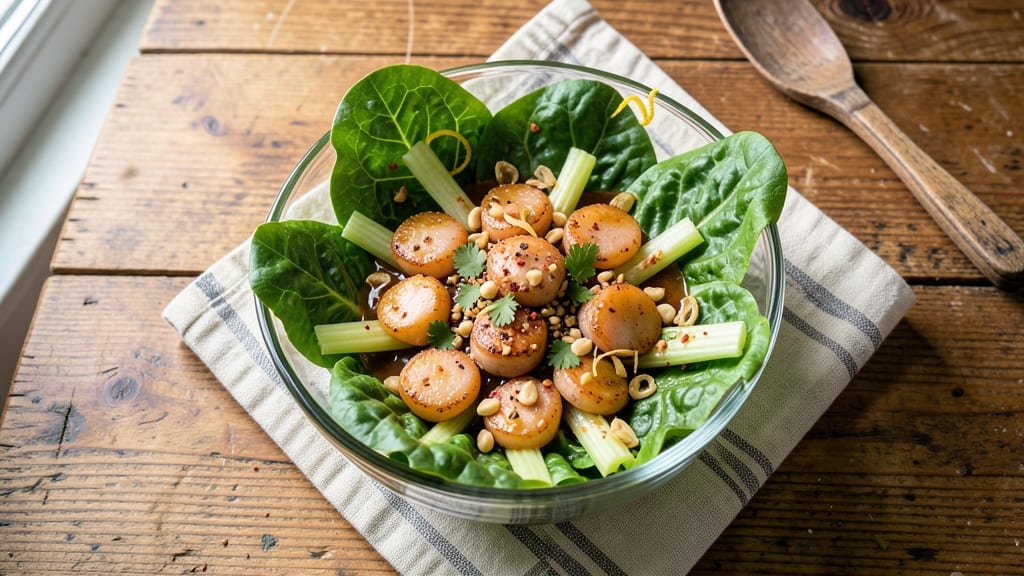
This Buddakan Asian Caesar Salad transforms a classic with crispy celery crowns, wok-seared scallops, and a tangy tamarind dressing that balances sweet, umami, and spice. The secret lies in the dressing—emulsified with sesame oil and ginger—while the celery crowns add a satisfying crunch that elevates every bite.
I developed this recipe after craving a fusion dish that honored both Asian and Western flavors without sacrificing texture or depth.
The dressing is where the magic happens: tamarind paste replaces traditional anchovies, while toasted sesame oil and fresh ginger create layers of complexity that cut through the richness of the scallops.
Each ingredient plays a role—crisp romaine holds the dressing, crushed peanuts add nutty contrast, and fried shallots bring a delicate crunch. The scallops sear in a wok for just 2 minutes, ensuring they stay tender yet develop a caramelized crust.
What you’ll end up with is a salad that’s as visually stunning as it is flavorful—golden-brown celery crowns stacked like a crown, plump scallops glistening with dressing, and a garnish of chili flakes for heat.
The tamarind dressing clings to every ingredient, tying the dish together with a perfect balance of sweet, tangy, and savory. This isn’t just a salad; it’s a restaurant-quality dish that feels special enough for dinner parties but simple enough for weeknights.
Serve it immediately for the crispiest celery and warmest scallops, or assemble ahead and dress just before serving to keep the romaine crisp. Pair with a chilled glass of sparkling wine or a light lager to complement the dish’s bright, umami notes.
Let’s get cooking—this salad will redefine your takeout nights.
Ingredients for buddakan asian caesar salad
Here’s what you’ll need to create this restaurant-worthy fusion salad with crispy celery crowns and tangy tamarind dressing.
| Ingredient | Amount | Notes |
|---|---|---|
| Fresh Romaine Lettuce 🥬 | 1 whole | Heads cut into quarters lengthwise |
| Scallops 🦪 | 12 oz | Fresh, dry-packed, uniform size |
| Celery Sticks 🥬 | 1 bunch | Large, crisp stalks |
| Crushed Peanuts 🥜 | ½ cup | Toasted for extra flavor |
| Fried Shallots 🧅 | ¼ cup | Store-bought or homemade |
| Tamarind Paste 🍯 | 2 tbsp | Unadulterated, block form preferred |
| Sesame Oil 🫒 | 1 tbsp | Toasted for aroma |
| Fresh Ginger 🌿 | 1 tbsp | Grated, finely minced |
| Extra-Virgin Olive Oil 🫒 | ½ cup | Light, fruity variety |
| Lemon Juice 🍋 | 2 tbsp | Freshly squeezed |
| Soy Sauce 🥢 | 1 tbsp | Light, not dark |
| Honey 🍯 | 1 tbsp | Wildflower preferred |
| Red Chili Flakes 🌶️ | ½ tsp | Adjust for heat preference |
| Salt 🧂 | ½ tsp | Kosher or sea salt |
| Black Pepper 🌶️ | ¼ tsp | Freshly ground |
The scallops are the star—fresh, dry-packed ones from the seafood counter make all the difference. Look for uniform size (about 6-8 oz each) so they cook evenly. Whole Foods or local fish markets usually carry the best quality. If you can’t find dry-packed, pat them very dry with paper towels before searing. Celery? Crisp stalks are non-negotiable—avoid those with brown spots or limp ends. For the tamarind paste, block form from Asian markets is ideal, but the jarred stuff in a pinch works too (just check for no added sugar).
No tamarind? Substitute with 1 tbsp lime juice plus 1 tsp maple syrup—it won’t be identical, but close. Out of sesame oil? Avocado oil works, but the toasted nutty aroma is key. For the peanuts, unsalted is best—toast them in a dry pan for 3-4 minutes until fragrant. The fried shallots can be swapped for thinly sliced, pan-fried shallots if you’re avoiding store-bought. And if you’re sensitive to heat, skip the chili flakes entirely—the dressing still packs flavor without them.
Scallops keep best in the fridge for 1-2 days—use them ASAP for peak texture. Romaine lasts 5-7 days if stored dry in a sealed container. The tamarind dressing? 3-4 days in the fridge, but add a splash of water if it thickens. For the celery crowns, fry them fresh—they lose crispness fast. Make the dressing ahead though; it just gets better as flavors meld. Portion the peanuts and fried shallots in small containers—they’ll stay crunchy for days if sealed tightly.
Why You'll Love This Recipe
- No Scallop? No Problem: I’ll be real—this salad works even if you skip the scallops. The crisp romaine, crunchy celery, and peanut dressing carry the day. Honestly, my budget-friendly version with just chicken or even tofu still tastes like a fancy night out.
- Crunch in Every Bite: That combo of fried shallots and crushed peanuts? It’s like a textural party in your mouth. The shallots add a sweet, brittle crunch while the peanuts bring nutty depth—no soggy lettuce here, just perfect contrast.
- Weeknight to Dinner Party: Make it for yourself or double it for guests. The dressing keeps well, so toss everything together last-minute. I’ve served this at potlucks and it disappears faster than my famous (but messy) homemade cookies.
- Leftovers That Don’t Suck: Unlike most salads, this one actually improves the next day. The peanuts stay crisp, the dressing clings better, and you can repurpose it as a cold appetizer or quick lunch. No sad, wilted lettuce here—just reliable flavor.
Step-by-step instructions for buddakan Asian caesar salad
Here's how to build this vibrant salad with crispy celery crowns and a bold tamarind dressing.
Prepare the Celery Crowns
Start with the celery sticks—this is where the magic happens. Cut each stick into 4-inch lengths (you should have about 12 pieces). Using a sharp chef's knife, trim the ends diagonally to create flat surfaces. This makes them stand upright better.
Next, carefully slice each stick lengthwise into ¼-inch thick planks, creating long, flat strips. The key here is precision—keep the cuts even so they crisp up uniformly. Arrange the celery planks on a parchment-lined baking sheet, leaving ½-inch gaps between each piece. This ensures they crisp rather than steam.
Lightly brush both sides with ½ cup extra-virgin olive oil (about ¼ teaspoon per piece) and sprinkle with ½ teaspoon salt. Bake at 400°F for 12-15 minutes, flipping halfway, until edges turn deep golden brown and they're crisp enough to stand upright when cooled. Watch closely—they go from perfect to burnt quickly!
Sear the Scallops
While the celery bakes, pat the 12 oz scallops completely dry with paper towels—this ensures maximum searing. Season both sides generously with ½ teaspoon salt and ¼ teaspoon black pepper. Heat 1 tablespoon sesame oil in a nonstick skillet over high heat until shimmering.
Add the scallops in a single layer and let them sear undisturbed for 2 minutes until a golden crust forms. Flip carefully and sear the other side for 1 minute. The scallops should be opaque in the center but still slightly springy—they'll finish cooking when assembled. Transfer to a plate and tent with foil to keep warm.
Make the Tangy Tamarind Dressing
In a small bowl, whisk together 2 tablespoons tamarind paste, 2 tablespoons lemon juice, 1 tablespoon soy sauce, 1 tablespoon honey, and ½ teaspoon red chili flakes. Slowly drizzle in ½ cup extra-virgin olive oil while whisking vigorously to emulsify. Add 1 tablespoon finely grated ginger and mix until smooth.
Taste and adjust seasoning—you want a balance of tangy, sweet, and slightly spicy. If it's too thick, add 1 teaspoon water at a time until it reaches a light drizzle consistency. The dressing should coat the back of a spoon but still pour easily. Cover and set aside while you finish the salad.
Assemble the Salad
Cut the 1 whole fresh romaine lettuce into quarters lengthwise, then separate the leaves. Arrange them on a large platter, slightly overlapping for a lush base. Gently place the cooled celery crowns upright around the edges, creating a dramatic border. Add the seared scallops in the center, slightly overlapping.
Drizzle the tamarind dressing generously over the scallops and lettuce, letting it pool slightly in the center. Sprinkle with ½ cup crushed peanuts and ¼ cup fried shallots for crunch and visual contrast. Serve immediately while the celery crowns are still crisp and the scallops are warm.
Garnish and Serve
Just before serving, give everything a final sprinkle of ½ teaspoon red chili flakes and a pinch of black pepper for a pop of color and heat. The contrast between the crispy celery crowns, tender scallops, and cool lettuce makes this salad truly special.
For the best experience, serve with extra crushed peanuts on the side—let guests add their own crunch. This dish shines as a light lunch or elegant appetizer, especially when paired with a sparkling citrus beverage to cut through the richness.
Pro Tips For Making Buddakan Asian Caesar Salad
- SEAR SCALLOPS FAST: Hit your scallops with a screaming-hot pan—just 60 seconds per side max—until they’re golden and release easily. Overcrowding the pan steams them instead of searing, and you’ll end up with sad, rubbery centers. Keep them moving and work in batches if needed.
- DRESS LETTUCE LAST: Toss your Romaine with the dressing right before plating—no earlier. The leaves get soggy fast, and you’ll waste perfectly good lettuce. If you’re prepping ahead, store the dressing separately and mix it in just as you’re serving.
- CRUSH PEANUTS FINE: Skip the rough chunks—this isn’t a crunchy trail mix. Pulse your peanuts in a food processor until they’re almost powdery, but not paste. Too coarse, and they’ll feel like an afterthought; too fine, and they’ll disappear into the salad. Aim for a texture between sand and small gravel.
- TOAST SHALLOTS DRY: Drain your fried shallots thoroughly on a wire rack—don’t just blot them with paper towels. Any leftover oil makes them greasy when tossed with the salad, and you’ll end up with a dish that feels heavy instead of crisp. A quick shake over the rack does the trick.
Troubleshooting your buddakan asian caesar salad
Celery Crowns Too Soft
If your celery crowns emerge limp instead of crisp, you’ve likely steamed them rather than crisped them. The key is even spacing—leave ½-inch gaps between pieces on the baking sheet so hot air circulates. Also, don’t overcrowd the pan; bake in batches if needed.
For extra insurance, brush with olive oil right before baking and flip halfway through the 12-15 minutes at 400°F. If they’re still soft, try 5 more minutes at 425°F—just watch closely to avoid burning! 🌡️
Scallops Overcooked
Scallops turn rubbery when overcooked, and the culprit is usually uneven heat or flipping too soon. Use a nonstick skillet heated to high until it’s shimmering hot—not smoking. Sear undisturbed for 2 full minutes per side, then check for opaque centers (they should still have a slight bounce).
If yours are tough, they’ve been cooked too long. Next time, reduce heat to medium-high after the first minute to prevent burning while finishing. 🦪
Dressing Too Thick
A dressing that clumps instead of drizzling means the emulsification failed. The secret is slow incorporation—whisk the tamarind, lemon, soy, honey, and chili together first, then drizzle in olive oil drop by drop while whisking vigorously.
If it’s still too thick, add water 1 tsp at a time until it reaches a light, pourable consistency. For extra insurance, blend the wet ingredients first to break up the tamarind paste completely. The dressing should coat the back of a spoon but still pour easily. 🍯
Romaine Turning Slimy
Wilted or slimy romaine ruins the salad’s freshness, and it’s usually from excess moisture or overcrowding. Dry the lettuce thoroughly with paper towels before assembling, and avoid washing it unless absolutely necessary. If using pre-cut romaine, pat it dry and store it in a single layer in the fridge.
For assembly, arrange leaves slightly overlapping but not packed tightly—this prevents steam buildup. Serve immediately after dressing to keep it crisp. 🥬
Peanuts Losing Crunch
Crushed peanuts go soft when exposed to moisture or heat. To keep them crisp, toast them fresh in a dry pan for 3-4 minutes until fragrant, then let them cool completely before crushing. Store them in an airtight container at room temperature, away from the fridge (humidity is the enemy!).
If they’ve already softened, re-toast them for 1-2 minutes to restore crunch. For extra insurance, sprinkle them just before serving to guarantee freshness. 🥜
Dressing Separating
Separation happens when the emulsion breaks, usually from too much oil added too quickly or not enough emulsifier. To fix it, whisk in 1 tsp Dijon mustard (if you have it) or 1 tsp honey to help bind the oil.
If it’s already separated, re-emulsify by vigorously whisking in 1 tsp warm water while adding 1 tsp olive oil at a time. For prevention, blend the wet ingredients first to create a smooth base before adding oil.
The dressing should hold together for 3-4 days in the fridge if stored properly. 💫
Nutrition facts
Frequently asked questions
Can I use shrimp instead of scallops in this salad?
Shrimp works beautifully and adds a different texture. Use 12 oz large shrimp (about 16-20 count), peeled and deveined. Sear them for 1-2 minutes per side until pink and opaque—they cook faster than scallops. For extra flavor, marinate in 1 tbsp soy sauce and 1 tsp grated ginger for 10 minutes before cooking.
How do I make the tamarind dressing less sweet?
Adjust the honey or reduce it to ½ tablespoon while keeping the tamarind and soy sauce amounts the same. For extra tang, add 1 extra teaspoon of lemon juice or ½ teaspoon of rice vinegar. Taste as you go—the dressing should balance sweet, tangy, and umami flavors without being cloying.
Can I prepare this salad ahead of time?
Yes, but with smart timing! Prep the dressing and celery crowns up to 2 days ahead—store them separately. Keep the scallops raw in the fridge until 30 minutes before serving to maintain texture. Assemble the romaine base last, then add the warm scallops and dressing just before eating for the crispiest results.
What’s the best way to crisp the celery crowns?
Air fryers work wonders too! Toss celery planks with 1 tbsp olive oil and ½ tsp salt, then air fry at 375°F for 8-10 minutes, shaking halfway. For oven crispiness, spread them on a wire rack over a baking sheet to allow airflow. Avoid steaming by ensuring they’re not touching each other.
Is this salad gluten-free?
Mostly, but check your ingredients! The dressing is naturally gluten-free, but fried shallots often contain wheat. Use gluten-free fried shallots or omit them entirely. For extra crunch, add toasted sesame seeds or crushed gluten-free corn nuts. Always verify labels on store-bought components like tamarind paste or soy sauce.