
Salads
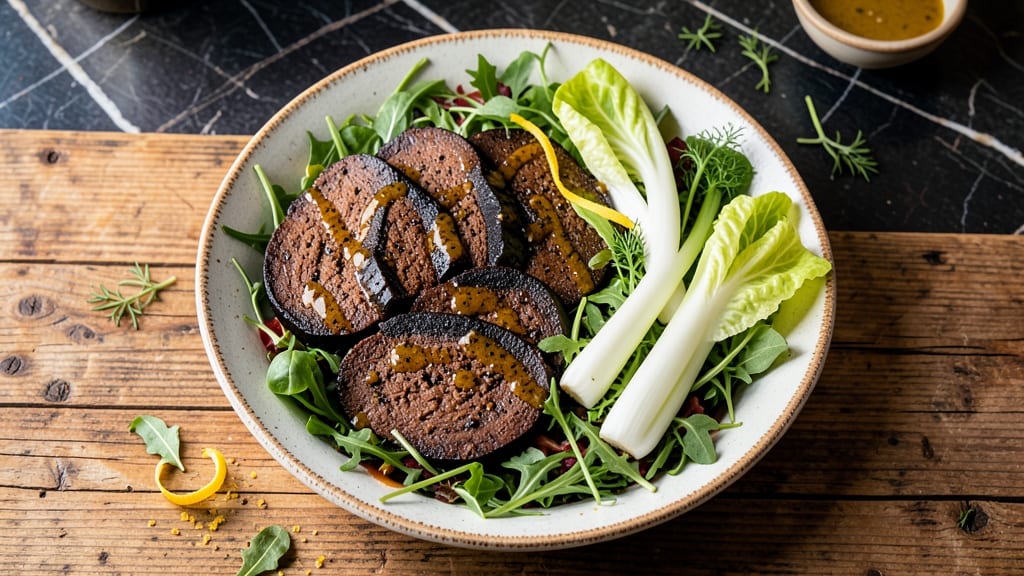
This black pudding salad recipe transforms a traditional British breakfast staple into a sophisticated dish that balances smoky richness with crisp textures and bright herbs.
The key lies in perfectly frying the black pudding until it develops a satisfying crunch, then pairing it with fresh celery crowns, mixed greens, and a tangy dressing that cuts through the fat.
I developed this recipe after realizing how versatile black pudding could be beyond its usual fried or grilled preparations.
The magic happens in the contrast—crispy black pudding slices with their smoky, slightly spicy depth against the cool crunch of celery and the fresh bite of herbs. This isn't your typical salad; it's a bold, savory dish that works equally well as a main course or a showstopping starter.
The recipe includes a simple vinaigrette that enhances rather than overpowers the black pudding's natural flavors, ensuring every bite is perfectly balanced.
What makes this salad truly special is its adaptability. While the classic version stays true to British roots, you can easily modernize it with additions like toasted nuts, pomegranate seeds, or a drizzle of honey for a sweet-savory twist.
The technique for frying the black pudding—just 2-3 minutes per side—is simple but critical for achieving that perfect crispy-yet-tender texture that defines this dish.
Whether you're serving it at a dinner party or simply craving something different for lunch, this black pudding salad delivers restaurant-quality results with minimal effort.
The combination of textures and flavors creates a dish that's both comforting and exciting, proving that salads can be just as satisfying as they are healthy.
Ingredients for black pudding salad
Transform traditional black pudding into a sophisticated salad with these carefully balanced ingredients.
| Ingredient | Amount | Notes |
|---|---|---|
| Black Pudding 🥓 | ½ lb | High-quality, traditional British style |
| Celery Crowns 🥬 | 1 cup | Thinly sliced, crisp variety |
| Mixed Greens 🥗 | 4 cups | Butter lettuce or arugula blend |
| Red Wine Vinegar 🍷 | ¼ cup | Bold, dry variety preferred |
| Extra-Virgin Olive Oil 🫒 | ½ cup | High-quality, fruity profile |
| Dijon Mustard 🌶️ | 1 tbsp | Mellow, not spicy |
| Fresh Parsley 🌿 | ¼ cup | Chopped, flat-leaf preferred |
| Fresh Chives 🌱 | 2 tbsp | Finely chopped for garnish |
| Granulated Sugar 🍚 | 1 tsp | For vinaigrette balance |
| Sea Salt 🧂 | 1 tsp | Diamond Crystal preferred |
| Freshly Ground Black Pepper 🌶️ | ½ tsp | Cracked pepper preferred |
| Toasted Walnuts 🥜 | ½ cup | Optional, for crunch |
| Pomegranate Seeds 🍇 | ¼ cup | Optional, for sweet contrast |
The black pudding is the star here, so prioritize quality—look for traditional British-style pudding with visible fat and a rich, smoky aroma. Waitrose or M&S carry excellent options, or check the international aisle at Whole Foods for authentic brands like Heston Blumenthal's. The celery crowns should be crisp, not fibrous; organic varieties from the produce section tend to hold their crunch better. For the greens, a mix of butter lettuce and arugula provides both tender and peppery notes—local farmers markets often have fresher options than grocery stores. Toast your walnuts in a dry pan until golden for maximum flavor, and store them in an airtight container to prevent staling.
No traditional black pudding? High-quality chorizo can substitute in a pinch, though the flavor profile differs slightly. For the vinaigrette, if you lack red wine vinegar, apple cider vinegar with a pinch of smoked paprika mimics the depth. Fresh herbs are ideal, but dried parsley at one-third the amount works in a bind—just remember it lacks the bright freshness. The optional pomegranate seeds can be swapped for toasted pine nuts if you prefer a different texture contrast. When frying the black pudding, medium-low heat is critical—too hot and it burns before crisping properly. The key is patience; let it develop that satisfying crunch without overcooking the interior.
Store the vinaigrette separately in a sealed jar for up to 5 days in the fridge, shaking well before use. The black pudding slices should be kept in a single layer on parchment paper to maintain crispness, and used within 2 days for optimal texture. Assemble the salad just before serving to preserve the crunch of the celery and greens. For meal prep, store components separately—dressing, greens, and toppings can be prepped ahead, while the black pudding should be fried fresh. This salad reheats poorly, so plan to serve it immediately after assembly for the best experience.
Why You'll Love This Recipe
- No-Cook Crunch: I swear by this when I’m too tired to slice much—just slice the black pudding thin, toss with celery crowns (pre-cut, thank you), and drizzle. The greens stay crisp, the pudding adds hearty texture without effort, and honestly? It’s the kind of salad that feels fancy but takes less time than boiling water.
- Umami Bomb: That first bite of black pudding—smoky, rich, with a hint of iron—cuts through the bright acidity of the red wine vinegar like a knife. I’ll be real: it’s the kind of flavor that makes you pause mid-bite, even if the rest of the meal is basic. The olive oil ties it all together without overpowering, so it’s never too heavy.
- Picnic-Proof Power: Between us, this is my go-to for lunchboxes or last-minute gatherings. The pudding holds up for hours (yes, even in a bento box), the celery stays crisp, and the dressing keeps everything fresh. Pack it in a jar, and it’s still delicious—no sad wilted greens here.
- Budget-Friendly Feast: I stretch a single black pudding into three meals easily—slice it thin, store it in the fridge, and toss with whatever greens I have. Celery crowns last ages, and a splash of vinegar plus olive oil costs pennies. It’s the kind of recipe that makes grocery day feel like a win, especially when I’m feeding a crowd on a tight budget.
Step-by-step instructions for black pudding salad
This savory salad balances rich black pudding with crisp celery crowns and bright herbs.
Prepare the Black Pudding
Begin by slicing the 0.5 lb black pudding into ¼-inch thick rounds using a sharp knife. I always recommend chilling the pudding for 10 minutes first—this makes clean slicing easier and prevents the slices from crumbling. Arrange the slices on a plate and set aside while you prepare the other components.
Black pudding has a dense, slightly crumbly texture when raw, so slicing against the grain yields the most uniform pieces. If the slices feel too firm, let them sit at room temperature for 5 minutes before assembling the salad—this enhances their natural richness and prevents them from tasting overly cold.
Make the Vinaigrette Dressing
In a small bowl, whisk together the 0.25 cup red wine vinegar, 0.5 cup extra-virgin olive oil, 1 tbsp Dijon mustard, 1 tsp granulated sugar, 1 tsp sea salt, and 0.5 tsp freshly ground black pepper. Start with a slow whisk to emulsify the oil and vinegar, then increase speed until the dressing is smooth and glossy.
Taste and adjust seasoning—this dressing should have bright acidity with a touch of sweetness to complement the pudding's savory depth. The sugar balances the vinegar's sharpness while the mustard adds subtle complexity. If the dressing separates, whisk vigorously again or add 1 tsp water to help re-emulsify.
Assemble the Base and Toppings
In a large bowl, combine the 4 cups mixed greens with the 1 cup celery crowns. Drizzle half of the vinaigrette over the greens and toss gently to coat evenly. The greens should be lightly dressed but still retain their crisp texture—over-tossing will make them soggy.
Add the sliced black pudding to the bowl and toss once more to distribute evenly. Sprinkle the 0.5 cup toasted walnuts and 0.25 cup pomegranate seeds over the top. The walnuts provide a satisfying crunch while the pomegranate seeds add a bright, tangy contrast to the rich pudding.
Garnish and Serve
Divide the salad among 4 plates and drizzle with the remaining vinaigrette. Scatter the 0.25 cup fresh parsley and 2 tbsp fresh chives evenly over each serving. The herbs add a fresh, aromatic finish that cuts through the richness of the black pudding.
Serve immediately for the best texture contrast—crisp celery, tender greens, and slightly warm black pudding slices. This salad shines as a hearty starter or light main course, especially when paired with a crisp white wine or sparkling water.
Pro Tips For Making Black Pudding Salad
- Slice Thin, Slice Even: Black pudding’s texture changes when sliced—thick pieces stay chewy, thin ones melt into the salad. Use a sharp knife and cut against the grain into ¼-inch slices (yes, measure it—your salad will thank you). If the pudding’s cold, let it sit at room temp for 10 minutes first, or the knife will drag.
- Trim Celery Like a Pro: Celery crowns look fancy, but their tough strings make every bite a chore. Run a peeler down the length of each stalk first—it removes the fibrous bits without wasting the good part. Then slice into ½-inch rounds. (Pro move: Soak the celery in ice water for 5 minutes before slicing; it crisps up better.)
- Dress Greens Last: Mixed greens wilt fast under dressing, especially with vinegar’s acid. Toss the greens and celery together first, then add the black pudding slices on top. Only when serving, drizzle the red wine vinegar and olive oil directly over everything—this keeps the greens bright and the pudding from getting soggy.
- Balance the Vinegar: Red wine vinegar is bold, and black pudding’s smoky saltiness needs a check. Start with 1 tablespoon per 2 tablespoons of olive oil, then taste. If it’s too sharp, add a pinch of honey or a splash of water to the dressing—just enough to soften the edge. (I learned this after serving a salad that made guests reach for their water glasses mid-bite.)
Best sauces and condiments for this recipe
Classic Red Wine Vinaigrette
The red wine vinaigrette in this salad is the backbone of its flavor balance. I use Waitrose red wine vinegar for its bold, dry profile that stands up to the black pudding's richness.
The 1 tbsp Dijon mustard adds depth without overpowering, while the 1 tsp granulated sugar subtly rounds out the acidity. For extra brightness, I add a pinch of smoked paprika—just ¼ tsp—to echo the black pudding's natural smokiness. 🍷
Creamy Mustard Dressing
Swap the vinaigrette for a creamy mustard dressing by thinning 2 tbsp whole-grain mustard with ¼ cup buttermilk and ¼ cup olive oil. This version works beautifully with the salad's textures, adding a velvety contrast to the crisp celery and crunchy walnuts.
For a vegetarian twist, replace the black pudding with grilled halloumi slices—the creamy dressing complements the salty cheese perfectly.
Spicy Honey-Lime Dressing
For a sweet-savory kick, mix 3 tbsp extra-virgin olive oil with 2 tbsp lime juice, 1 tbsp honey, ½ tsp chili flakes, and ½ tsp grated ginger.
This dressing transforms the salad into a fusion dish, especially when paired with toasted sesame seeds and shredded red cabbage. The honey balances the black pudding's saltiness, while the lime keeps the flavors vibrant. 🌶️
Herb-Infused Olive Oil
Lighten up the salad with a herb-infused olive oil drizzle. Simply heat ¼ cup olive oil with 2 tbsp fresh thyme, 2 tbsp fresh rosemary, and 1 garlic clove until fragrant (about 2 minutes).
Strain and drizzle over the assembled salad just before serving. This adds an aromatic depth without overpowering the black pudding's natural flavors.
Balsamic Glaze Reduction
For a touch of elegance, reduce ¼ cup balsamic vinegar with 1 tbsp honey and 1 tsp apple cider vinegar until syrupy (about 5 minutes on medium heat). Drizzle lightly over the salad for a sweet-tangy finish.
This works especially well with caramelized onions or roasted beets as additional toppings. The reduction's depth enhances the black pudding's smoky notes beautifully. 💫
Creamy Blue Cheese Dressing
For a richer option, blend ½ cup crumbled blue cheese with ¼ cup buttermilk, 2 tbsp sour cream, and 1 tbsp chopped walnuts until smooth. This dressing adds a bold, tangy contrast that pairs wonderfully with the black pudding's savory depth.
Garnish with extra walnuts and dried cranberries for a festive touch. Perfect for serving at holiday gatherings! 🥜
Nutrition facts
Frequently asked questions
Can I substitute black pudding with another meat?
Yes, but the flavor will change. For a similar texture, try chorizo (sliced thin and pan-fried) or crispy prosciutto. For a vegetarian option, grilled halloumi or marinated tofu works well with the creamy mustard dressing. The key is maintaining the dish's savory crunch contrast.
How do I store leftover black pudding salad?
Store components separately: Keep the dressing in a sealed jar (up to 5 days), the greens and celery in a container (use within 2 days), and the fried black pudding slices on parchment paper (best eaten fresh). Reassemble just before serving to preserve crispness. Never store the fully dressed salad overnight.
Why does my black pudding turn rubbery when frying?
This happens from overcooking or too-high heat. Fry at medium-low heat for 2-3 minutes per side until golden-brown, not black. Chill the pudding first for cleaner slices, and pat dry with paper towels before frying to prevent excess moisture. The interior should remain slightly pink inside.
Can I make this salad ahead of time?
Yes, but with adjustments. Prep the dressing, greens, and toppings the day before. Fry the black pudding fresh and add it just before serving. For a make-ahead version, slice the pudding and store it raw in the fridge, then fry it 10 minutes before serving to maintain crispness. The celery crowns should always be added fresh.
What wine pairs best with this salad?
A crisp Sauvignon Blanc or dry Riesling complements the dish beautifully. For red wine lovers, a light Pinot Noir works well with the black pudding's smoky notes. Sparkling water with a squeeze of lemon is also a refreshing choice. Avoid heavy, oaked wines that overpower the salad's delicate flavors.