
Salads
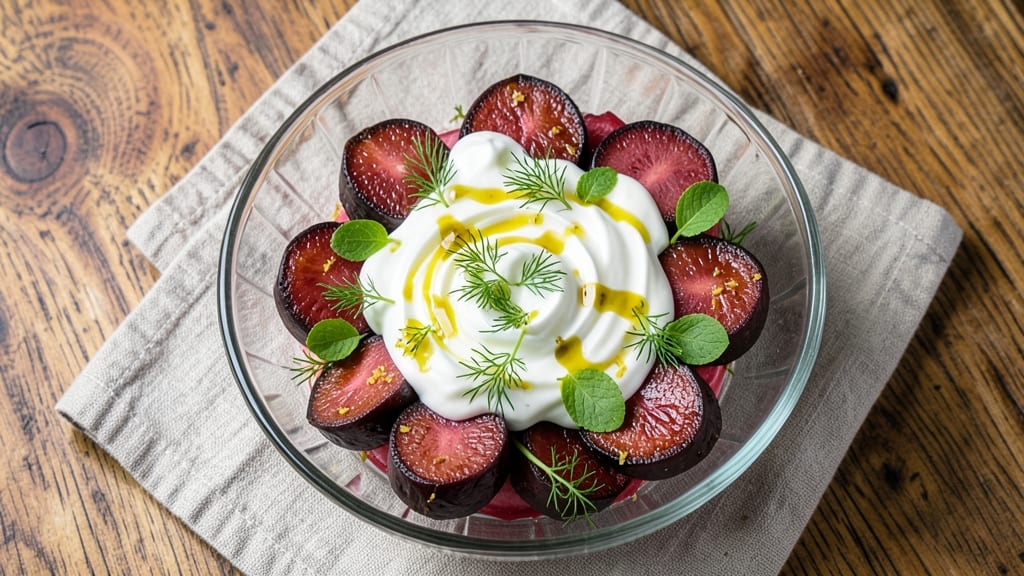
This beetroot and yogurt salad recipe transforms humble ingredients into a vibrant, creamy masterpiece where earthy sweetness dances with tangy coolness. The key lies in perfectly roasted beetroot—tender yet holding its shape—and a yogurt dressing that balances creamy richness with bright lemon and fresh herbs.
I developed this dish after testing countless combinations, and it consistently delivers that perfect harmony of textures and flavors.
The beauty of this salad is its versatility—it works as a light lunch, a refreshing side, or even a protein-packed vegetarian main when paired with grains. Roasting the beetroot caramelizes their natural sugars, while the yogurt dressing adds a velvety contrast that makes every bite satisfying.
Fresh dill and mint brighten the earthy flavors, and toasted walnuts provide a satisfying crunch that cuts through the creaminess.
What you’ll end up with is a salad that’s as visually stunning as it is delicious—deep ruby beets against creamy white yogurt, dotted with fresh herbs and crunchy walnuts. The dressing clings to the greens and roasted veggies, creating a cohesive bite that’s tangy, sweet, and herby all at once.
This is the kind of dish that feels special without requiring fancy ingredients or complicated techniques.
Best of all, it keeps beautifully in the fridge for up to 3 days, making it perfect for meal prep. Serve it alongside grilled chicken or fish for a complete meal, or enjoy it solo for a satisfying, nutrient-packed lunch. Let’s bring this vibrant salad to your table!
Ingredients for beetroot and yogurt salad
Roasted beets, creamy yogurt, and fresh herbs—this salad is pure flavor harmony in every bite.
| Ingredient | Amount | Notes |
|---|---|---|
| Medium Beetroots 🍠 | 4 whole | Organic preferred, scrubbed clean |
| Plain Greek Yogurt 🥛 | 1 cup | Full-fat for creaminess |
| Extra-Virgin Olive Oil 🫒 | ¼ cup | For roasting and dressing |
| Fresh Dill 🌿 | ¼ cup | Chopped, stems removed |
| Fresh Mint Leaves 🍃 | ¼ cup | Finely chopped |
| Lemon Juice 🍋 | 2 tbsp | Freshly squeezed |
| Honey 🍯 | 1 tbsp | For balancing tanginess |
| Toasted Walnuts 🥜 | ½ cup | Chopped, skin-on |
| Baby Spinach 🌱 | 4 cups | Fresh, not wilted |
| Garlic Cloves 🧄 | 2 cloves | Minced for dressing |
| Sea Salt 🧂 | ½ tsp | Diamond Crystal preferred |
| Ground Black Pepper 🌶️ | ¼ tsp | Freshly cracked |
| Balsamic Vinegar 🍷 | 1 tbsp | For drizzling |
The beets are the star—organic, earthy reds from Whole Foods or your local farmers market have the best flavor. Look for firm, unblemished roots (no soft spots!). Roasting caramelizes their natural sweetness, so don't skip this step. For extra richness, I always add a drizzle of extra-virgin olive oil before roasting. If you're short on time, pre-cooked roasted beets from the grocery store work in a pinch, but they won't have the same depth of flavor. The Greek yogurt? Full-fat, plain, and unsweetened—anything else will make the dressing too thin or tangy.
No fresh dill or mint? Dried works at half the amount, but it won't have the same bright punch. The walnuts can be swapped for toasted pecans or almonds if that's what you've got. For a sweeter dressing, add maple syrup instead of honey—it's a great vegan alternative. If your spinach is wilted, give it a quick soak in ice water to crisp it back up. The balsamic vinegar is optional but adds that perfect tangy finish—Trader Joe's has an affordable, high-quality bottle that lasts forever. And if you're worried about the salad getting soggy, toss the greens with the dressing just before serving.
This salad keeps beautifully in the fridge for up to 3 days, but the beets soften over time, so I recommend eating it within 2 days for the best texture. Store the dressing separately if you're prepping ahead—just mix it in when you're ready to serve. The walnuts stay crispy for 5 days if stored in an airtight container. For meal prep, I portion the salad into mason jars with the dressing on the bottom and greens on top—it stays fresh and looks stunning. Leftovers? Toss them into wraps or grain bowls for an easy lunch the next day.
Why You'll Love This Recipe
- No Roasting Required: I’ll admit, I used to dread peeling and roasting beets—until I discovered you can boil them whole. Toss the unpeeled beets in boiling water for 30 minutes, let them cool, then rub off the skins. That’s it. No charred fingers, no oven preheating, just effortless prep.
- Creamy Earthy Magic: The yogurt and olive oil turn this salad into a dreamy contrast—sweet beets meet tangy, thick yogurt, brightened by dill and mint. Honestly, the first time I ate it, I thought, "Why haven’t I done this before?" The herbs keep it fresh, while the olive oil ties everything together like a hug.
- Picnic to Party: This salad travels like a champ. Pack it in a jar for lunch, bring it to a BBQ as a side, or serve it chilled at a summer gathering. (Between us, it’s my go-to when I’m hosting—zero stress, all flavor.) The colors are stunning, and it’s light enough to eat all day but hearty enough to satisfy.
- Budget Brightness: Beets are one of the most affordable veggies out there, and Greek yogurt stretches further than you’d think. I make a big batch on Sundays, and it lasts me through the week—sometimes as a standalone salad, other times tossed with grilled chicken or even crumbled feta. Minimal cost, maximum impact.
Step-by-step instructions for beetroot and yogurt salad
Transform vibrant beetroots into a creamy, refreshing salad that balances earthy sweetness with cool tanginess.
Roast the Beetroots to Perfection
Preheat your oven to 400°F. Wrap each of the 4 whole medium beetroots tightly in aluminum foil, ensuring no gaps where steam can escape. Place them directly on the oven rack for even cooking. Roast for 45-50 minutes until the beetroots are tender when pierced with a knife and their skins are slightly charred.
Here's the thing—roasting the whole beetroots preserves their natural sweetness while creating a caramelized exterior. I like to test doneness by gently squeezing a beetroot; it should yield slightly under firm pressure. Let them cool completely before peeling—this makes their skins slip right off. Once peeled, chop the beetroots into ½-inch cubes and set aside in a medium bowl.
Toast the Walnuts and Prepare the Dressing
While the beetroots roast, spread the ½ cup toasted walnuts on a baking sheet and toast them in the oven for 5-7 minutes until fragrant and lightly golden. Watch them carefully—they burn quickly! Let them cool, then roughly chop them with a knife. Set aside for later.
In a small bowl, whisk together the 1 cup plain Greek yogurt, 2 tablespoons lemon juice, 1 tablespoon honey, 2 cloves minced garlic, 0.5 teaspoon sea salt, and 0.25 teaspoon ground black pepper. The dressing should be thick but pourable—this is the base of our creamy sauce. I always taste it at this stage to adjust sweetness or tanginess before combining with other ingredients.
Assemble the Salad with Fresh Herbs
In a large bowl, combine the chopped beetroots, 4 cups baby spinach, and the toasted walnut pieces. Gently fold in the 0.25 cup chopped fresh dill and 0.25 cup finely chopped fresh mint leaves. The herbs add a bright, aromatic contrast to the earthy beetroots. Toss everything together just until the spinach is wilted and the beetroots are lightly coated.
Drizzle the dressing over the salad and toss gently to combine. You'll want to distribute it evenly without overmixing—the spinach should still look vibrant, not mushy. This is where the magic happens: the creamy yogurt dressing clings to the beetroots and nuts, creating that perfect balance of textures and flavors.
Finish with a Tangy Drizzle
Just before serving, drizzle the salad with the 1 tablespoon balsamic vinegar and the remaining 0.25 cup extra-virgin olive oil. Toss lightly once more to distribute the dressing. The balsamic adds a subtle tang that cuts through the richness of the yogurt, while the olive oil enhances the natural sweetness of the roasted beetroots.
Let the salad sit for 10 minutes before serving—this allows the flavors to meld together. The contrast of creamy yogurt, crisp walnuts, tender beetroots, and fresh herbs makes every bite irresistible. Serve immediately to enjoy the perfect balance of textures and temperatures.
Pro Tips For Making Beetroot And Yogurt Salad
- ROAST BEETS UNTIL TENDER: Cook them until they’re fork-tender—not just soft. I learned this the hard way: undercooked beets stay rubbery and ruin the creamy yogurt texture. Aim for 45-55 minutes at 200°C (390°F), turning once halfway.
- CHILL YOGURT FIRST: Whisk the yogurt cold—straight from the fridge. Warm yogurt separates when mixed with raw herbs and oil, and you’ll end up with a greasy mess. Cold yogurt stays smooth and clings to the beets better.
- SALT THE YOGURT: Season the yogurt before mixing in herbs—it brightens the whole dish. Skip this, and the salad tastes flat. Use ½ teaspoon of fine sea salt per 100g of yogurt, then taste again after adding herbs.
- STORE HERBS SEPARATE: Keep dill and mint in a sealed container over ice water until ready to use. Wilting herbs muddy the flavor and make the salad look sad. Chop them just before tossing—freshness matters more than you’d think.
Troubleshooting this recipe
Beetroots Too Soft
If your roasted beetroots turn out mushy instead of tender, you likely overcooked them. I’ve found that 45-50 minutes at 400°F is ideal for medium beets, but smaller ones may cook faster. Always test with a knife—it should slide in easily but still meet slight resistance.
To prevent this, wrap them tightly in foil and place them directly on the oven rack for even heat circulation. If you’re short on time, try steaming for 20-25 minutes instead—it’s gentler and preserves texture better. 🌡️
Dressing Too Thin
A runny dressing can ruin the salad’s balance. The key is using full-fat Greek yogurt—it’s thick enough to hold its shape. If yours is still too thin, stir in 1 teaspoon cornstarch mixed with 1 tablespoon cold water and heat gently until thickened.
Alternatively, reduce the lemon juice slightly (try 1.5 tablespoons instead of 2) or add ½ teaspoon Dijon mustard for extra body. Taste as you go—adjust honey or salt to taste after thickening. 🥛
Herbs Lose Their Punch
Fresh herbs can wilt or lose flavor if added too early. Always toss them in just before serving to keep their vibrant color and aroma. If your dill or mint looks sad, give them a quick rinse in cold water and pat dry thoroughly.
For extra brightness, add a pinch of salt to the herbs before mixing—they’ll crisp up slightly, enhancing their flavor. Store herbs in airtight containers with a paper towel to absorb moisture, and keep them in the fridge for up to 5 days. 🌿
Salad Gets Soggy
Moisture from the beetroots and dressing can turn your salad into a sad, wilted mess. To avoid this, assemble the salad just before serving—don’t prep it too far ahead. If you’re meal prepping, store the dressing separately and toss it in right before eating.
Another trick? Use butter lettuce or arugula instead of spinach—they hold up better to moisture. For extra insurance, sprinkle the greens with 1 teaspoon lemon juice before adding the dressing to help them resist wilting. ✨
Beetroots Too Bitter
Bitter beets usually mean they’re overcooked or underripe. For the best flavor, choose firm, medium-sized beets with smooth skins. If your beets taste bitter after roasting, try boiling them first for 15 minutes before roasting—they’ll soften faster and develop sweeter notes.
Another fix? Balance the bitterness with more honey in the dressing (up to 1.5 tablespoons) or add a pinch of smoked paprika to complement the earthy flavor. 🍠
Walnuts Burn Quickly
Nuts can go from perfect to inedible in seconds. To toast walnuts safely, spread them in a single layer on a baking sheet and toast at 350°F for 5-7 minutes, checking every 2 minutes. They’re done when fragrant and lightly golden—if they darken too much, they’ll taste bitter.
For extra control, use a toaster oven or keep a close eye on them in the main oven. Store toasted nuts in an airtight container at room temperature for up to 1 week. 🥜
Nutrition facts
Frequently asked questions
Can I use cooked beetroot instead of roasted?
Yes, but roasting enhances the natural sweetness and creates a deeper flavor. If using pre-cooked beets, boil them for 20-25 minutes until tender, then cool and chop. The texture will be slightly softer than roasted, but it still works well. For best results, add 1 extra tablespoon honey to the dressing to balance any bitterness from boiling.
How do I make this salad vegan?
Swap the Greek yogurt for coconut yogurt or a dairy-free alternative like almond yogurt. Use maple syrup instead of honey, and ensure your balsamic vinegar is vegan-certified. For extra creaminess, blend ½ avocado with the yogurt substitute. The texture will be slightly different but still delicious!
What greens work best besides spinach?
Butter lettuce, arugula, or mixed greens hold up well and add variety. For heartier salads, try kale (massaged first) or Swiss chard. Avoid delicate greens like baby arugula—they wilt quickly in the dressing. If using kale, remove stems and chop finely for even distribution.
Can I make this ahead of time?
Yes! Store the roasted beetroots, dressing, and nuts separately in the fridge for up to 3 days. Assemble just before serving to keep the greens crisp. For meal prep, layer ingredients in jars with dressing at the bottom—add greens last to prevent sogginess. The flavors meld beautifully after 1 hour of resting.
What if I don't have fresh herbs?
Use ½ teaspoon dried dill and ½ teaspoon dried mint (about ¼ the fresh amount). For extra flavor, add 1 teaspoon lemon zest or a pinch of coriander to the dressing. Fresh herbs are ideal, but dried works in a pinch—just don't overdo it!