
Salads
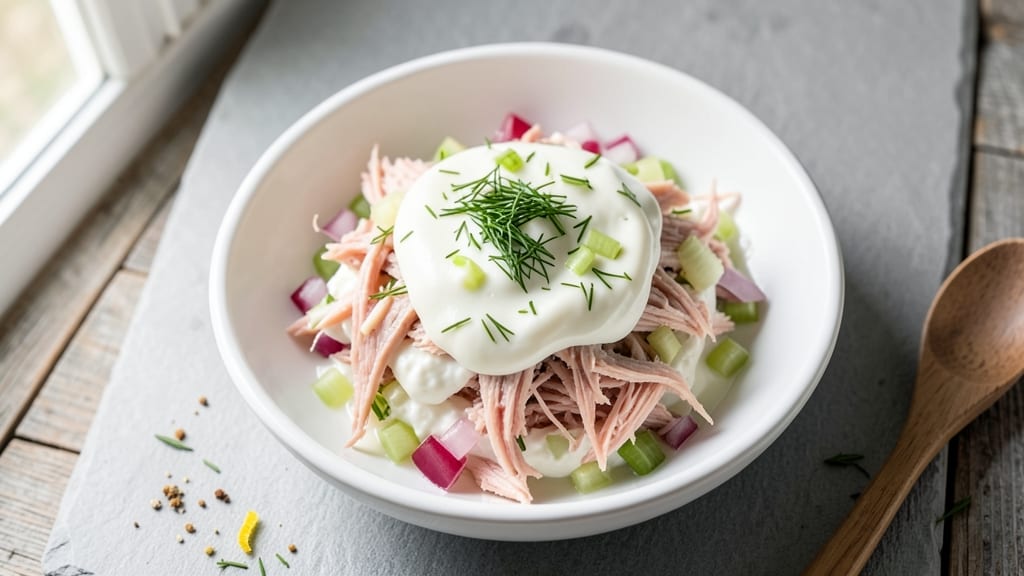
This bariatric tuna salad recipe delivers all the protein-packed satisfaction without the digestive discomfort. Designed specifically for post-surgery dietary needs, it skips heavy mayo and focuses on lean ingredients that support healing while keeping calories in check.
The secret lies in Greek yogurt and finely chopped celery—both gentle on digestion while adding texture and flavor.
What makes this recipe work is the balance: high protein from canned tuna and cottage cheese, low fat through Greek yogurt instead of mayo, and easy-to-digest veggies like finely diced celery and red onion.
Portion control is built in—each serving packs about 15g of protein with minimal fiber to avoid bloating, making it perfect for meal plans after bariatric surgery.
The result is a creamy yet light salad that stays together without being heavy. The Greek yogurt adds tangy richness while keeping calories low, and the celery provides satisfying crunch without overpowering digestion.
This isn’t just another tuna salad—it’s a nutritionally optimized meal that fits seamlessly into a post-surgery diet while still tasting like a real, satisfying dish.
Serve it on a bed of lettuce for extra volume or wrap it in low-carb tortillas for a portable protein boost. The recipe scales easily, so you can prep multiple servings ahead—just store in airtight containers to maintain freshness.
Let’s get started on a salad that nourishes without weighing you down.
Ingredients for bariatric tuna salad
Lean proteins and gentle veggies create a bariatric-friendly tuna salad with optimal protein and minimal digestive strain.
| Ingredient | Amount | Notes |
|---|---|---|
| Canned Tuna in Water 🐟 | 12 oz | High-quality, drained well |
| Nonfat Plain Greek Yogurt 🥛 | ½ cup | Full-fat may slow digestion |
| Low-Fat Cottage Cheese 🧀 | ½ cup | Blended smooth for texture |
| Finely Chopped Celery 🧅 | ¼ cup | Diced small for easy digestion |
| Finely Diced Red Onion 🧅 | ⅛ cup | Minced for gentle texture |
| Fresh Dill Weed 🌿 | 1 tbsp | Chopped fine for flavor |
| Lemon Juice 🍋 | 1 tbsp | Freshly squeezed for tang |
| Iceberg Lettuce Leaves 🥬 | 4 whole | For serving base |
| Low-Carb Tortillas 🌯 | 2 whole | For wrapping portions |
| Diamond Crystal Kosher Salt 🧂 | ¼ tsp | For seasoning balance |
| Freshly Ground Black Pepper 🌶️ | ⅛ tsp | For subtle seasoning |
| Extra-Virgin Olive Oil 🫒 | ½ tsp | For drizzling on lettuce |
The nonfat Greek yogurt is the cornerstone of this recipe—it replaces mayo while delivering 15g of protein per serving with minimal fat. Fage or Chobani brands are excellent choices, but any nonfat plain Greek yogurt will work. The cottage cheese adds another 12g of protein per serving while keeping the texture creamy without heaviness. For the tuna, Wild Planet or Starkist in water are reliable options, but avoid oil-packed varieties as they add unnecessary fat. The celery and red onion must be finely diced—think rice grain-sized pieces—to prevent fiber-related discomfort while still providing satisfying texture.
No Greek yogurt? Nonfat sour cream works in a pinch, though it lacks the same protein punch. Substitute cottage cheese with blended silken tofu for a dairy-free option, though texture will differ slightly. Fresh dill can be swapped for 1 tsp dried dill, but fresh provides a brighter flavor. The lemon juice is essential for brightness—bottled lemon juice is acceptable if fresh isn't available, though it may lack some acidity. For those avoiding onion entirely, asparagus tips can replace the red onion while adding a mild, digestible flavor. Always measure your spices carefully—this recipe is sensitive to salt and pepper balance due to its low-fat nature.
Store the salad in an airtight glass container with a damp paper towel over the top to maintain moisture and freshness for up to 3 days in the refrigerator. The lettuce leaves should be wrapped separately and added just before serving to prevent wilting. For meal prep, portion the salad into small, single-serving containers with a side compartment for the tortillas. If using tortillas, store them separately and warm briefly before wrapping to maintain flexibility. The recipe scales perfectly for 8 servings—simply double all ingredients while maintaining the same ratios for optimal protein distribution.
Why You'll Love This Recipe
- Five-Ingredient Magic: This recipe lives in my pantry—literally. Open a can, scoop yogurt and cottage cheese, chop celery and onion while watching one episode of your favorite show. No fancy tools, no stress. That’s the power of canned tuna and a few staples doing all the heavy lifting.
- Creamy Without Guilt: Here’s what sold me—the Greek yogurt and cottage cheese blend creates this rich, tangy base that’s light years better than mayo. The onion adds a sharp bite that cuts through the richness, and the celery? It’s the secret texture boost—crunchy enough to keep things interesting.
- Lunchbox Legend: Between us, this is my go-to for packed lunches or post-surgery meals when chewing’s tough. The mix holds together perfectly in containers, and the flavors actually improve after a day in the fridge. Honestly, I’ve sent this to work, to my kid’s school, and even as a hospital snack—it’s that reliable.
- Budget Meal Hack: A single can of tuna and a tub of cottage cheese stretch across three meals for my family. No waste, no fancy shopping lists. Plus, the red onion adds zero cost but so much flavor—it’s the kind of recipe that makes you feel clever after you make it. (Yes, even on a Tuesday night.)
Step-by-step instructions for bariatric tuna salad
Here's how to create a protein-rich, low-bloat tuna salad that's gentle on digestion while delivering bold flavor.
Prepare the Protein Base
Open the 12 oz canned tuna in water and drain it thoroughly using a fine-mesh strainer, pressing gently on the tuna to remove excess moisture. This step is crucial for preventing a watery salad that could upset digestion. Transfer the drained tuna to a medium mixing bowl.
In a separate small bowl, blend the 0.5 cup low-fat cottage cheese until completely smooth using a fork or whisk. This ensures the cottage cheese incorporates evenly without creating lumps that could be difficult to digest. The smooth texture also helps prevent any grittiness in your salad.
Combine Wet Ingredients
Add the blended cottage cheese to the tuna in the mixing bowl, then stir in the 0.5 cup nonfat plain Greek yogurt. The yogurt provides additional protein and helps create a creamy texture without adding significant fat. Mix these ingredients together until fully combined and smooth.
Next, incorporate the 1 tbsp lemon juice and 0.5 tsp extra-virgin olive oil. The lemon juice adds brightness and helps balance the richness of the tuna and cheese, while the olive oil provides healthy fats that aid in nutrient absorption. Mix well to distribute these ingredients evenly throughout the protein base.
Add Vegetables and Seasonings
Fold in the 0.25 cup finely chopped celery and 0.125 cup finely diced red onion using a silicone spatula. The celery adds a subtle crunch and freshness, while the finely diced onion provides a gentle onion flavor without the harsh texture. Mix gently to avoid breaking down the celery fibers too much, which could make the salad mushy.
Season the mixture with 0.25 tsp diamond crystal kosher salt and 0.125 tsp freshly ground black pepper. Taste and adjust the seasoning if needed—this is where you can customize the flavor to your preference. Finally, stir in the 1 tbsp fresh dill weed, which adds a bright, herbal note that complements the tuna beautifully.
Assemble for Serving
Lay out the 4 whole iceberg lettuce leaves on a serving platter to create individual bases for your tuna salad. Drizzle each lettuce leaf with a tiny amount of the remaining extra-virgin olive oil (about 0.125 tsp per leaf) to add moisture and enhance flavor without overpowering the delicate lettuce.
Divide the tuna salad evenly among the lettuce leaves, creating neat portions that are easy to handle. For a portable option, warm the 2 whole low-carb tortillas lightly in a dry skillet or microwave for 10-15 seconds, then wrap each portion of tuna salad in a tortilla for a convenient, protein-packed meal on the go.
Pro Tips For Making Bariatric Tuna Salad
- Drain and Pat Tuna Dry: The canned tuna in water will make your salad soggy if you skip this. After draining, grab a paper towel and press firmly—no need to go crazy, just squeeze out the excess moisture so the yogurt and cottage cheese bind properly.
- Use Room-Temp Cottage Cheese: Cold cottage cheese gives the salad a weird, grainy texture. Take it out of the fridge 10 minutes before mixing—just enough to soften the curds without turning them warm. Trust me, it makes a real difference.
- Salt the Onions First: Raw red onion can overwhelm the flavor if you add it last. Toss the diced onion with a pinch of salt and let it sit for 5 minutes before mixing—this draws out the sharpness and keeps the flavor balanced.
- Mix in Stages: Dumping everything at once leads to a mushy mess. First, combine the tuna with half the yogurt, then fold in the cottage cheese, then the veggies. This keeps the texture light and creamy instead of gloppy. (Yes, even if you’re impatient like me.)
Make-ahead tips for leftovers
Prep Ahead Strategy
This salad is perfect for meal prep—just assemble the components separately to keep everything fresh. Store the tuna mixture (without lettuce or tortillas) in an airtight glass container with a damp paper towel on top.
This keeps it moist and flavorful for up to 3 days in the fridge. The lettuce and tortillas should be stored separately to maintain crispness. 💡
Portion Control Tips
Divide the salad into 4 single-serving containers (about 3 oz per serving) to avoid overeating. Use small, stackable containers with compartments for the lettuce and tortilla.
Label each container with the date to track freshness. I like using 3.5 oz Pyrex containers—they’re microwave-safe and easy to grab on busy mornings.
Freezer-Friendly Hack
For longer storage, freeze the tuna mixture (without lettuce) in 1-ounce portions using silicone molds or ice cube trays. Once frozen, transfer to a ziplock bag and store for up to 1 month.
Thaw overnight in the fridge, then mix in fresh celery and dill before serving. This works great for emergency protein boosts! ❄️
Lettuce Prep Trick
Wash and dry the iceberg lettuce leaves thoroughly, then wrap them individually in damp paper towels before storing in a resealable plastic bag. This keeps them crisp for 4-5 days without wilting. Add the lettuce just before serving to preserve texture and prevent sogginess.
Tortilla Storage
Keep the low-carb tortillas in their original packaging or a resealable bag with a slice of bread (to absorb moisture). Warm them for 10-15 seconds in the microwave before wrapping to maintain flexibility. Store tortillas separately to avoid sogginess when packed with the salad.
Flavor Refresh
If the salad loses brightness after storage, revive it with a splash of lemon juice or a pinch of fresh dill. I also keep a small bottle of extra-virgin olive oil nearby to drizzle just before eating—this adds richness without altering the protein-to-fat ratio.
A sprinkle of everything bagel seasoning works too for a savory kick! 🌟
Nutrition facts
Frequently asked questions
Why use Greek yogurt instead of mayo in this bariatric tuna salad?
Greek yogurt replaces mayo to eliminate unhealthy fats while delivering 15g of protein per serving. It creates a creamy texture without triggering bloating or digestive discomfort common with full-fat mayo. Plus, the probiotics in yogurt support gut health during recovery.
Can I make this recipe without cottage cheese?
Yes! Substitute with 0.5 cup blended silken tofu for a dairy-free option or 0.5 cup nonfat sour cream for a similar texture. Just note the cottage cheese adds 12g of protein per serving—tofu provides about 8g while maintaining the same creamy consistency.
How do I prevent the salad from getting watery after mixing?
Drain the tuna thoroughly using a fine-mesh strainer and press gently to remove excess moisture. Also, use a damp paper towel in the storage container to maintain freshness without adding liquid. For extra insurance, chill the salad for 30 minutes before serving to help ingredients set.
Is this recipe safe to eat immediately after bariatric surgery?
This salad is designed for the 6-8 week post-op phase when you're reintroducing solid foods. The finely chopped veggies and smooth textures are gentle on digestion, but always follow your surgeon's specific guidelines. Start with 2 tbsp portions and gradually increase as tolerated.
Can I add other proteins to boost nutrition?
For extra protein, stir in 1 tbsp finely chopped hard-boiled egg whites (about 3g protein per tbsp**) or 1 tbsp nutritional yeast for a cheesy flavor without dairy. Avoid adding more than 10% extra protein to maintain the salad's balanced texture and digestion-friendly consistency.