
Salads
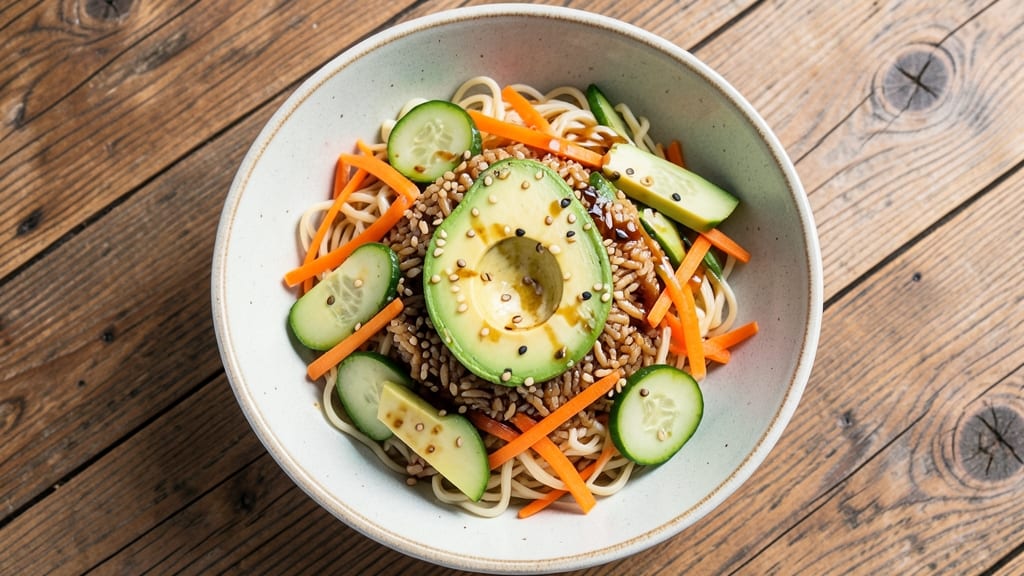
This avocado sushi salad recipe transforms classic sushi flavors into a refreshing, crunchy bowl that's perfect for lunch or dinner. The secret lies in perfectly seasoned rice noodles that stay crispy, paired with creamy avocado and fresh vegetables for a balanced bite.
I developed this dish to deliver restaurant-quality texture and flavor without the fuss of rolling sushi.
The foundation starts with sushi rice seasoned just right—slightly sticky but still holding its shape—and tossed with rice noodles for that satisfying crunch. Creamy avocado slices add richness while cucumber, carrot, and optional protein (like tofu or smoked salmon) bring freshness and substance.
The dressing ties everything together with a perfect balance of tangy and umami notes.
What you'll end up with is a visually stunning salad that's packed with layers of texture and flavor—crispy noodles, tender avocado, fresh vegetables, and all the familiar sushi elements in bite-sized form. It's vegetarian-friendly but easily elevated with protein, making it versatile for any meal.
Serve immediately for the best texture, or assemble ahead and refrigerate until ready to eat. Garnish with sesame seeds or a soy sauce drizzle for extra flair. This dish proves you don't need to roll sushi to enjoy its deliciousness—just mix, assemble, and enjoy!
Ingredients for avocado sushi salad
Crunchy noodles, creamy avocado, and tangy dressing—this salad brings sushi flavors to life in every bite.
| Ingredient | Amount | Notes |
|---|---|---|
| Sushi Rice 🍚 | 2 cups | Cooked and cooled |
| Rice Noodles 🍜 | 8 oz | Thin, dried variety |
| Avocados 🥑 | 2 whole | Ripe, pitted, sliced |
| English Cucumbers 🥒 | 1 whole | Thinly sliced lengthwise |
| Carrots 🥕 | 1 whole | Julienned or matchstick cut |
| Sesame Seeds 🌰 | 1 tbsp | Toasted for garnish |
| Extra-Virgin Olive Oil 🫒 | 2 tbsp | For tossing |
| Rice Vinegar 🍶 | 3 tbsp | Seasoned preferred |
| Soy Sauce 🥢 | 2 tbsp | Low-sodium preferred |
| Sesame Oil 🫒 | 1 tsp | For aroma |
| Honey 🍯 | 1 tsp | Or agave for vegan |
| Lime Juice 🍋 | 1 tbsp | Freshly squeezed |
| Salt 🧂 | ½ tsp | Kosher or sea salt |
| Black Pepper 🌶️ | ¼ tsp | Freshly ground |
| Optional Protein 🐟 | 6 oz | Tofu or smoked salmon |
The rice noodles are the star here—look for thin, dried varieties at Asian markets or the international aisle. Nongshim or Koyo are my go-tos, but any brand works. For the avocados, pick slightly soft ones—they should yield just a bit to gentle pressure. Sushi rice? Day-old rice works best—it's less sticky and holds its shape. If you're short on time, microwave-cooked rice (just add a splash of water) is a decent shortcut, though it won't be as perfectly seasoned. The optional protein? Firm tofu (pressed and sliced) or smoked salmon adds that restaurant-quality touch without overpowering the dish.
No sesame seeds? Toasted sunflower seeds give a similar crunch. Short on rice vinegar? Substitute apple cider vinegar at the same amount—it's got a similar tang. The dressing can be prepped ahead, but hold off on adding lime juice until serving to keep the avocado from browning. For extra umami, add a dash of mirin or a pinch of fish-free soy sauce. The carrots can be baby carrots or regular—just make sure they're cut into thin matchsticks for that satisfying crunch. And if you're feeling fancy, add a sprinkle of furikake (Japanese seasoning blend) for a true sushi-inspired finish.
This salad is best served immediately for that perfect crunch, but you can assemble it ahead and refrigerate for up to 4 hours—just toss with a little extra dressing before serving. The avocado will darken, but it's still delicious. Store any leftovers in an airtight container with a paper towel pressed on top to absorb moisture. Freezing isn't recommended—the texture changes too much. For meal prep, I like to portion the dressing separately and mix it in right before eating. Garnish with those toasted sesame seeds right before serving—they add so much flavor and make it look restaurant-worthy!
Why You'll Love This Recipe
- No Rice Burner Needed: I’ve made this salad a dozen times—no fancy rice cooker required. Just microwave the sushi rice ahead (or use leftover rice from takeout), and the rest is chop-chop. The noodles cook in 3 minutes flat, and the avocado stays fresh if you toss it in last.
- Creamy-Crunch Balance: That first bite? The avocado’s buttery richness meets the cool, crisp carrots and cucumbers like a hug. Honestly, I’ll take this over store-bought sushi any day—no fishy aftertaste, just pure, satisfying texture.
- Lunchbox Magic: Between us, this is my go-to for work lunches or picnics. Pack the rice and noodles separately, then assemble it cold with the avocado and veggies—no reheating, no soggy mess. My kid even brings it to school (yes, even on a Tuesday).
- Budget-Friendly Flex: You’re getting three servings for the price of one takeout order. Swap in whatever veggies are on sale—bell peppers, edamame, even leftover roasted sweet potatoes work. Leftovers? They taste just as good the next day, cold or at room temp.
Step-by-step instructions for avocado sushi salad
Here's how to create this vibrant, creamy twist on traditional sushi salad—crisp rice noodles meet velvety avocado in minutes.
Prepare the Crunchy Rice Noodle Base
Bring a pot of water to a rolling boil and add the 8 oz rice noodles. Cook for 4-5 minutes until the noodles are just tender and still hold their shape—you want them to stay slightly firm for that perfect crunch. Drain immediately in a colander and rinse under cold water for 30 seconds to stop the cooking process. This cooling step prevents the noodles from becoming mushy when tossed with other ingredients.
Transfer the drained noodles to a large mixing bowl. While still slightly damp, drizzle with 2 tablespoons extra-virgin olive oil and toss gently with your hands until the noodles are evenly coated. The oil will help preserve that fresh, crunchy texture we're aiming for. Set aside while you prep the remaining ingredients—this salad comes together fastest when everything is ready simultaneously.
Create the Creamy Avocado Dressing
In a separate bowl, mash the 2 whole avocados with a fork until you achieve a smooth, creamy consistency with just a few small chunks remaining for texture. This isn't a puree—we want that luxurious avocado ribbon effect when tossed with the salad. Add 1 tablespoon lime juice, 1 teaspoon honey, and 1 teaspoon sesame oil, then mix gently to combine. The acidity from the lime brightens the avocado flavor while the honey adds just the right touch of sweetness to balance the dish.
Next, whisk together 3 tablespoons rice vinegar, 2 tablespoons soy sauce, 0.5 teaspoon salt, and 0.25 teaspoon black pepper in a small bowl. This tangy dressing is the secret to that perfect umami-sweet balance that makes this salad irresistible. Pour this mixture over the mashed avocado and stir until fully incorporated. The dressing should coat the back of a spoon with a glossy sheen—this indicates proper emulsification for that signature creamy texture.
Assemble the Fresh Vegetable Medley
While the dressing rests, prepare the fresh vegetables. Thinly slice the 1 whole English cucumber lengthwise into ¼-inch thick strips—this creates elegant ribbons that add beautiful texture contrast. Using a julienne peeler or mandoline, cut the 1 whole carrot into matchstick-thin strips. These vegetables should be crisp and fresh, so avoid overcrowding your cutting board which can bruise the delicate cucumber slices.
Add the cucumber and carrot strips to the bowl with the rice noodles. Gently toss everything together, being careful not to break the noodles. The vegetables should be evenly distributed throughout the noodles, creating visual appeal while maintaining that satisfying crunch. Here's where the magic happens—this is the moment that transforms simple ingredients into something extraordinary.
Combine and Toss with the Dressing
Pour the avocado dressing over the noodle and vegetable mixture. Using clean hands or two large spoons, gently fold everything together until the noodles are evenly coated with the creamy avocado dressing. You should see the green avocado ribbon through the translucent noodles—this is your visual cue that the flavors are properly distributed. The dressing should cling to the noodles without making them soggy, creating that perfect balance of textures we're after.
For that final touch of sophistication, sprinkle 1 tablespoon toasted sesame seeds evenly over the top. The nutty aroma of the sesame seeds complements the creamy avocado and fresh vegetables beautifully. If using the 6 oz optional protein (tofu or smoked salmon), add it now and toss gently to heat through if using cold smoked salmon, or to absorb the dressing flavors if using tofu. Serve immediately while the noodles are still crisp and the avocado maintains its vibrant green color.
Pro Tips For Making Avocado Sushi Salad
- CHILL THE RICE NOODLES: Dump those rice noodles straight into boiling water and they’ll turn to mush faster than you can say "sushi fail." Instead, rinse them cold first—just a quick splash under running water—then boil for 30 seconds less than the package says. They’ll hold their shape better and soak up dressing like a dream.
- CUT AVOCADOS LAST MINUTE: I used to slice avocados hours ahead, and by the time I assembled the salad, they’d turned brown and sad. Now I wait until right before serving—peel and pit them, then drizzle with a little lime juice and plastic wrap them tightly to buy 10 minutes. The texture stays creamy, not grainy.
- JULIENNE CUCUMBERS UNEVENLY: Skip the perfect matchsticks—English cucumbers are thick, and uniform slices just look boring. Cut them into uneven half-moons or thin slabs instead. They’ll still hold shape in the salad, and the varied edges make the dish look fresher without extra effort.
- TOSS RICE WITH SESAME OIL COLD: Warm sushi rice with sesame oil while it’s still hot, and you’ll end up with greasy clumps that ruin the texture. Let the rice cool to room temp first, then drizzle the oil in while mixing—just enough to coat, about 1 teaspoon. The grains stay separate, and the aroma clings properly.
Common mistakes when making great avocado sushi salad
Overcooking Noodles
Rice noodles are delicate—once they hit 5 minutes in boiling water, they start turning mushy. I’ve ruined this salad more times than I’d admit by leaving them in too long.
The goal is al dente texture, so test one noodle by biting into it—it should have a slight bite but still be tender. Drain immediately and rinse under cold water for 30 seconds to stop cooking. This quick rinse also removes excess starch that can make your salad gummy. 🍜
Skipping the Oil Toss
That 2 tablespoons olive oil isn’t just for flavor—it’s the secret to keeping noodles crisp. Without it, the dressing will make them soggy within minutes. Toss the noodles with oil while they’re still warm and slightly damp.
The oil creates a protective barrier that locks in crunch. Pro tip: Use a light, fruity olive oil like California Extra Virgin—it won’t overpower the dish.
Mashing Avocado Too Much
I’ve seen people turn avocado into a puree, and that’s a crime against this salad. You want creamy but still textured avocado with visible ribbons. Mash just until smooth with a few small chunks remaining.
The texture contrast with crisp noodles is what makes this dish sing. For extra creaminess without overworking, add 1 tablespoon Greek yogurt to the mashed avocado—it blends seamlessly and adds protein. 🥑
Adding Lime Juice Too Early
Avocado oxidizes quickly, turning brown and unappetizing. That’s why I always hold off on adding lime juice until the very last minute. If you’re prepping ahead, store the avocado dressing without lime and mix it in just before serving.
The acidity from lime also breaks down the avocado’s cell walls faster, so timing is everything. For extra insurance, brush avocado slices with a tiny bit of lime juice right before plating.
Using Stale Sushi Rice
Freshly cooked sushi rice is too sticky and can make your salad gluey. Day-old rice works best—it’s firmer and holds its shape. If you must use freshly cooked rice, spread it on a tray and refrigerate for 2 hours to firm it up.
For the rice noodle base, this rule doesn’t apply—they should be cooked fresh and crisp. The contrast between the two textures is what makes this salad special. 🍚
Overcrowding the Bowl
When tossing everything together, resist the urge to pack the bowl tightly. Overcrowding causes the noodles to steam in their own moisture, turning them limp. Work in batches if needed, or use two bowls. The salad should be airy with visible gaps between ingredients.
This isn’t a packed sushi roll—it’s a light, refreshing bowl where every component should be distinct yet harmonious. A gentle toss with clean hands works best.
Nutrition facts
Frequently asked questions
Can I make this salad ahead of time?
Assemble everything except the lime juice up to 4 hours ahead and store in an airtight container with a paper towel on top to absorb moisture. Just add the lime juice and toss gently before serving to keep the avocado vibrant. The noodles will lose some crunch but still taste great!
What if I don't have rice noodles?
Use 8 oz soba noodles or even cooked and cooled sushi rice as a substitute. For extra crunch, add 1 cup shredded nori strips or toasted sesame seeds. The texture will differ slightly, but the flavors will still shine through.
How do I prevent the avocado from browning?
Add lime juice only when ready to eat, and keep the salad refrigerated until serving. For extra protection, brush avocado slices with a tiny bit of lime juice right before plating. The cold temperature and acidity slow oxidation, keeping that fresh green color longer.
Can I make this salad gluten-free?
Yes! Just ensure your rice noodles are certified gluten-free (look for tamari instead of soy sauce). All other ingredients are naturally gluten-free. For extra umami, use coconut aminos as a soy sauce substitute. This makes it perfect for gluten-sensitive diets while keeping all the delicious flavors.
What's the best way to store leftovers?
Store in an airtight container with a paper towel pressed on top to absorb moisture. Keep leftovers refrigerated for up to 2 days. The noodles will soften over time, but the flavors remain delicious. For best texture, reheat gently in the microwave for 20-30 seconds and toss with a splash of water to revive the crunch.