
Salads
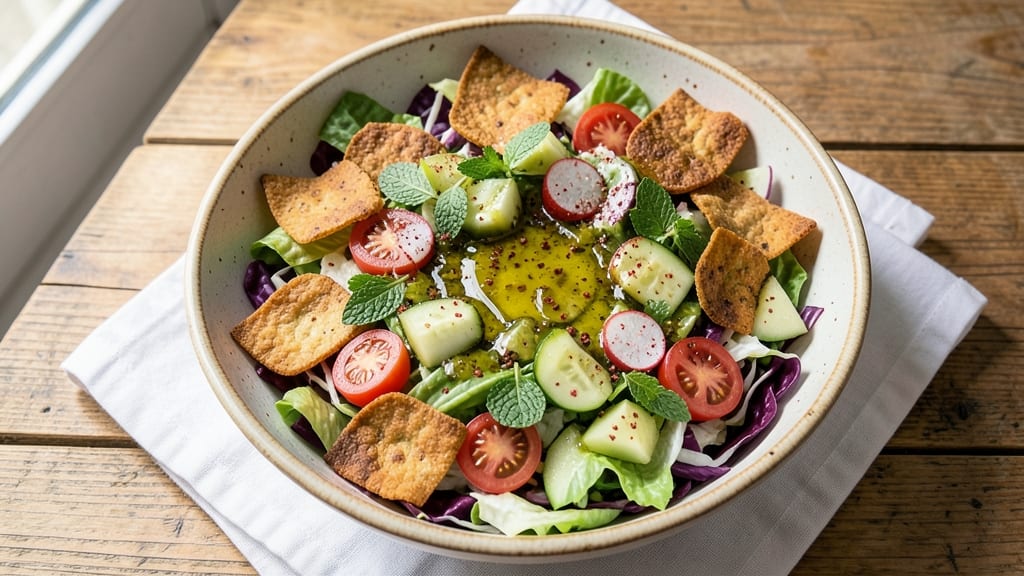
This authentic Lebanese fattoush salad brings the vibrant flavors of mezze tradition to your table with crispy pita bites and a tangy sumac dressing. 🌟 The key lies in perfectly toasted bread that stays crunchy even after soaking up the bright lemony dressing, balanced by fresh cucumbers, tomatoes, and radishes that add refreshing crunch.
Every bite delivers a mix of textures and flavors that make this salad a standout centerpiece.
The traditional recipe relies on simple yet essential ingredients: pita bread cut into cubes and toasted until golden, a dressing of olive oil, lemon juice, and sumac for that signature tang, and a medley of fresh vegetables tossed together just before serving.
This isn't just a salad—it's a celebration of Lebanese hospitality, where every component plays a role in creating a harmonious, flavorful dish.
What sets this recipe apart is the balance of crispy, fresh, and tangy elements working together. The pita stays crunchy thanks to a quick toast in the oven, while the sumac dressing adds a bright, citrusy kick that cuts through the richness of the olive oil.
Fresh herbs like mint and parsley complete the dish, offering a burst of freshness in every bite.
Serve this authentic fattoush as a mezze starter or a light main dish, especially during warm weather or special gatherings. For extra protein, add grilled chicken or lamb, but the traditional version remains perfectly satisfying on its own.
Let's bring the flavors of Lebanon to your kitchen with this classic recipe.
Ingredients for authentic lebanese fattoush salad
Simple ingredients transform into Lebanon's iconic crispy, herb-packed salad—authentic and vibrant.
| Ingredient | Amount | Notes |
|---|---|---|
| Pita Bread 🍞 | 1 whole | Store-bought or homemade, cut into 1-inch cubes |
| Extra-Virgin Olive Oil 🫒 | ¾ cup | High-quality, fruity variety preferred |
| Fresh Lemon Juice 🍋 | ½ cup | Freshly squeezed, about 2-3 lemons |
| Sumac Spice 🌿 | 2 tbsp | For authentic tangy flavor |
| Fresh Cucumbers 🥒 | 1 ½ cups | Diced, skin-on for texture |
| Fresh Tomatoes 🍅 | 1 ½ cups | Diced, vine-ripened preferred |
| Red Radishes 🧅 | 1 cup | Thinly sliced for crispness |
| Fresh Mint Leaves 🌿 | ¼ cup | Chopped, stems removed |
| Fresh Parsley Leaves 🌿 | ¼ cup | Chopped, for brightness |
| Red Onion 🧅 | ½ cup | Thinly sliced, white part only |
| Salt 🧂 | 1 ½ tsp | Diamond Crystal preferred |
| Ground Black Pepper 🌶️ | ½ tsp | Freshly ground for best flavor |
| Garlic Cloves 🧄 | 3 cloves | Minced for dressing |
The pita is non-negotiable for authentic texture. Arabian or Mediterranean brands from the international aisle work best—they're thinner and crispier than regular pita. Toast the cubes until golden, then let them cool completely before tossing with dressing. Whole Foods or Middle Eastern markets carry the best quality. If you can't find sumac, substitute lemon zest plus a pinch of salt, but it won't be the same. The herbs? Fresh is a must here—dried won't give that bright, fresh flavor you're aiming for.
No fresh mint? Substitute extra parsley at double the amount, though the flavor won't be identical. Running low on radishes? Extra cucumber or green bell pepper adds crunch. The tomatoes should be ripe but firm—vine-ripened from the farmers market are ideal. For the dressing, toast the garlic in olive oil first to deepen its flavor. If you're short on time, pre-chop all veggies and store in airtight containers—just add dressing right before serving to keep everything crisp.
This salad shines when made fresh, but components can be prepped ahead. Toast the pita cubes and store in an airtight container for up to 3 days—they'll stay crispy. The dressing keeps for 5 days in the fridge, and chopped veggies hold for 2 days if sealed tightly. For a restaurant-worthy touch, sprinkle extra sumac and toasted pine nuts on top right before serving. The flavors meld beautifully overnight, so it actually tastes better the next day—just give it a quick toss with fresh herbs.
Why You'll Love This Recipe
- I’ll be real: most salads require a knife marathon. Not this one. The pita gets toasted in whole rounds, then torn by hand—no precision needed. Cucumbers? Just slice ‘em thick and let the sumac’s tang do the work.
- No Chopping Chaos: I’ll be real: most salads require a knife marathon. Not this one. The pita gets toasted in whole rounds, then torn by hand—no precision needed. Cucumbers? Just slice ‘em thick and let the sumac’s tang do the work.
- Sumac Magic: That tangy, citrusy kick from sumac isn’t just flavor—it’s the star. A sprinkle over crispy pita and zesty lemon juice turns ordinary greens into something ridiculously addictive. (Yes, even my picky husband asks for seconds.)
- Party on a Plate: Bring this to a picnic, potluck, or just your own kitchen table—it’s equally at home. The pita stays crispy for hours, the dressing won’t wilt, and it feeds a crowd without breaking the bank. (Pro tip: Double the batch. You will.)
Step-by-step instructions for authentic Lebanese fattoush salad
Here's how to assemble this vibrant salad with perfectly crisp pita and bright Mediterranean flavors.
🔥 Step 1: Crisp the Pita to Golden Perfection
Preheat your oven to 375°F and line a baking sheet with parchment paper. Cut the 1 whole pita bread into 1-inch cubes—I like to cut it into thirds first, then stack and slice for even pieces. Arrange the cubes in a single layer on the baking sheet, leaving space between them.
Drizzle the pita cubes with 2 tablespoons of the extra-virgin olive oil and sprinkle lightly with ½ teaspoon of the sumac spice. Bake for 12-15 minutes until the edges are deep golden brown and the cubes are crisp throughout. Watch them closely—they crisp quickly and can burn easily. Remove from oven and set aside to cool slightly while you prepare the vegetables.
👨🍳 Step 2: Prepare the Fresh Vegetable Medley
In a large bowl, combine the 1.5 cups diced fresh cucumbers, 1.5 cups diced fresh tomatoes, 1 cup thinly sliced red radishes, and ½ cup thinly sliced red onion. Sprinkle generously with 1 teaspoon of the salt and ½ teaspoon of the ground black pepper, then toss gently to distribute.
Let the vegetables sit for 5 minutes while you prepare the dressing. This brief resting period allows the salt to draw out moisture and intensify the flavors. The radishes should maintain their crisp texture, while the tomatoes will soften slightly—this is perfect for the salad's balance of textures.
🍳 Step 3: Make the Herb-Infused Lemon Dressing
In a small bowl, whisk together the remaining ½ cup extra-virgin olive oil, ½ cup fresh lemon juice, 1 tablespoon of the remaining sumac spice, 3 minced garlic cloves, ¼ cup chopped fresh mint leaves, and ¼ cup chopped fresh parsley leaves. Taste and adjust seasoning with remaining ½ teaspoon salt if needed.
The dressing should be vibrant and tangy with a bright citrus aroma. I like to let it sit for 2 minutes before using—this allows the sumac to bloom and the herbs to release their full flavor. The texture should be emulsified but still slightly broken, which helps it cling beautifully to the salad components.
🥘 Step 4: Assemble the Fattoush Salad
In a large serving bowl, gently combine the prepared vegetables with the crisp pita cubes. Drizzle the herb dressing generously over the top and toss everything together with a large spoon or your hands. The goal is to distribute the dressing evenly while maintaining the crispness of the pita and vegetables.
Let the salad sit for 5 minutes before serving—this allows the flavors to meld together. The pita should remain crisp, the vegetables should be slightly wilted but still crunchy, and the dressing should be absorbed just enough to create a cohesive dish without making it soggy.
🍽️ Step 5: Serve Immediately with Confidence
Transfer the fattoush to serving plates and garnish with an additional sprinkle of sumac spice and chopped parsley. Serve immediately while the pita is still crisp and the vegetables retain their vibrant colors. The salad should be a perfect balance of textures—crisp pita, crunchy vegetables, and a tangy dressing that ties everything together.
For the most authentic experience, serve with warm flatbread on the side. The contrast of warm, soft bread with the crisp, cool salad is what makes this dish truly special. Each bite should deliver a harmony of flavors and textures that's both refreshing and satisfying.
Pro Tips For Making Authentic Lebanese Fattoush Salad
- CRISPY PITA FIRST: Toast the pita until it’s golden and slightly charred—not just crispy, but with dark spots where the oil pools. I learned this the hard way: under-toasted pita turns soggy when mixed with the wet salad, and no one wants mushy bread in their fattoush.
- SALT THE CUCUMBERS: Toss sliced cucumbers in a pinch of salt and let them sit for 10 minutes before draining. This pulls out excess water, so your salad stays bright and crunchy instead of waterlogged. (Yes, even if you’re impatient like me.)
- LEMON JUICE LAST: Add lemon juice just before serving—it brightens the flavors and prevents the sumac from losing its tang. I used to mix it in early, and the salad always tasted flat by the end of the meal.
- USE SUMAC GENEROUSLY: Don’t skimp on the sumac—it’s the soul of the dish. Sprinkle it over everything, then toss, then sprinkle again. The acidity and earthiness cut through the richness of the olive oil, and the dish won’t feel balanced without it.
Perfect pairings for this authentic lebanese fattoush salad
Traditional Mezze Pairings
Serve your fattoush with classic Lebanese mezze like hummus and baba ganoush for a complete spread. The creamy, smoky flavors of these dips complement the salad's tangy brightness perfectly.
I love pairing it with labneh (strained yogurt) drizzled with olive oil and za'atar, or muhammara (roasted red pepper and walnut dip) for a deeper flavor profile. 🌟
For a protein boost, add grilled halloumi or shish tawook (Lebanese-style grilled chicken). The warm, charred flavors contrast beautifully with the cool, crisp salad. If you're keeping it vegetarian, falafel makes a fantastic addition—just warm them in the oven before serving to maintain their crispiness.
Beverage Matchups
A cold ayran (yogurt drink) is the traditional pairing for fattoush, balancing the salad's acidity with its creamy, refreshing taste. For something lighter, try mint lemonade or hibiscus tea (karkade), both of which enhance the salad's citrus notes. 🍹
If you prefer alcohol, a crisp white wine like Lebanese Ojakian or a dry rosé complements the salad's freshness. For beer lovers, a light lager or Belgian witbier (like Hoegaarden) adds a subtle effervescence that contrasts nicely with the salad's bold flavors.
Avoid heavy red wines—they can overpower the delicate herbs and citrus.
Garnish Elevations
Take your fattoush to the next level with a few simple garnishes. Toast pine nuts or slivered almonds in a dry pan until golden, then sprinkle over the top for added crunch. A handful of pomegranate seeds adds a sweet-tart contrast that brightens every bite. 💫
For a smoky touch, drizzle with a little smoked paprika-infused olive oil> (mix 1 tbsp smoked paprika with ¼ cup olive oil and let it steep for 10 minutes before using).
Fresh thyme leaves or dill sprigs also add an elegant herbal note that pairs beautifully with the sumac and mint.
Seasonal Variations
In summer, swap out radishes for cherry tomatoes and add peeled cucumber ribbons> for extra freshness. For a winter twist, include roasted butternut squash cubes> and caramelized onions> in the vegetable mix. The warm, sweet flavors balance the salad's tangy dressing beautifully. ❄️
Spring calls for asparagus spears> (blanched for 2 minutes> to keep them crisp) and snow peas>. In fall, add roasted eggplant> and walnuts**> for a heartier salad that still feels light. Each season brings new textures and flavors that keep this dish exciting year-round.
Nutrition facts
Frequently asked questions
What makes this fattoush salad different from other Middle Eastern salads?
The key difference is the crispy pita cubes that stay crunchy even after soaking up the dressing—this is what sets fattoush apart from other mezze salads. The sumac dressing gives it that signature tangy kick, while the mix of fresh herbs and vegetables creates a perfect balance of textures and flavors. Unlike tabbouleh (which uses bulgur) or fattat (with chickpeas), fattoush relies entirely on fresh ingredients and toasted bread for its signature crunch.
Can I make fattoush ahead of time?
Prep the components separately and store them in airtight containers. Toast the pita cubes and keep them in the fridge for up to 3 days—they'll stay crispy. The dressing keeps for 5 days, and chopped veggies hold for 2 days. Just toss everything together right before serving to maintain the perfect crunch. The flavors actually improve overnight, so it's even better the next day!
What's the best way to keep the pita from getting soggy?
Toast the pita cubes until they're deep golden brown (about 12-15 minutes at 375°F) and let them cool completely before adding the dressing. For extra insurance, toss the cooled pita cubes with a tiny bit of sumac before mixing with the rest of the salad. This creates a protective barrier that helps maintain crispness. Never add dressing to the pita before baking—it'll turn mushy!
Can I substitute sumac if I can't find it?
Yes! For a similar tangy flavor, mix 1 teaspoon lemon zest with ½ teaspoon salt—this combo mimics sumac's bright acidity. Another option is 1 teaspoon dried oregano plus ½ teaspoon lemon juice, though the flavor won't be identical. Sumac is what gives fattoush its authentic taste, so if possible, track down a small jar from Middle Eastern markets or online. It's worth it for that signature zing!
How do I know when the pita is perfectly crisp?
The pita cubes are done when they're deep golden brown with crisp edges and still slightly firm to the touch. They should make a satisfying crunch when you press them gently. If they're pale or still soft in the center, bake for another 2-3 minutes. Over-browning can happen quickly, so keep a close eye on them—once they're golden, remove immediately. The texture should hold up even after tossing with the dressing!