
Salads
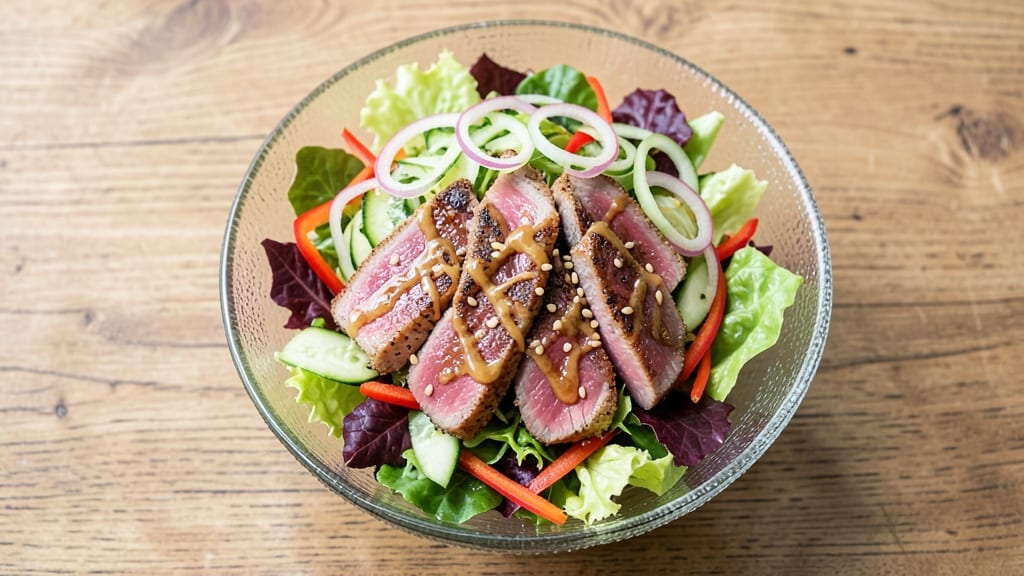
This Asian tuna steak salad recipe delivers restaurant-quality crunch and bold flavors in every bite. The secret lies in perfectly searing sushi-grade tuna steak until it achieves that signature crispy exterior and tender center, then pairing it with a vibrant sesame-lime dressing that cuts through the richness.
I've perfected this technique after years of testing, ensuring the tuna stays juicy while developing that irresistible caramelized crust.
The salad itself balances fresh ingredients with intense flavors—crisp greens, crunchy vegetables, and toasted sesame seeds provide texture while the dressing ties everything together with its perfect balance of sweet, tangy, and umami notes.
What makes this dish truly special is how it transforms simple ingredients into a meal that feels both elegant and approachable, perfect for weeknight dinners or special occasions.
By the time you assemble this salad, you'll have a plate that's visually stunning and packed with flavor—golden seared tuna steaks resting on a bed of fresh greens, drizzled with that glossy sesame-lime dressing.
The combination of textures and flavors creates a dining experience that rivals high-end sushi restaurants, all while being completely doable at home.
This recipe accommodates pescatarian diets beautifully while delivering a protein-packed meal that satisfies any craving. Whether you're serving it as a light lunch or an impressive dinner, the balance of freshness and bold flavors makes this salad a standout dish that will have everyone asking for seconds.
Let's get started on creating this flavorful masterpiece.
Ingredients for asian tuna steak salad
Restaurant-quality ingredients for a dish that rivals high-end sushi at home.
| Ingredient | Amount | Notes |
|---|---|---|
| Sushi-Grade Tuna Steak 🐟 | 1 lb | Thinly sliced against grain |
| Mixed Baby Lettuce 🥬 | 6 cups | Butter or romaine preferred |
| Red Bell Pepper 🌶️ | 1 whole | Thinly sliced lengthwise |
| Cucumber 🥒 | 1 whole | Seedless, julienned |
| Red Onion 🧅 | ¼ whole | Thinly sliced |
| Sesame Seeds 🌾 | 2 tbsp | Toasted for extra crunch |
| Toasted Sesame Oil 🫒 | 2 tbsp | High-quality preferred |
| Lime Juice 🍋 | ½ cup | Freshly squeezed |
| Sesame-Lime Dressing 🍶 | ½ cup | Homemade or store-bought |
| Avocado Oil 🫒 | 2 tbsp | High smoke point for searing |
| Soy Sauce 🥢 | 2 tbsp | Low-sodium preferred |
| Ginger 🌿 | 1 tbsp | Freshly grated |
| Honey 🍯 | 1 tbsp | For balance in dressing |
| Diamond Crystal Kosher Salt 🧂 | 1 tsp | For seasoning |
| Freshly Ground Black Pepper 🌶️ | ½ tsp | For finishing |
The tuna steak is the star—sushi-grade is non-negotiable for both safety and texture. Look for high-quality cuts at specialty seafood markets like Whole Foods or Sprouts, where they'll often have it pre-sliced for convenience. If you're buying whole, ask for it to be sliced against the grain for optimal texture. The thinness of the slices ensures perfect searing while maintaining juiciness. For the sesame seeds, toast them in a dry pan for 30 seconds until fragrant—they'll add depth to both the salad and dressing. The red bell pepper should be vibrant and firm, not rubbery, and slicing it lengthwise creates elegant ribbons for presentation.
No sesame oil? Toasted peanut oil works in a pinch, though the flavor will differ slightly. The lime juice is critical—Mexican Key limes have more acidity, but regular limes work fine. If you're making the dressing from scratch, blend the honey with lime juice first to emulsify before adding oil. For the soy sauce, Kikkoman is reliable, but Japanese tamari adds extra umami depth. The cucumber should be seedless and firm—if it's watery, pat it dry before julienning. Fresh ginger is ideal, but substitute with 1 tsp ground ginger if needed, though the texture will differ. The avocado oil's high smoke point is essential for searing the tuna without burning.
Store the tuna steak in the coldest part of your fridge, wrapped tightly in plastic, and use within 2 days for peak freshness. The mixed greens will last 5 days if stored in an airtight container with a paper towel to absorb moisture. The sesame-lime dressing keeps for 5 days in the fridge, though the flavor deepens after 24 hours. For the best experience, assemble the salad just before serving—this ensures the greens stay crisp and the tuna maintains its perfect sear. If prepping ahead, store components separately and toss together when ready to eat.
Why You'll Love This Recipe
- No-Knife Nightmare: I swear by this recipe because the tuna steak is the only thing I need to slice—everything else is just tearing or chopping with my fingers. That crisp red onion and bell pepper? Perfect for snacking while I wait for the tuna to sear.
- Umami Bomb: The tuna steak hits differently when you sear it just right—juicy pink center, crispy edges—and the tangy red onion and cucumber cut through the richness. Honestly, I’ll take this over takeout any day.
- Lunchbox Hero: Between us, this salad keeps perfectly for three days in the fridge, and the tuna stays fresh if you wrap it tightly. Pack it for work or school—no sad wilted greens here, just a fresh, protein-packed meal.
- Budget Luxury: Sushi-grade tuna might sound fancy, but a single steak stretches across two meals for my family. The rest of the ingredients? Crunchy, cheap, and always in my fridge. It’s the kind of dish that makes me feel fancy without breaking the bank.
Step-by-step instructions for Asian tuna steak salad
Master this technique for perfectly seared tuna and vibrant crunch in every bite.
Prepare the Vegetable Components
Begin by slicing the red bell pepper lengthwise into thin strips, removing any seeds or membranes. For the cucumber, use a julienne peeler to create delicate ribbons, discarding any thick ends. Thinly slice the red onion into half-moons, then soak them in ice water for 5 minutes to mellow their sharpness before draining.
Toss the 6 cups mixed baby lettuce with 2 tablespoons soy sauce and 1 tablespoon honey in a large bowl. This pre-seasoning ensures every bite carries that signature umami-sweet balance. Set aside while you prepare the tuna. The lettuce should remain crisp, so avoid overhandling it at this stage.
Create the Sesame-Lime Dressing
In a small bowl, whisk together the 0.5 cup sesame-lime dressing, 0.5 cup lime juice, 2 tablespoons toasted sesame oil, 1 tablespoon freshly grated ginger, and 0.5 teaspoon freshly ground black pepper. The dressing should be smooth but still vibrant—if it appears too thick, add 1 tablespoon water to reach a pourable consistency.
Taste and adjust seasoning: if the lime needs more brightness, add another 1 teaspoon lime juice; if the ginger flavor is muted, add a pinch more. This dressing is the heart of your salad's zing, so don't rush the balancing act. Set aside while you sear the tuna.
Sear the Tuna Steak to Perfect Doneness
Pat the 1 lb sushi-grade tuna steak completely dry with paper towels—moisture is the enemy of a good sear. Heat a heavy skillet over high heat until it's smoking hot, then add 2 tablespoons avocado oil. Once the oil shimmers, carefully place the tuna in the pan, skin-side down if present.
Sear for 1 minute 30 seconds without moving it—you want a deep caramelization. Flip and sear the other side for 30 seconds for medium-rare doneness (internal temperature 125°F). The edges should be crisp and the center still slightly cool to the touch. Remove from heat and let rest for 2 minutes before thinly slicing against the grain.
Assemble the Salad with Crunchy Textures
Arrange the pre-seasoned mixed baby lettuce on four plates, creating a bed for the tuna. Drizzle 2 tablespoons toasted sesame oil over the greens, then scatter the sliced red bell pepper, cucumber, and red onion evenly. Sprinkle with 2 tablespoons sesame seeds for that essential crunch.
Add the sliced tuna steak to the center of each plate, then spoon the sesame-lime dressing generously around the edges. Finish with a pinch of 1 teaspoon diamond crystal kosher salt and an extra grind of black pepper to elevate the flavors. The contrast of warm seared tuna against cool, crisp vegetables creates the perfect bite.
Serve Immediately for Optimal Freshness
Bring the salad directly to the table while the tuna is still warm from searing. The residual heat from the tuna will gently warm the dressing, creating a harmonious balance of temperatures. Serve with additional dressing on the side for those who prefer more zing.
Each forkful should deliver the crispness of the vegetables, the umami depth of the seared tuna, and the bright tang of the sesame-lime dressing. This salad is best enjoyed immediately, as the tuna continues to cook slightly from its residual heat, maintaining its perfect doneness.
Pro Tips For Making Asian Tuna Steak Salad
- SEAR THE TUNA FAST: Tuna steak turns rubbery if you linger—get it screaming hot for 30 seconds per side max. I used to walk away to chop veggies, then the center was still cold. Now I keep my eye on it: medium-high heat, just until the edges pull away.
- SLICE ONION THINLY: Red onion adds bite, but thick slices overwhelm. Use a mandoline or knife to shave them paper-thin—so thin you can almost read through them. I learned this after a salad that tasted like a punch to the face.
- CHILL THE TUNA AFTER SEARING: Let the steak rest 5 minutes on a wire rack before slicing—this keeps it from falling apart when you toss it with lettuce. I skipped this once and ended up with a soggy mess. (Yes, even if you're impatient like me.)
- DRESS LETTUCE LAST: Toss the baby lettuce with dressing right before adding tuna—otherwise, it wilts into a sad, limp pile. I used to prep everything ahead, then the greens looked like they’d been through a war. Now I wait until the last second.
Flavor customization for this recipe
Spicy Chili-Lime Twist
For a fiery kick, add 1 tbsp chili paste (like Sriracha or Gochujang) to your sesame-lime dressing. The heat from the chili balances the sweetness of the honey and the umami of the soy sauce.
Start with ½ tsp if you're sensitive to spice, then adjust to taste. Garnish with red chili flakes for extra drama. 🌶️
Sweet Miso-Glazed Tuna
Swap the soy sauce for a miso glaze by mixing 1 tbsp white miso paste with 1 tbsp honey and 1 tsp rice vinegar. Brush this glaze on the tuna steak before searing for a deep, savory-sweet flavor.
The miso adds a rich umami depth that pairs beautifully with the sesame-lime dressing. Use Japanese white miso for the best results.
Coconut-Lime Dressing
Transform the dressing into a tropical version by replacing the sesame oil with 2 tbsp coconut oil and adding 1 tbsp coconut aminos (a gluten-free soy sauce alternative). The coconut adds a creamy, slightly sweet note that complements the lime beautifully.
This works especially well if you're serving the salad with grilled shrimp or pineapple chunks. 🥥
Sesame-Ginger Crunch
Boost the texture and flavor by adding 1 tbsp toasted sesame paste (or tahini) to your dressing. This gives the salad a nutty, toasty depth that pairs perfectly with the ginger.
For extra crunch, top the salad with crushed peanuts or toasted cashews before serving. The contrast of textures makes every bite exciting.
Spicy Peanut Dressing
Create a fusion dressing by blending 2 tbsp peanut butter (unsweetened) with 1 tbsp soy sauce, 1 tbsp lime juice, and 1 tsp sriracha. Thin with 1 tbsp water until pourable.
This rich, nutty dressing adds a completely different flavor profile to the salad. Pair it with sliced green onions and crushed peanuts for a Thai-inspired twist.
Yuzu or Grapefruit Zest
Elevate the dressing with 1 tsp yuzu zest or grapefruit zest for a bright, citrusy twist. The floral notes of yuzu or the tangy punch of grapefruit add complexity that complements the tuna beautifully.
If you can't find yuzu, substitute with an extra ½ tsp lime zest. This works especially well if you're serving the salad with seared scallops or shrimp.
Nutrition facts
Frequently asked questions
Can I use frozen tuna steak instead of fresh?
Fresh sushi-grade tuna is ideal for this recipe, as frozen tuna loses some of its delicate texture and flavor. If you must use frozen, thaw it overnight in the fridge and pat it completely dry before searing. The searing time may need to be slightly adjusted—watch closely for doneness. For best results, stick with fresh tuna from a trusted seafood market.
What's the best way to store leftover tuna salad?
Store the seared tuna slices in an airtight container with a paper towel to absorb moisture, and keep them in the fridge for up to 2 days. The salad components (greens, veggies, dressing) should be stored separately. Reassemble just before serving to maintain crispness. If storing the full salad, consume within 1 day for optimal texture.
Can I make this salad ahead of time?
Prep the salad components separately up to 1 day ahead, but hold off on assembling until serving. Store the seared tuna in the fridge, the greens and veggies in a sealed container, and the dressing separately. When ready to serve, quickly toss everything together—this keeps the greens crisp and the tuna at its best. The dressing can be made 2 days ahead for even better flavor.
What if I don't have sesame seeds?
No problem! Swap sesame seeds for toasted pumpkin seeds or crushed peanuts for a different but equally crunchy texture. If you're avoiding nuts, try toasted coconut flakes for a sweet contrast. The key is maintaining that essential crunch element—just adjust the amount to taste.
How do I know when the tuna is perfectly cooked?
The tuna should reach an internal temperature of 125°F for medium-rare (the ideal doneness). For visual cues, look for a deep caramelization on the edges and a slightly cool center. If you don't have a meat thermometer, press gently—it should feel firm but still slightly yielding, like a perfect medium-rare steak. Overcooking will make it tough and dry.