
Salads
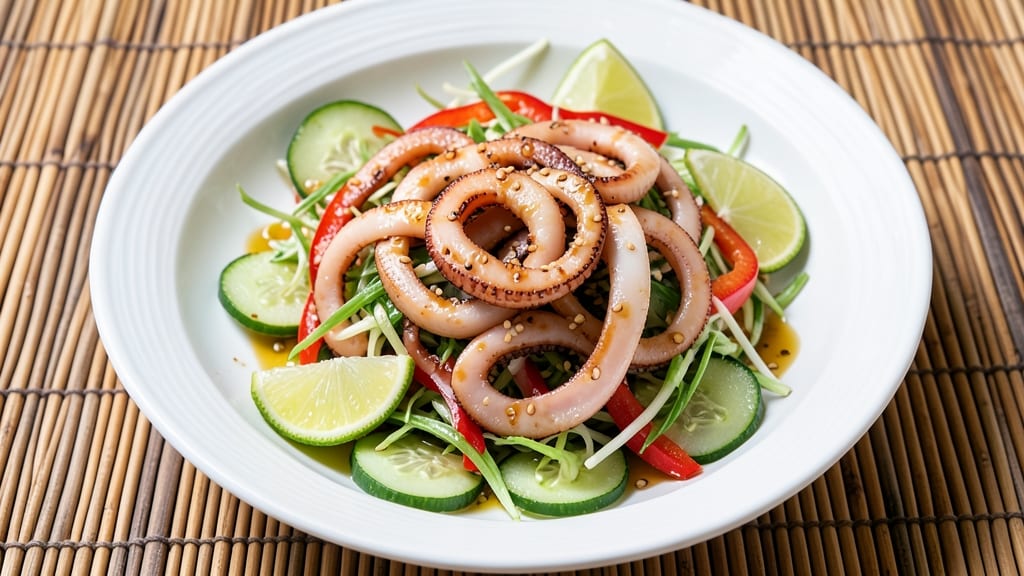
This Asian squid salad recipe transforms tender squid into crispy, golden bites that balance perfectly with a bright citrusy sesame vinaigrette. The secret lies in quick wok-searing the squid just until the edges turn crispy—no overcooking allowed.
I developed this dish after discovering how a perfect sear could elevate simple ingredients into something restaurant-worthy, all while keeping prep under 30 minutes.
The foundation is a simple yet flavorful base of shredded cabbage, crisp cucumber, and crunchy bell peppers, all tossed with a dressing that marries zesty lime, toasted sesame oil, and a touch of honey for balance.
The squid, marinated briefly in soy and ginger, absorbs just enough flavor to complement rather than overpower the fresh vegetables. This isn't just another seafood salad—it's a fusion of textures and tastes that feels both elegant and approachable.
What you'll end up with is a dish that's equal parts vibrant and satisfying: tender squid with crispy edges, a refreshing salad base, and a dressing that ties everything together with its perfect acidity.
The contrast between the warm, caramelized squid and the cool, crisp vegetables creates every bite into a harmonious experience. Serve it as a light main or a sophisticated appetizer—it excels in both roles.
The best part? This recipe scales effortlessly for gatherings or meal prep. Double the dressing and store it separately to keep everything fresh for up to 2 days.
For an extra touch of sophistication, garnish with toasted sesame seeds and thinly sliced scallions just before serving. Here's how to bring it all together.
Ingredients for asian squid salad
Crispy wok-seared squid meets vibrant veggies and citrusy dressing for a restaurant-worthy salad in under 30 minutes.
| Ingredient | Amount | Notes |
|---|---|---|
| Fresh Squid 🦑 | 1 lb | Cleaned, bodies sliced into rings |
| Green Cabbage 🥬 | 4 cups | Shredded, outer leaves removed |
| Persian Cucumber 🥒 | 1 whole | Thinly sliced, seeds removed |
| Red Bell Pepper 🌶️ | 1 whole | Thinly sliced, seeds removed |
| Fresh Lime 🍋 | 2 whole | Juiced, zest reserved |
| Toasted Sesame Oil 🫒 | 2 tbsp | For aroma and flavor |
| Honey 🍯 | 1 ½ tbsp | Light variety preferred |
| Low-Sodium Soy Sauce 🥢 | 2 tbsp | For squid marinade |
| Fresh Ginger 🧄 | 1 tbsp | Grated, for marinade |
| Sesame Seeds 🌱 | 1 tbsp | Toasted, for garnish |
| Scallions 🧅 | 3 whole | Thinly sliced, for garnish |
| Neutral Oil 🫒 | 2 tbsp | Avocado or vegetable oil |
| Sesame Vinaigrette Base 🥄 | ¼ cup | Store-bought or homemade |
| Salt 🧂 | 1 tsp | Kosher or sea salt |
| Black Pepper 🌶️ | ½ tsp | Freshly cracked |
The squid is the star—look for fresh, plump bodies with a glossy sheen at Asian markets or well-stocked seafood counters. If you can't find it fresh, frozen squid works too—just thaw and pat completely dry before cooking. The cabbage should be crisp and vibrant, not wilted. For the sesame oil, Kadoya or La Choy are reliable brands, but any toasted sesame oil will do. The key here is toasting it yourself for 30 seconds in a dry pan—that nutty aroma makes all the difference.
No fresh ginger? Powdered works at half the amount. Short on lime? Substitute lemon juice, but add a pinch of sugar to mimic the sweetness. The soy sauce can be regular, but low-sodium is better for balance. For the vinaigrette base, homemade is ideal—just whisk together 1 tbsp rice vinegar, 1 tsp honey, and 1 tsp toasted sesame oil—but store-bought works in a pinch. The bell pepper can be any color, but red or yellow add natural sweetness that pairs beautifully with the squid's caramelized edges.
The squid marinade keeps for 2 days in the fridge, but the squid itself should be cooked immediately after marinating. Store the dressing separately in a sealed container for up to 1 week—it actually tastes better the next day as the flavors meld. For meal prep, toss the salad base together and keep the squid and dressing separate until ready to serve. The squid reheats beautifully in a 350°F oven for 5-7 minutes, but it's best served fresh off the wok.
Why You'll Love This Recipe
- No-Fuss Assembly: I swear by this one—just sear the squid until it’s tender and slightly crispy, then toss everything raw (cabbage, cucumber, bell pepper) in a bowl. No fancy techniques, no small cuts—just big, satisfying bites that come together faster than takeout.
- Zesty Crunch Factor: That lime juice? It’s the MVP. The squid stays tender but snappy, while the Persian cucumber adds a cool, refreshing bite that cuts through the richness. Honestly, I reach for this when I want something that tastes like a vacation in my lunchbox.
- Lunchbox Legend: Between us, this is my go-to for packed lunches or potlucks. It holds up for days in the fridge (the lime keeps it fresh), and I’ve served it at BBQs, office parties, and even my mom’s dinner table—no one ever questions what’s in it, they just ask for seconds.
- Budget Seafood Win: Fresh squid is cheaper than you think, and it stretches further than you’d imagine. I buy it frozen to save cash, thaw it overnight, and boom—protein-packed meals that don’t break the bank. Plus, the veggies bulk it up without costing a fortune.
Step-by-step instructions for Asian squid salad
Here's how to transform tender squid into crispy, restaurant-quality bites over a vibrant citrusy vinaigrette.
Prepare the Squid Marinade and Sear to Perfection
In a small bowl, whisk together the 2 tablespoons low-sodium soy sauce, 1 tablespoon grated fresh ginger, 1.5 tablespoons honey, 1 teaspoon salt, and 0.5 teaspoon black pepper. This marinade will tenderize the squid while adding depth of flavor. Cut the 1 pound fresh squid into ½-inch rings and marinate for 15 minutes—no longer, or the squid will become mushy.
Heat 2 tablespoons neutral oil in a wok or large skillet over high heat until shimmering. Add the marinated squid in a single layer—don't crowd the pan—and sear for 1-2 minutes per side until the edges curl and develop a deep golden-brown crust. The squid should release easily from the pan when ready. Transfer to a plate and sprinkle with 2 tablespoons toasted sesame oil while still hot to enhance aroma. This high-heat sear is what creates that irresistible crispy texture you're after.
Assemble the Crunchy Vegetable Base
Shred the 4 cups green cabbage, thinly slice the 1 whole Persian cucumber and 1 whole red bell pepper, and finely chop the 3 whole scallions. Toss everything together in a large mixing bowl. The cabbage should be cut into ¼-inch ribbons for maximum crunch, while the cucumber and pepper add refreshing texture and color. Reserve ¼ cup of this vegetable mixture for garnish—you'll use it later to add freshness to each serving.
In a small bowl, whisk together the 0.25 cup sesame vinaigrette base, juice of 2 whole fresh lime (about 3 tablespoons), and 1 tablespoon sesame seeds. The lime juice brightens the entire dish, cutting through the richness of the squid and balancing the sweetness of the honey in the marinade. Taste and adjust seasoning with additional salt or pepper if needed. Pour this dressing over the vegetable mixture and toss gently to coat evenly.
Combine and Garnish for Maximum Impact
Add the seared squid to the dressed vegetable mixture and toss gently with tongs. You want to preserve the crispy texture of the squid while distributing it evenly throughout the salad. The residual heat from the squid will help warm the vegetables slightly, creating a perfect temperature contrast. Divide the salad among 4 serving plates—this recipe makes enough for a generous portion per person.
For the final touch, top each serving with the reserved ¼ cup vegetable mixture, a sprinkle of toasted sesame seeds, and a few drops of the remaining lime zest. The sesame seeds add nutty crunch, while the lime zest provides an aromatic finish that elevates every bite. Serve immediately while the squid is still crispy—this salad tastes best fresh out of the bowl, with all components at their peak texture and temperature.
Pro Tips For Making Asian Squid Salad
- SEAR THE SQUID FAST: Toss squid in cornstarch (about 2 tablespoons) before hitting a screaming-hot pan—no oil needed at first. Let it cook undisturbed for 30 seconds per side until the edges crisp, then add just enough oil to finish. I learned this the hard way after rubbery batches from overcrowding the pan.
- SLICE CABBAGE THIN: Use a mandoline or sharp knife to cut green cabbage into paper-thin strips—no wider than 1/8 inch. The texture changes everything: crisp, not chewy, and it soaks up dressing better. (Yes, even if you’re impatient like me, take the extra 2 minutes.)
- DRESS THE CUCUMBER LAST: Toss Persian cucumber in lime juice and a pinch of salt only after mixing everything else—its skin gets soggy fast. Keep it whole or in thick chunks until the very end, then add just before serving. (Your future self will thank you.)
- CHILL THE SQUID FIRST: After cooking, plunge squid into ice water for 30 seconds to stop cooking and firm up the texture. This prevents the salad from getting warm and limp while you prep the rest. (Sounds weird, but it works—trust me.)
Best sauces and condiments for this dish
Citrusy Sesame Vinaigrette
This bright, tangy dressing is the heart of your salad, balancing the richness of the squid. I start with 0.25 cup sesame vinaigrette base (homemade or store-bought) and whisk in juice of 2 limes for zesty acidity.
Add 1.5 tablespoons honey to round out the flavors, then finish with 1 tablespoon toasted sesame oil for depth. The key is adjusting the lime to honey ratio—if your limes are tart, reduce honey slightly. Taste before tossing with the salad to ensure perfect balance. 🍋
Spicy Chili-Lime Dressing
For a kick, blend 2 tablespoons lime juice, 1 tablespoon honey, 1 tablespoon rice vinegar, 1 teaspoon chili crisp (or finely chopped jalapeño), and 1 teaspoon toasted sesame oil. This adds heat without overpowering the squid.
I like adding ½ teaspoon grated ginger for extra zing. Store in an airtight container for up to 5 days—it only gets better as flavors meld. Perfect for spice lovers who want a bold twist. 🌶️
Creamy Peanut Dressing
For a richer option, mix 2 tablespoons creamy peanut butter, 1 tablespoon soy sauce, 1 tablespoon lime juice, 1 teaspoon honey, and 1 teaspoon toasted sesame oil. Thin with 2 tablespoons warm water until pourable.
This adds protein and a nutty depth that pairs beautifully with the squid's caramelized edges. Garnish with crushed peanuts for extra crunch. Store in the fridge for up to 3 days.
Ginger-Soy Drizzle
Simmer 1 tablespoon soy sauce, 1 tablespoon honey, 1 teaspoon grated ginger, and 1 teaspoon rice vinegar in a small saucepan until slightly thickened. Drizzle this warm sauce over the salad just before serving to create a glossy, flavorful glaze.
The ginger enhances the squid's natural sweetness while adding warmth. Keep this sauce separate until serving to maintain its texture. 🧄
Yuzu or Lemon Vinaigrette
If you can't find limes, substitute yuzu juice (or lemon) for a similar bright tang. Use 3 tablespoons juice (about 1 yuzu or 1.5 lemons) and 1 teaspoon zest for extra aroma. The citrus's acidity cuts through the squid's richness, making each bite refreshing.
For extra flair, add ½ teaspoon white pepper to the dressing for a subtle kick. Store in a sealed container for up to 1 week.
Sesame-Garlic Sauce
For a savory option, blend 1 tablespoon toasted sesame oil, 1 tablespoon soy sauce, 1 teaspoon minced garlic, 1 teaspoon honey, and 1 teaspoon rice vinegar. Thin with 1 tablespoon water if needed.
This sauce adds umami depth and pairs perfectly with the squid's crispy texture. Drizzle lightly over the salad just before serving to keep the vegetables crisp. Store in the fridge for up to 5 days.
Nutrition facts
Frequently asked questions
How do I properly clean and prepare squid for this recipe?
Start by removing the head and internal organs from the squid body. Rinse thoroughly under cold water, then pat completely dry with paper towels. For this salad, slice the bodies into ½-inch rings—discard the tentacles or save them for garnish. The key is keeping everything bone-dry before cooking to ensure that perfect crispy texture.
Can I use frozen squid instead of fresh?
Yes, but thaw it completely first. Place frozen squid in a sealed bag and submerge in cold water for 15-20 minutes. Drain and pat very dry before marinating. The texture difference is minimal if you follow the same cooking time—just watch the squid closely to avoid overcooking. For best results, buy the highest quality frozen squid you can find.
What vegetables can I substitute if I don't have all the ingredients?
This salad is flexible! Swap cabbage for shredded purple cabbage or bok choy, cucumber for radishes or jicama, or bell pepper for shredded carrots or snap peas. The key is maintaining a mix of textures—crunchy (cabbage), crisp (cucumber), and slightly sweet (bell pepper). Just adjust the dressing quantity if using more watery veggies.
How do I prevent the squid from becoming rubbery?
Never overcook! The squid should cook for only 1-2 minutes per side at high heat. It's done when the edges curl and turn golden-brown. Overcrowding the pan drops the temperature, leading to rubbery texture. Also, don't marinate longer than 15 minutes—acidic ingredients break down the protein too much.
Can I make this salad ahead of time?
Prepare the components separately for best results. Cook the squid and store it in the fridge for up to 2 days, reheating gently before serving. Store the dressed vegetables separately (without the squid) for 1 day. Assemble everything right before eating to maintain crispness. The dressing can be made 3 days ahead and stored in an airtight container.