
Salads
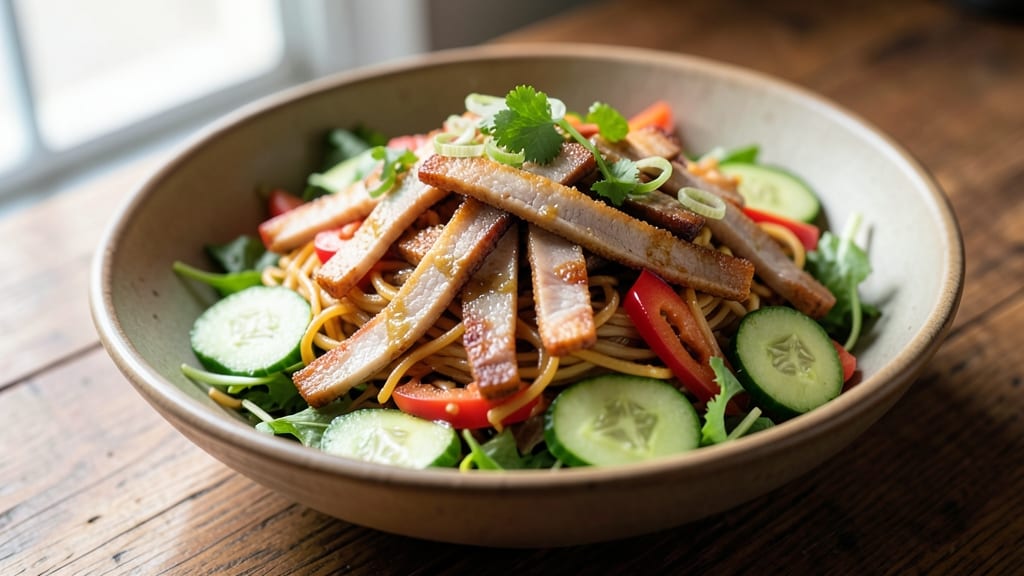
This Asian pork salad recipe transforms simple ingredients into a vibrant, restaurant-quality dish with crispy rice noodles and a tangy tamarind dressing that balances sweet, sour, and umami flavors.
The secret lies in marinating the pork just right—tender yet flavorful—and achieving that perfect crisp-tender texture in the noodles through a quick sear. I developed this recipe after craving something light yet satisfying, and it became an instant weeknight favorite.
The salad combines marinated pork slices, chewy rice noodles, and a medley of fresh vegetables like cucumber, bell peppers, and cilantro, all tossed in a bright tamarind-lime dressing. What sets this apart is the crispy texture of the noodles, achieved by stir-frying them just until they're golden and slightly caramelized.
The dressing, made with tamarind paste, fish sauce, and a touch of honey, adds depth that elevates every bite.
This dish is perfect for a quick lunch or a light dinner, especially on warm days when you want something refreshing yet filling. The tamarind dressing cuts through the richness of the pork, while the fresh vegetables add crunch and brightness.
Serve it over a bed of mixed greens or alongside steamed jasmine rice for a complete meal.
One of the best things about this recipe is its versatility—swap in shrimp or tofu for a vegetarian twist, or adjust the dressing sweetness to your preference. The key is balancing the flavors so each component shines without overpowering the others. Let’s get started!
Ingredients for asian pork salad
Crispy pork, chewy noodles, and a tangy dressing—this salad packs restaurant-quality flavor with just 17 ingredients.
| Ingredient | Amount | Notes |
|---|---|---|
| Boneless Pork Tenderloin 🥩 | 1 lb | Thinly sliced against grain |
| Rice Noodles 🍜 | 8 oz | Thin vermicelli type, dry |
| Tamarind Paste 🍈 | ¼ cup | High-quality, unsweetened |
| Fish Sauce 🍶 | 2 tbsp | Red Boat preferred |
| Honey 🍯 | 1 tbsp | Wildflower preferred |
| Lime Juice 🍋 | ¼ cup | Freshly squeezed |
| Sesame Oil 🫒 | 1 tbsp | Toasted sesame oil |
| Garlic Cloves 🧄 | 4 cloves | Minced for marinade |
| Ginger Root 🌿 | 1 tbsp | Freshly grated |
| Vegetable Oil 🫒 | ½ cup | High smoke point |
| English Cucumber 🥒 | 1 whole | Seedless, thinly sliced |
| Red Bell Pepper 🌶️ | 1 whole | Thinly sliced |
| Cilantro Leaves 🌿 | ½ cup | Chopped, fresh |
| Green Onions 🧅 | 3 whole | Thinly sliced |
| Sesame Seeds 🌰 | 1 tbsp | Toasted for garnish |
| Diamond Crystal Kosher Salt 🧂 | 1 tsp | For seasoning |
| Ground Black Pepper 🌶️ | ½ tsp | Freshly cracked |
The pork tenderloin is your star—look for uniform slices at the butcher counter or Asian market. Whole Foods and Trader Joe's carry pre-sliced versions if you're short on time. Thin slices sear faster and stay tender. For the rice noodles, vermicelli type is key—avoid thick rice sticks. Soak them in warm water for 10 minutes before using. Tamarind paste? Thai Kitchen brand is my go-to—it's sweet, tangy, and never grainy. If you can't find it, sub with lime juice plus 1 tsp sugar, but you'll lose that complex depth.
No tamarind paste? Lime juice plus 1 tsp sugar works in a pinch, but trust me on the tamarind—it's worth hunting down. Swapping pork for shrimp? Marinate shrimp in the same sauce for 15 minutes instead of slicing. The fish sauce is non-negotiable here—Red Boat has the cleanest flavor, but any reputable brand works. Fresh ginger and garlic? Grate the ginger on the smallest side of a box grater for fine texture. The sesame oil should smell nutty and toasty—if it's rancid, toss it. For the veggies, seedless cucumber stays crisp longer, and red bell peppers add that perfect pop of color.
Pork marinates best in the fridge for at least 30 minutes—overnight is ideal. Noodles? Rinse with cold water after cooking to stop them from sticking. The dressing keeps for 5 days in the fridge, but the noodles are best eaten fresh. For leftovers, store components separately—dressing, veggies, and pork/noodles. Toss everything together right before serving to keep the noodles from getting soggy. Garnish with toasted sesame seeds right before eating—they add that final crunchy texture that makes this dish sing.
Why You'll Love This Recipe
- No-Fuss Protein: I swear by this pork tenderloin—it’s lean, tender, and cooks in 15 minutes on the stovetop. No brining, no marinating overnight, just slice it thin, sear it fast, and you’ve got perfect bite-sized pieces that hold up in the salad.
- Sweet-Savory Balance: That tamarind paste and honey combo? It’s magic—tangy, sticky, and just sweet enough to make you want to eat it with a spoon. Fish sauce rounds it out with umami depth, so you’re not just tasting "Asian flavors," you’re tasting real ones.
- Lunchbox Hero: Between us, this is my go-to for packed lunches. The noodles stay separate until you toss them, so no soggy mess. Add cucumber, mint, and crushed peanuts, and you’ve got a meal that’s fresh at room temp—no reheating required.
- Budget Meal Stretch: A single pork tenderloin feeds four for dinner and leaves enough for two lunches. Rice noodles are cheap, tamarind paste lasts forever, and fish sauce is a pantry MVP. Honestly, it’s the kind of recipe that makes grocery day feel like a win.
Step-by-step instructions for crispy Asian pork salad
Here's how to create restaurant-quality crispy pork and tangy rice noodles that'll impress anyone.
Marinate and Slice the Pork Tenderloin
Slice the 1 lb boneless pork tenderloin thinly against the grain into ¼-inch thick strips. This ensures tender bites that cook quickly and evenly. In a bowl, combine 2 tbsp fish sauce, 1 tbsp honey, 4 cloves minced garlic, and 1 tbsp freshly grated ginger. Add the pork strips and toss until fully coated. Let it marinate for at least 30 minutes in the refrigerator—this develops deep flavor and tenderizes the meat.
While the pork marinates, prepare the tamarind dressing by whisking together 0.25 cup tamarind paste, 0.25 cup freshly squeezed lime juice, 1 tbsp toasted sesame oil, 1 tsp Diamond Crystal kosher salt, and 0.5 tsp freshly cracked black pepper. Set aside—this bright, tangy dressing will tie everything together.
Cook the Pork Until Crispy
Heat 0.5 cup vegetable oil in a large skillet over medium-high heat until shimmering but not smoking. Add the marinated pork in a single layer, being careful not to overcrowd the pan. Cook undisturbed for 2-3 minutes until the edges turn golden brown and crispy. Flip and cook another 1-2 minutes until fully cooked through—you want the pork to reach 145°F internally and develop that perfect crispy exterior.
Remove the pork from the skillet and set it aside on a paper towel-lined plate. The residual heat will keep it warm while you prepare the remaining components. Don't drain the oil yet—those crispy bits will add incredible flavor to the noodles.
Prepare and Cook the Rice Noodles
Bring a large pot of water to a rolling boil and add 8 oz rice noodles. Cook for 2-3 minutes until the noodles are just tender but still slightly firm to the bite—this ensures they hold their shape when tossed with the dressing. Drain immediately and rinse under cold water to stop the cooking process. Toss the noodles with 1 tbsp sesame oil to prevent sticking and add a subtle nutty aroma.
Return the skillet with the pork oil to medium heat. Add the cooked noodles and toss vigorously for 1-2 minutes until they're evenly coated in the crispy pork oil. This step creates that signature crispy texture that makes this salad so irresistible. The noodles should be hot but not soggy—just enough to warm through.
Assemble the Salad
In a large bowl, combine the crispy noodles with 1 whole thinly sliced English cucumber, 1 whole thinly sliced red bell pepper, 0.5 cup chopped cilantro leaves, and 3 whole thinly sliced green onions. Gently toss everything together, being careful not to break the noodles. Add the marinated pork back into the bowl and mix lightly to distribute evenly.
Drizzle the tamarind dressing over the salad and toss gently to coat everything evenly. The dressing should cling to the noodles and pork, creating a perfect balance of tangy, sweet, and umami flavors. Sprinkle with 1 tbsp toasted sesame seeds for added texture and visual appeal. Serve immediately while the noodles are still warm and crispy.
Garnish and Serve with Confidence
Divide the salad among 4 plates and garnish each serving with an extra sprinkle of sesame seeds and a few cilantro leaves. The contrast of crispy pork, tender noodles, and fresh vegetables creates a textural masterpiece. Serve with additional tamarind dressing on the side if desired—this salad tastes even better when you can adjust the tanginess to your preference.
Here's the thing—this dish is all about balance. The crispy pork provides a satisfying crunch, the tamarind dressing adds a bright tang, and the fresh vegetables keep it light. Every bite delivers a perfect harmony of textures and flavors that'll have everyone asking for seconds. Enjoy immediately while everything is at its peak!
Pro Tips For Making Asian Pork Salad
- SEAR THE PORK FAST: Hit the pork tenderloin with a screaming-hot pan—no need to wait for it to sizzle. Slice it thin (¼-inch max) after searing, and you’ll get perfect bite-sized pieces that stay tender. I used to let it cook too long, and it turned out chewy—don’t let that happen.
- SOAK NOODLES JUST RIGHT: Rice noodles turn to mush if you over-soak them. Test them at 3 minutes—if they’re still slightly firm, drain and rinse with cold water to stop cooking. They’ll soften further in the dressing, but you’ll avoid that dreaded gummy texture.
- DILUTE TAMARIND PASTE FIRST: Tamarind paste is thick and sticky—mix it with 1-2 tablespoons of warm water before adding it to the dressing. This keeps the sauce smooth and prevents clumps. I learned this after scraping globs out of my salad for the third time.
- BALANCE THE DRESSING IN STAGES: Taste as you go—start with 1 tablespoon fish sauce and ½ tablespoon honey, then adjust. Tamarind is tart, so if it’s too sharp, a pinch of sugar (or more honey) fixes it. Don’t dump everything in at once; you’ll regret it.
Essential equipment for great asian pork salad
Skillet Essentials
Your 12-inch cast iron skillet is the MVP for crispy pork and noodles—I swear by my Lodge Pre-Seasoned skillet for even heat distribution. For budget-friendly alternatives, a non-stick stainless steel skillet like All-Clad works well, but avoid non-stick coatings that can't handle high heat.
Preheat your skillet over medium-high heat for 3-4 minutes before adding oil to ensure proper searing. 🔥
Use a wire whisk for tossing noodles—it creates better airflow than a spoon. I keep a stainless steel whisk from OXO in my kitchen for this exact purpose.
A large mixing bowl (at least 16 cups) is crucial for assembling the salad without breaking the noodles. I recommend a stainless steel bowl for durability.
Noodle Prep Tools
Rice noodles need precise timing, so a fine-mesh strainer is essential for draining them quickly. I use a colander with a handle from Rubbermaid Commercial Products—it's sturdy and fits perfectly in my sink.
For rinsing, a spray bottle with cold water works better than running water to stop the cooking process immediately. 💧
A mandoline slicer makes quick work of cucumbers and bell peppers—just set it to 2mm thickness. For the pork, a sharp chef's knife and cutting board are mandatory.
I prefer a Wüsthof Ikon knife for clean slices against the grain. A meat thermometer ensures pork reaches 145°F safely without overcooking.
Dressing and Garnish
The tamarind dressing requires a small whisk or fork for smooth emulsification. I use a silicon whisk attachment for my Immersion Blender when making larger batches.
For measuring tamarind paste, a small silicone spatula prevents messy transfers. A microplane is perfect for fresh ginger and garlic—it creates fine textures without pulp. 🌶️
Toast sesame seeds in a small dry skillet over low heat for 1-2 minutes until fragrant. Store them in a small airtight container to maintain freshness. Fresh cilantro and green onions should be chopped just before serving—I use a pair of kitchen shears for quick, even cuts.
A small serving spoon helps distribute the dressing evenly over the salad.
Nutrition facts
Frequently asked questions
Can I use ground pork instead of thinly sliced pork tenderloin?
Ground pork works but will give a completely different texture. For this recipe, thinly sliced pork tenderloin creates tender, crispy pieces that hold up well in the salad. If you must use ground pork, form it into small patties (about ¼-inch thick) and cook until browned and fully done (160°F internally). The flavor will be similar, but the texture will be denser.
How do I make this salad spicier?
Add heat by mixing ½ teaspoon of chili flakes or 1 teaspoon of sriracha into the tamarind dressing. For extra kick, stir in 1 tablespoon of minced fresh chili (like Thai bird's eye) with the pork marinade. Adjust to taste—start small and add more if needed.
Can I prepare this salad ahead of time?
Yes, but store components separately to keep everything fresh. Marinate the pork and make the dressing up to 2 days ahead. Cook the pork and noodles just before serving. Assemble the salad last minute—dressing the noodles too early makes them soggy. Keep fresh veggies and herbs in airtight containers in the fridge for up to 1 day.
What's the best way to store leftover tamarind dressing?
Transfer the dressing to an airtight container and refrigerate for up to 5 days. The flavors actually improve as it sits! Give it a good stir before using—sometimes the tamarind separates. If it thickens, add 1 teaspoon of warm water to restore consistency. Save any extra for future salads or marinades!
Is there a vegetarian version of this recipe?
Swap the pork for extra-firm tofu or shrimp. For tofu, press and cube it, then pan-fry until crispy. Marinate in the same sauce for 15 minutes before cooking. The noodles and dressing stay exactly the same—just adjust cooking times for tofu (3-4 minutes per side) to ensure it's fully cooked and crispy.