
Salads
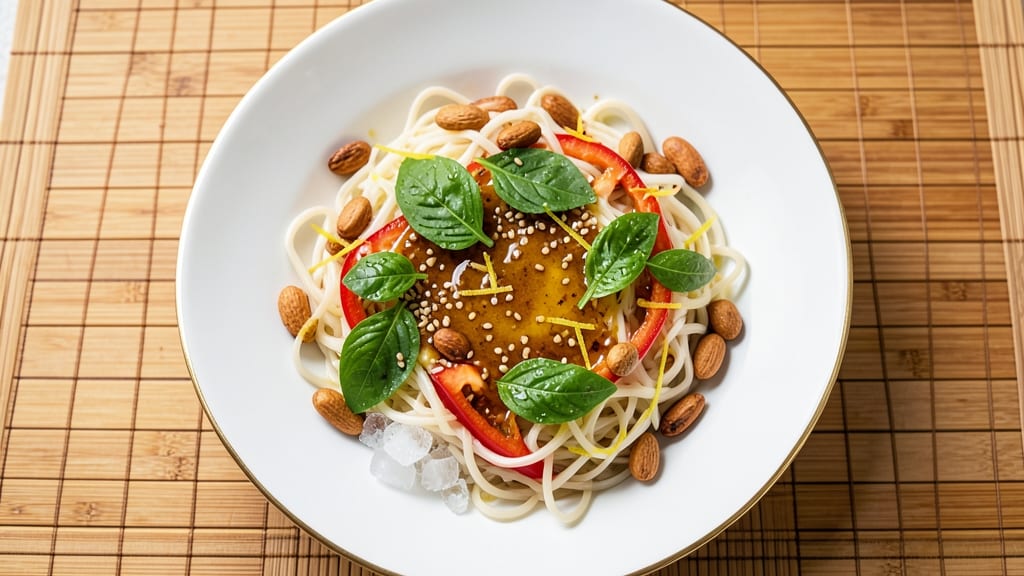
This Asian Oriental salad recipe transforms simple ingredients into a vibrant, restaurant-quality dish with just 20 minutes of prep. The secret lies in crispy rice noodles tossed with fresh julienned vegetables, a tangy peanut-lime dressing, and crunchy toppings that create perfect texture contrast.
I developed this version after years of perfecting the balance between traditional Asian flavors and modern fusion techniques that make it irresistible.
The foundation of this salad is the peanut-lime dressing, where toasted peanuts meet zesty lime juice and a touch of chili for that signature Asian kick. Fresh herbs like cilantro and Thai basil add aromatic depth, while julienned carrots and cucumbers provide crisp, refreshing bites.
The key technique is properly cooking the rice noodles—just al dente so they maintain their bite when tossed with the dressing.
What makes this salad truly special is how the flavors come together: the nutty richness of the peanut sauce balances perfectly with the bright acidity of lime, while the crunchy toppings add texture that keeps every bite exciting.
It's a dish that's light yet satisfying, fresh but flavorful—ideal for warm weather or as a refreshing starter for any meal.
This recipe serves 4 and can be prepped ahead, making it perfect for meal prep or entertaining. The components keep well separately until assembly, so you can customize toppings based on what you have on hand.
Whether you're serving it as a main dish or side, this Asian Oriental salad delivers authentic flavors with a modern twist.
Ingredients for asian oriental salad
Vibrant ingredients meet authentic Asian fusion in this crisp, zesty salad recipe.
| Ingredient | Amount | Notes |
|---|---|---|
| Rice Noodles 🍜 | 8 oz | Vermicelli or thin rice noodles |
| Raw Peanuts 🥜 | ½ cup | Toasted and finely chopped |
| Lime Juice 🍋 | ½ cup | Freshly squeezed, strained |
| Peanut Butter 🥜 | ¼ cup | Natural, unsweetened variety |
| Soy Sauce 🥢 | 2 tbsp | Low-sodium preferred |
| Sesame Oil 🫒 | 1 tbsp | Toasted for authentic flavor |
| Red Chili Flakes 🌶️ | ½ tsp | Adjust for heat preference |
| Carrots 🥕 | 1 medium | Julienned into matchsticks |
| English Cucumber 🥒 | 1 whole | Julienned, seeds removed |
| Fresh Cilantro 🌿 | ¼ cup | Stems removed, chopped |
| Thai Basil 🌿 | 0.15 cup | Fresh leaves, lightly bruised |
| Red Bell Pepper 🌶️ | ½ whole | Thinly sliced into strips |
| Crushed Peanuts 🥜 | ¼ cup | For garnish, toasted |
| Sesame Seeds 🌾 | 1 tbsp | Toasted, for garnish |
| Vegetable Oil 🫒 | 1 tbsp | For rice noodle cooking |
| Granulated Sugar 🍚 | 1 tsp | Balances acidity in dressing |
The rice noodles are non-negotiable for texture—look for vermicelli or thin rice noodles at Asian markets or the international aisle of Whole Foods. Brands like Three Crabs or Vietnamese rice noodles from Trader Joe's deliver consistent quality. Avoid pre-cooked varieties; they lose their crispness. For the peanut-lime dressing, toasted peanuts are essential—they develop nutty depth that store-bought peanut butter can't replicate. If you're short on time, toast your own in a dry pan for 5-7 minutes until fragrant. The lime juice should be freshly squeezed; bottled versions lack the bright acidity needed to cut through the richness. Mexican limes from the produce section have the perfect balance of tartness and sweetness.
No Thai basil? Fresh basil or mint work in a pinch, though the anise notes are unique to Thai basil. The red bell pepper can be swapped for julienned red onion if you prefer sharper contrast. For heat-sensitive diners, reduce the chili flakes to ¼ teaspoon or use sriracha instead—it adds complexity beyond just heat. The peanut butter should be natural, unsweetened to avoid overpowering the dressing with sweetness. If you're using a sweeter variety, reduce the granulated sugar to ½ teaspoon. The dressing keeps well for 5 days in the fridge, so make extra for sandwiches or wraps. For the vegetables, pre-cut julienne peeler tools save time, but a sharp knife and steady hand work just as well.
Rice noodles cook in 3-4 minutes—set a timer and test one immediately after draining. They should be al dente, not mushy. Store cooked noodles in an airtight container with a damp paper towel to retain crispness for 2 days. The dressing thickens when chilled, so give it a quick stir before using. For meal prep, assemble the salad components separately: store the dressing in a jar, the vegetables in sealed containers, and the noodles in a separate container. Toss everything together just before serving to maintain that crunchy texture. The salad holds well for 3 days in the fridge, though the cucumber may soften—swap in fresh julienned radishes for a crunchier update when reheating.
Why You'll Love This Recipe
- No-Chop Magic: I swear by this one—just toss in pre-cooked rice noodles (no boiling required) and chop one thing: the peanuts. The rest? Stir, drizzle, and serve. That lime-peanut dressing does all the work.
- Creamy-Spicy Balance: Between the peanut butter’s richness and lime’s tang, this salad hits just right—no weird aftertaste, just that addictive contrast. Honestly, I’ve made it three times this week, and I still reach for more.
- Lunchbox Hero: Pack it cold for work or picnic—no reheating needed. The noodles hold up perfectly, and the peanuts add crunch even after hours. (Yes, even on a Tuesday night when I forget to meal prep.)
- Pantry Staple Power: Soy sauce, peanut butter, lime? You’re already halfway there. It’s the kind of recipe that turns “what’s for dinner?” into “oh, I’ve got this.” Leftovers? Taste just as good the next day.
Step-by-step instructions for crunchy rice noodle salad
This vibrant salad delivers perfect texture contrast and balanced flavors every time.
Prepare the Rice Noodles
Bring a large pot of water to a rolling boil. Add the 8 oz rice noodles and cook for exactly 3-4 minutes until they're tender but still retain a slight bite. You'll know they're ready when they float to the surface and the edges begin to soften.
Immediately drain the noodles in a colander and rinse under cold water for 30 seconds to stop the cooking process. This prevents them from becoming mushy. Drain well and transfer to a large mixing bowl. While still warm, toss the noodles with 1 tablespoon vegetable oil to prevent sticking and add a subtle sheen.
Create the Peanut-Lime Dressing
In a small bowl, whisk together the 0.5 cup lime juice, 0.25 cup peanut butter, 2 tablespoons soy sauce, 1 tablespoon sesame oil, 1 teaspoon granulated sugar, and 0.5 teaspoon red chili flakes until completely smooth. The sugar helps balance the acidity from the lime while the chili flakes add subtle heat.
Gradually thin the dressing with 2-3 tablespoons of warm water until it reaches a pourable consistency. You want it thick enough to coat the noodles but still fluid enough to distribute evenly. Taste and adjust seasoning—add more soy sauce for saltiness or lime juice for acidity if needed.
Prep and Combine Vegetables
Julienne the 1 medium carrot and 1 whole English cucumber into thin matchsticks using a sharp mandoline or chef's knife. Thinly slice the 0.5 whole red bell pepper into strips. Remove stems from the 0.25 cup fresh cilantro and 0.15 cup Thai basil, then chop both finely.
Add all prepared vegetables to the warm noodles along with the 0.5 cup toasted and finely chopped raw peanuts. Pour the dressing over the mixture and toss gently but thoroughly to ensure every strand of noodle and vegetable is coated. The texture should be uniformly crisp with no dry spots.
Garnish and Serve Immediately
Transfer the salad to a large serving platter and sprinkle with 0.25 cup crushed peanuts and 1 tablespoon toasted sesame seeds. The crushed peanuts add an extra crunch while the sesame seeds contribute nutty aroma. Serve immediately while the noodles are still warm for the best texture contrast.
For optimal presentation, arrange the salad in a circular pattern on the platter, with the crushed peanuts and sesame seeds concentrated in the center. This creates visual appeal while maintaining the perfect balance of textures and flavors in every bite.
Pro Tips For Making Asian Oriental Salad
- Rinse Noodles Twice: Cold water only—no oil, no vinegar. The first rinse removes excess starch so they don’t turn into glue, and the second ensures they’re actually cold before tossing. I learned this the hard way when my salad turned into a sticky mess after sitting for 10 minutes.
- Toast Peanuts Low: Start at 300°F (150°C) for 5-6 minutes—any hotter and they’ll burn before they’re crisp. Pull them out when they’re just golden, not dark brown, or they’ll taste bitter. (Yes, even if you’re impatient like me.)
- Whisk Peanut Butter First: Mix peanut butter with lime juice before adding soy sauce—otherwise, you’ll end up with clumps. Use a fork to break it down into a smooth paste, then thin with a splash of hot water if needed. This isn’t the prettiest method, but it’s the tastiest.
- Balance Lime Last: Toss the salad with dressing, then squeeze lime over the top—this keeps the acid bright and lets you adjust to taste. Too much upfront, and you’ll regret it when the peanuts start to sweat. (Your future self will thank you.)
Serving suggestions for this asian oriental salad
Plating for Maximum Impact
Serve this salad on a large wooden board or slate platter to enhance the rustic Asian aesthetic. Arrange the noodles and vegetables in a sunburst pattern, radiating from the center where you concentrate the crushed peanuts and sesame seeds.
This creates visual interest while keeping textures balanced in every bite. 🌟
Protein Pairings
Add grilled shrimp or toasted tempeh for a complete meal. I like to marinate 8 oz shrimp in 1 tbsp soy sauce, 1 tsp sesame oil, and ½ tsp grated ginger for 15 minutes before grilling.
Serve alongside the salad for a protein boost that complements the peanut-lime flavors.
Dressing Variations
For a spicier kick, add 1 tbsp sriracha to the dressing. If you prefer sweeter notes, reduce the lime juice to ¼ cup and add 1 tsp honey.
The dressing works beautifully on rice paper rolls too—just dip the paper in warm water, add fillings, and roll for fresh spring rolls.
Meal Prep Adaptations
Store components separately: dressing in a jar, vegetables in sealed containers, and cooked noodles in an airtight container with a damp towel. Toss everything together just before serving to maintain crispness. This salad keeps well for 3 days in the fridge—perfect for busy weeknights.
Seasonal Swaps
In summer, swap cucumber for julienned zucchini and add sliced mango for sweetness. For fall, use butternut squash instead of carrots and add toasted pumpkin seeds for crunch. These seasonal updates keep the dish exciting year-round.
Presentation Upgrades
Garnish with edible flowers like pansies or nasturtiums for a pop of color. A drizzle of chili oil along the edge of the platter adds visual drama.
For a modern twist, serve in individual glass jars with noodles at the bottom, dressing layered next, and toppings on top—perfect for meal prep or parties. ✨
Nutrition facts
Frequently asked questions
Can I make this Asian salad without rice noodles?
Swap the rice noodles for shredded cabbage or rice vermicelli for a different texture. For a heartier option, try thinly sliced chicken breast or tofu cubes—just marinate them in the dressing first. The key is maintaining that crisp contrast, so choose ingredients that stay firm when tossed.
How do I prevent the dressing from separating?
The dressing should stay emulsified if you whisk it well and use warm water to thin it. For extra insurance, add 1 teaspoon of honey or 1 tablespoon of coconut milk to help bind the ingredients. If it does separate, just give it a quick stir before using—it won't affect the flavor!
What's the best way to store leftovers?
Store the dressing and vegetables separately in airtight containers for up to 3 days. Keep the cooked noodles in a sealed container with a damp paper towel to maintain crispness. When ready to eat, toss everything together and add fresh garnishes like crushed peanuts and sesame seeds for that restaurant-quality crunch.
Can I make this salad gluten-free?
Yes! Simply use tamari (gluten-free soy sauce) instead of regular soy sauce. Check that your peanut butter is certified gluten-free, and ensure your rice noodles are made from 100% rice flour. The rest of the ingredients are naturally gluten-free, so this version remains just as flavorful and satisfying.
Why does my salad taste bland after sitting overnight?
The flavors often mellow after chilling, so give it a quick taste and adjust with extra lime juice or a dash of soy sauce. The texture may also soften—revive it by tossing with 1 teaspoon of sesame oil or adding fresh julienned veggies like carrots or cucumber for that fresh crunch.