
Side Dishes
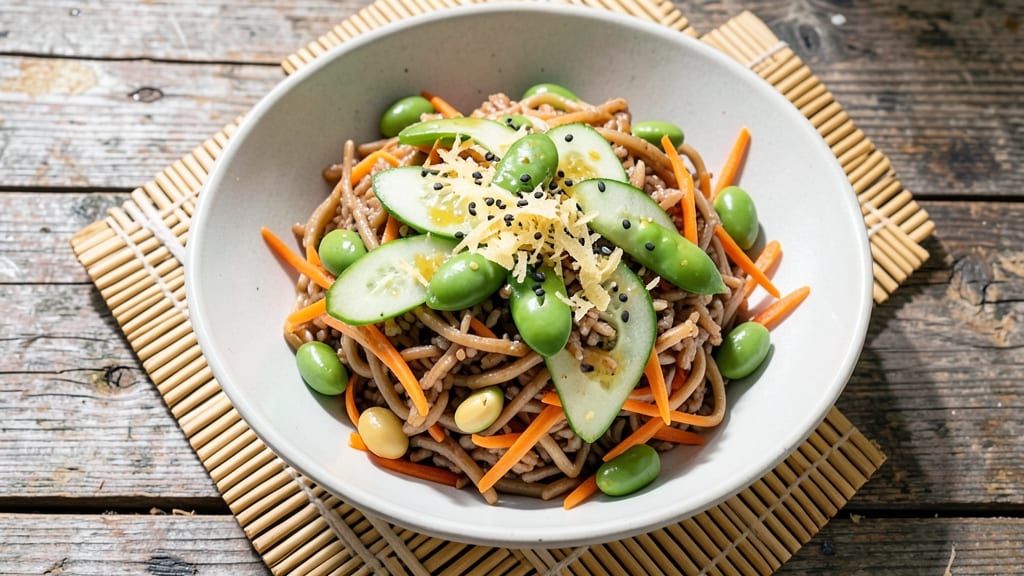
This Asian macaroni salad recipe transforms a classic side dish into a vibrant, flavor-packed centerpiece with a sesame-ginger dressing and crispy edamame. The perfect balance of textures—chewy pasta, crunchy vegetables, and toasted sesame seeds—makes it a standout for potlucks, picnics, or weeknight dinners.
I developed this version after craving something lighter than traditional pasta salads but still packed with bold Asian-inspired flavors.
The secret lies in the dressing: a harmonious blend of toasted sesame oil, fresh ginger, and a touch of soy sauce that coats each noodle and vegetable without overpowering. Unlike heavy mayo-based salads, this version stays fresh and flavorful for hours, thanks to the bright, umami-rich components.
The edamame adds a satisfying crunch and a boost of plant-based protein, while shredded carrots and cucumber keep it refreshing.
What sets this recipe apart is how effortlessly it comes together—just boil the pasta, blanch the veggies, and toss everything with the dressing. The result is a dish that’s restaurant-quality at home, with layers of flavor that evolve the longer it sits.
It’s hearty enough to serve as a main dish but light enough to pair with grilled meats or sushi. Ready in under 30 minutes, it’s the perfect solution for busy weeknights.
Whether you're hosting a gathering or simply craving a satisfying meal, this Asian macaroni salad delivers bold, balanced flavors that will have everyone asking for the recipe. The best part? It keeps well in the fridge for up to 3 days, making it ideal for meal prep. Let’s get started!
Ingredients for asian macaroni salad
Six servings of restaurant-quality Asian macaroni salad with bold, balanced flavors you'll crave.
| Ingredient | Amount | Notes |
|---|---|---|
| Short-Grain Brown Rice Pasta 🍜 | 12 oz | Al dente texture preferred |
| Shelled Edamame 🌱 | 1 ½ cups | Frozen, thawed and drained |
| Carrots 🥕 | 2 medium | Shredded with peeler |
| Persian Cucumber 🥒 | 1 whole | Seedless, thinly sliced |
| Fresh Ginger 🧄 | 2 tbsp | Finely grated, fresh |
| Toasted Sesame Oil 🫒 | ¼ cup | High-quality, nutty aroma |
| Rice Vinegar 💧 | ¼ cup | Seasoned preferred |
| Low-Sodium Soy Sauce 🍶 | 2 tbsp | Kikkoman preferred |
| Sesame Seeds 🌿 | 2 tbsp | Toasted for extra crunch |
| Green Onions 🧅 | 4 whole | Thinly sliced, white and green |
| Sesame-Ginger Dressing 🍶 | ½ cup | Homemade or store-bought |
| Diamond Crystal Kosher Salt 🧂 | ½ tsp | For seasoning |
| Black Pepper 🌶️ | ¼ tsp | Freshly cracked |
The edamame and sesame seeds are non-negotiable for that satisfying crunch. Frozen edamame works perfectly—just thaw and drain before tossing in. For the sesame seeds, toast them in a dry pan for 2 minutes until golden—game-changer for flavor. The Persian cucumber stays crisp longer than regular cucumbers, but any seedless variety works. Carrots should be shredded with a peeler for that restaurant-style texture. If you can't find brown rice pasta, regular pasta works, but the nutty flavor ties everything together better.
No sesame oil? Toasted peanut oil gives a similar depth, though it'll taste different. Short on ginger? Double the garlic powder for a similar punch. The dressing can be store-bought, but homemade is better—just blend the sesame oil, rice vinegar, soy sauce, grated ginger, and a pinch of salt. For extra protein, add chopped boiled eggs or crispy tofu. If you're making this ahead, hold off on adding the cucumber until serving to keep it crisp.
This salad keeps beautifully for 3 days in the fridge, with flavors actually improving as it sits. For meal prep, store components separately—pasta, veggies, and dressing—then toss together when ready to serve. The edamame and sesame seeds stay fresh for 5 days if stored in airtight containers. Double the batch and freeze half for later—it reheats beautifully when thawed.
Why You'll Love This Recipe
- No-Cook Add-Ins: I swear by the edamame and cucumber—just toss them in raw for that fresh crunch. The ginger? A tiny bit of grating is all you need, and suddenly everything tastes like a takeout menu.
- Umami Bomb: That brown rice pasta soaks up the sesame dressing like a dream, while the edamame adds this rich, nutty depth. Honestly, the first bite makes me wonder why I ever bought pre-made salad kits.
- Lunchbox Hero: Between us, this is my go-to for packed lunches—keeps for days without getting soggy. The carrots stay crisp, the pasta holds shape, and it’s the only salad my kids actually finish.
- Budget Stretch: Short-grain pasta and seasonal veggies mean I can make this for half the cost of store-bought. Plus, the leftovers? Even better the next day—if there are any, because it disappears fast.
Step-by-step instructions for Asian macaroni salad
This vibrant salad comes together in minutes with bold Asian flavors and satisfying textures.
Cook the Short-Grain Brown Rice Pasta Al Dente
Bring a large pot of water to a rolling boil and add 12 oz of short-grain brown rice pasta. Cook according to package directions until 1 minute before al dente—this ensures perfect texture when tossed with the dressing. The pasta should have a slight bite but still be tender. Drain immediately and rinse under cold water to stop cooking and remove excess starch.
Here's the thing—brown rice pasta has a nuttier flavor and chewier texture than white pasta. Rinsing helps prevent the salad from becoming gummy, while the slight undercooking ensures it holds up well when mixed with the crunchy vegetables. Spread the drained pasta on a baking sheet to cool completely before assembling the salad.
Prepare the Crunchy Vegetable Medley
Using a peeler, shred the 2 medium carrots into thin, matchstick-like strips. Thinly slice the 1 whole Persian cucumber into ¼-inch rounds, removing any seeds. Finely grate the 2 tbsp of fresh ginger—you want it smooth like a paste, not chunky. Thinly slice the 4 whole green onions, separating the white and green parts if you prefer different textures.
Real talk: the ginger is where the magic happens. Freshly grated ginger adds a bright, zesty kick that balances the richness of the sesame oil. Don't skip this step—store-bought ginger paste can't compare. As you work, keep the vegetables in separate piles until ready to combine with the pasta.
Assemble the Salad Base
In a large mixing bowl, combine the cooled short-grain brown rice pasta with the shredded carrots, cucumber slices, and sliced green onions. Gently toss everything together with your hands or a large spoon, being careful not to bruise the vegetables. Add the 1.5 cups of shelled edamame and mix again, distributing them evenly throughout the pasta.
The reason we wait until the pasta is completely cool is to prevent the vegetables from wilting in the heat. The edamame adds a satisfying crunch that contrasts beautifully with the tender pasta. Give everything a final toss to ensure even distribution—this is your flavor foundation before adding the dressing.
Whisk the Sesame-Ginger Dressing
In a small bowl, whisk together the 0.5 cup of sesame-ginger dressing with the 0.25 cup of toasted sesame oil, 0.25 cup of rice vinegar, and 2 tbsp of low-sodium soy sauce. Add the 0.5 tsp of diamond crystal kosher salt and 0.25 tsp of black pepper, then whisk until completely smooth. The dressing should coat the back of a spoon with a silky, glossy texture.
Here's where it gets fun—taste the dressing before adding it to the salad. You might want to add a touch more soy sauce for saltiness or a drizzle of rice vinegar for acidity. The dressing should be tangy, nutty, and slightly sweet from the sesame oil. If it's too thick, add 1-2 tablespoons of water to reach your desired consistency.
Combine and Finish with Toasted Sesame Seeds
Pour the dressing over the pasta mixture and toss gently but thoroughly to coat every strand and vegetable piece. Let the salad sit for 5 minutes to allow the flavors to meld together. Sprinkle the 2 tbsp of toasted sesame seeds evenly over the top just before serving—this adds an extra layer of crunch and visual appeal.
Your Asian macaroni salad is now ready to serve. The textures should be perfectly balanced: the chewy pasta, crisp vegetables, tender edamame, and crunchy sesame seeds. For the best experience, serve immediately while the vegetables are still vibrant and the dressing is fresh. This salad keeps well in the refrigerator for up to 3 days, making it perfect for meal prep!
Pro Tips For Making Asian Macaroni Salad
- Boil Pasta Till Al Dente: Short-grain brown rice pasta turns mushy fast—pull it from the pot when it’s still slightly firm. Toss it immediately in ice water to stop cooking, then drain well. I learned this the hard way when my salad turned into a gluey mess.
- Shave Ginger Thin: Skip the grater and use a microplane for fresh ginger—it releases more flavor and blends smoothly. A teaspoon of finely shaved ginger (not minced) makes a real difference without overpowering the dish.
- Salt the Edamame: Toss shelled edamame with a pinch of salt before adding it to the salad. It keeps them from getting soggy and adds a subtle crunch that holds up better than raw beans ever could.
- Cut Cucumber in Half: Slice Persian cucumbers lengthwise first, then dice—this removes the bitter seeds and keeps the texture crisp. No one wants a watery salad, so resist the urge to chop them raw.
Essential equipment for this recipe
Pasta Cooker Essentials
For this recipe, a large pot with a tight-fitting lid is non-negotiable—think 8-quart or larger to prevent pasta from boiling over. I use my All-Clad stainless steel pot because it heats evenly and prevents scorching.
A pasta fork or tongs helps drain and rinse the pasta efficiently without breaking strands. For brown rice pasta, avoid overcrowding the pot—cook in two batches if needed to maintain water temperature. 🍜
Vegetable Prep Tools
A Y-shaped peeler (like the OXO Good Grips) is perfect for shredding carrots into thin strips without the mess of a grater. For cucumbers, a sharp chef’s knife and mandoline (set to ¼-inch thickness) ensure uniform slices.
I keep a small bowl of ice water nearby to refresh grated ginger immediately after grating—this preserves its bright flavor. A microplane works best for ginger, giving you that smooth, paste-like texture. 🥕
Mixing and Tossing
A large mixing bowl (at least 8-quart capacity) is essential for combining all ingredients without spills. I prefer glass or stainless steel—they’re non-reactive and easy to clean.
For tossing, wooden salad servers or silicon spatulas prevent bruising the vegetables. A fine-mesh strainer helps drain edamame thoroughly, removing excess water that could dilute the dressing. 🥄
Dressing Whisk and Storage
Use a small whisk (like the OXO Good Grips) to emulsify the dressing smoothly. For measuring, a liquid measuring cup ensures precise amounts of sesame oil and rice vinegar.
Store leftovers in airtight glass containers with a parchment-lined lid to prevent sogginess. I label containers with the date—this salad keeps for 3 days at its freshest. 💧
Crunchy Toppings
A small nonstick skillet is perfect for toasting sesame seeds—just 2 minutes on medium-low heat until golden. Keep seeds in a small jar with a tight lid to maintain crispness.
For edamame, a colander with large holes drains them efficiently after thawing. A fine-mesh sieve catches any stray seeds or debris before adding to the salad. 🌱
Nutrition facts
Frequently asked questions
Can I use regular white pasta instead of brown rice pasta?
Yes, you can substitute white pasta, but you'll lose the nutty depth that brown rice pasta provides. For a closer match, try jasmine rice pasta—it has a similar chewy texture and mild flavor. If using white pasta, rinse it thoroughly after cooking to prevent the salad from becoming too sticky.
How do I keep the cucumber crisp in the salad?
Add the cucumber slices just before serving to prevent wilting. For extra crunch, toss them with a pinch of salt and let sit for 5 minutes before adding to the salad. If prepping ahead, store cucumber slices separately in a colander in the fridge with a paper towel to absorb moisture.
What can I add for extra protein?
Try adding ½ cup of chopped hard-boiled eggs, ½ cup of cubed baked tofu, or ¼ cup of crumbled feta cheese for a protein boost. For a seafood twist, mix in ½ cup of cooked shrimp or chopped smoked salmon. Just add these ingredients after tossing the salad with dressing.
Is this salad gluten-free?
Not as written, but it can be easily adapted! Use gluten-free brown rice pasta and ensure your soy sauce is tamari. Double-check all ingredients for hidden gluten, especially in the sesame seeds and edamame. The recipe maintains the same delicious flavors while being fully gluten-free.
Can I make this ahead of time?
This salad actually tastes better after 24 hours as the flavors meld together. Store all components (pasta, veggies, dressing) separately in airtight containers. When ready to serve, combine everything and add fresh sesame seeds. For best texture, add cucumber just before serving.