
Salads
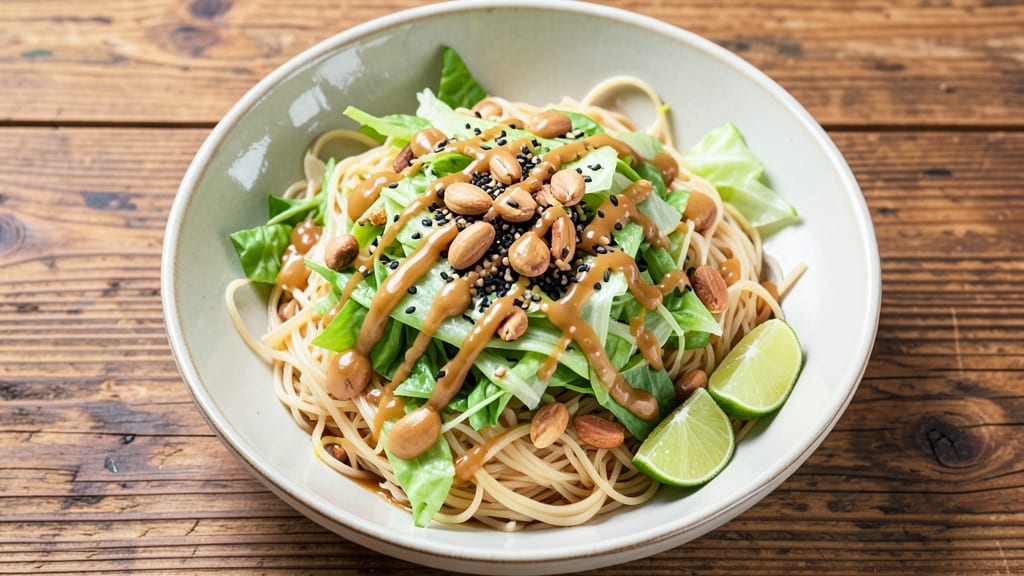
This Asian cabbage noodle salad recipe delivers crispy rice noodles that stay satisfyingly crunchy even after dressing, paired with tangy peanut-lime flavors that balance fresh cabbage perfectly.
The secret lies in high-heat stir-frying the noodles just until set, then tossing them with a dressing that marries sweet, salty, and bright citrus notes—no soggy textures here.
I developed this recipe after realizing how often restaurant versions fall flat with limp noodles, and this method guarantees restaurant-quality results at home.
The foundation starts with crispy rice noodles—cooked al dente, then tossed with sesame oil while still hot to lock in that satisfying crunch. Shredded cabbage adds refreshing crunch, while toasted peanuts contribute texture and nutty depth.
The dressing, a fusion of peanut butter, lime juice, soy sauce, and a touch of honey, creates that signature Asian tang that elevates every bite. It’s vegetarian-friendly by design but easily customizable with protein like edamame or tofu for extra staying power.
What you’ll end up with is a salad that’s crispy yet tender, tangy yet balanced, and packed with layers of flavor that keep coming back. The contrast between the crunchy noodles and creamy dressing makes this dish irresistibly satisfying—perfect for meal prep, potlucks, or a light yet filling lunch.
No wilted greens or mushy noodles here; just a harmonious blend of textures and flavors that feels both comforting and exciting.
Best of all, this recipe comes together in 30 minutes with minimal effort, making it ideal for busy weeknights or when you crave something fresh without the fuss. The dressing can be made ahead, and the noodles hold their texture beautifully until serving.
Whether you’re serving it as a main dish or a side, this salad is sure to become a staple in your rotation.
Ingredients for asian cabbage noodle salad
These 15 ingredients transform into crispy, tangy noodles that stay crunchy—no soggy salad here.
| Ingredient | Amount | Notes |
|---|---|---|
| Rice Noodles 🍜 | 8 oz | Flat rice noodles, uncooked |
| Green Cabbage 🥬 | 4 cups | Shredded, outer leaves removed |
| Peanuts 🥜 | ½ cup | Toasted, unsalted, chopped |
| Natural Peanut Butter 🥜 | ¼ cup | Creamy, no added sugar |
| Lime Juice 🍋 | ¼ cup | Freshly squeezed |
| Soy Sauce 🍶 | ¼ cup | Low-sodium preferred |
| Sesame Oil 🫒 | 1 tbsp | Toasted, for crunch |
| Honey 🍯 | 1 tbsp | Raw preferred for purity |
| Garlic Cloves 🧄 | 3 cloves | Minced, for dressing |
| Fresh Ginger 🌿 | 1 tbsp | Grated, for zing |
| Red Chili Flakes 🌶️ | ½ tsp | Adjust for heat |
| Sesame Seeds 🌾 | 1 tbsp | Toasted, for garnish |
| Cilantro 🌿 | ¼ cup | Chopped, optional garnish |
| Vegetable Oil 🫒 | 1 tbsp | For stir-frying noodles |
| Sea Salt 🧂 | 1 tsp | Fine grain preferred |
The rice noodles are the star—look for flat, medium-width noodles at Asian markets or the international aisle. Thai Kitchen or Three Ladies brands are my go-tos, but any rice noodle works. Soak them for 10-12 minutes in warm water, then rinse immediately to stop cooking. The cabbage? Green cabbage holds up best to shredding—skip the red, it bleeds color. Toast your peanuts in a dry pan for 3-4 minutes until golden; they should smell nutty, not burnt. Fresh ginger and garlic? Buy them whole—pre-grated stuff loses its punch fast.
No peanut butter? Substitute tahini or almond butter—just add a splash of water to thin it out. Short on lime juice? Lemon works in a pinch, but the citrus notes won’t be quite as bright. The soy sauce can be swapped for tamari if you’re gluten-free, or coconut aminos for a milder taste. No sesame oil? A light drizzle of neutral oil (like avocado) plus a pinch of toasted sesame seeds does the trick. For extra protein, toss in edamame or baked tofu—just add them after the noodles cool slightly so they don’t get soggy. The dressing keeps for 5 days in the fridge, so make extra for another salad.
This salad stays crispy for 24 hours if stored properly—keep the dressing separate until serving. Portion into airtight containers with a paper towel pressed on top to absorb moisture. The peanuts and sesame seeds can be toasted ahead and stored in a jar for up to 2 weeks. For meal prep, assemble everything except the dressing, then toss just before eating. The flavors actually improve overnight as the cabbage softens slightly and the dressing mellows—trust me on this. Garnish with cilantro and extra chili flakes right before serving for maximum freshness.
Why You'll Love This Recipe
- No Boil Needed: I just soak the rice noodles in warm water for 10 minutes—no pot, no fuss, no waiting for water to boil. That lime juice? It keeps them chewy and fresh-tasting while you toss everything together.
- Peanut Butter Magic: Honestly, the peanut butter isn’t just a binder—it’s the star. That creamy, nutty depth balances the sharp lime and crunchy cabbage like nothing else. (Yes, even on a Tuesday night.)
- Lunchbox Hero: Between us, this salad holds up better than most takeout. Pack it in jars or containers, and it stays crisp and flavorful for days—perfect for work lunches or school snacks. My kid still asks for it after three days.
- Budget Crunch Saver: Green cabbage lasts forever, peanut butter is cheap, and rice noodles stretch into multiple meals. I’ve made this for under $5 per serving, and it’s still more exciting than sad desk salads.
Step-by-step instructions for Asian cabbage noodle salad
Here's how to make crispy rice noodles with that perfect tangy peanut-lime balance everyone loves.
Cook the Rice Noodles Just Right
Bring a large pot of water to a rolling boil. Add the 8 oz rice noodles and the 1 teaspoon sea salt, then stir immediately to prevent sticking. Cook for 2-3 minutes—they'll be done when they float to the surface and are tender but still slightly firm to the bite. Drain thoroughly in a colander and rinse briefly with cold water to stop the cooking process.
Don't overcook these noodles—they should hold their shape but still have a bit of bite. I like to spread them out on a baking sheet and let them cool completely before tossing with the dressing. This prevents them from turning mushy when mixed with wet ingredients later.
Stir-Fry the Cabbage Until Crisp-Tender
Heat the 1 tablespoon vegetable oil in a large skillet over medium-high heat. Add the 4 cups shredded green cabbage and stir-fry for 4-5 minutes until the edges just begin to soften but still maintain some crunch. The cabbage should look vibrant green and slightly wilted but not limp.
Here's the thing—you want to keep as much texture as possible. If the cabbage starts to steam instead of crisp up, reduce the heat slightly. Once it reaches that perfect crisp-tender stage, transfer it to a large mixing bowl and set aside. We'll combine everything there next.
Make the Tangy Peanut-Lime Dressing
In a small bowl, whisk together the 0.25 cup natural peanut butter, 0.25 cup soy sauce, 0.25 cup lime juice, 1 tablespoon honey, 1 tablespoon sesame oil, 3 minced garlic cloves, 1 tablespoon grated fresh ginger, and 0.5 teaspoon red chili flakes. Start with 2 tablespoons water to thin it out, then add more as needed until you reach a smooth, pourable consistency.
The dressing should be thick enough to coat the noodles but still flow easily. Taste it now—you want a perfect balance of sweet, salty, tangy, and just a hint of spice. If it needs more zing, add a splash more lime juice. If it's too thick, thin with another 1 teaspoon water at a time.
Combine Everything for Maximum Crunch
Add the cooled rice noodles and crisp-tender cabbage to the mixing bowl with the dressing. Using clean hands or tongs, gently toss everything together until the noodles and cabbage are evenly coated. The dressing should cling to each strand of noodle and every piece of cabbage without making it soggy.
Here's where the magic happens: sprinkle the 0.5 cup chopped peanuts and 1 tablespoon sesame seeds over the top and toss one more time. The peanuts add that satisfying crunch, while the sesame seeds bring nutty depth. Let the salad sit for 5 minutes before serving—this gives the flavors time to meld together perfectly.
Garnish and Serve Immediately
Transfer the salad to serving plates and garnish with the 0.25 cup chopped cilantro. The bright green color contrasts beautifully with the creamy peanut dressing and crisp cabbage. Serve immediately while everything is still crisp—this salad tastes best when eaten fresh.
Each bite should deliver that perfect combination of crispy noodles, crunchy peanuts, tender cabbage, and that addictive tangy peanut-lime dressing. If you want to make it ahead, assemble everything except the peanuts and sesame seeds, store in the fridge for up to 24 hours, then add the toppings just before serving to maintain that perfect crunch.
Pro Tips For Making Asian Cabbage Noodle Salad
- SOAK NOODLES UNTIL THEY’RE JUST DONE: I used to eyeball the rice noodle soak time and end up with either mushy or chewy strands—neither works. Test them by pressing a piece between your fingers: it should hold its shape but still feel tender, like al dente pasta. Drain immediately after and rinse with cold water to stop cooking—this keeps them from turning into glue in your salad.
- SHRED CABBAGE THIN AND TIGHT: Thick, uneven shreds mean half your cabbage stays crunchy while the rest wilts into sad, limp piles. Use a sharp knife and cut lengthwise (core intact) into 1/8-inch strips, then slice crosswise into matchsticks. Toss with lime juice right after shredding—this softens it just enough without turning it to mush.
- TOAST PEANUTS LOW AND SLOW: Skip the high-heat blitz in a dry pan—you’ll burn them before they’re crisp. Spread raw peanuts on a baking sheet at 300°F (150°C) for 8–10 minutes, stirring once. They’ll brown evenly and smell amazing—no smoke alarms, no bitter aftertaste. Let them cool completely before chopping; hot peanuts release oil like crazy and turn your salad greasy.
- MIX PEANUT BUTTER FIRST: Drizzle the peanut butter into the dressing before adding lime juice or oil. It’ll emulsify instantly instead of clumping like a greasy nightmare. Stir in 1 teaspoon of warm water or a splash of soy sauce first if it’s thick—this breaks it down smoother than a blender ever could. Trust me, your salad won’t taste like peanut butter residue stuck to your teeth.
Common mistakes when making this recipe
Overcooked Noodles
Your biggest enemy is mushy noodles—they happen when you overcook them or don’t rinse properly. Rice noodles should cook for just 2-3 minutes until they float and are tender but still firm. Rinse them immediately in cold water to stop the cooking process.
I’ve ruined this salad more times than I’d like to admit by letting them sit in hot water too long. Spread them on a baking sheet to cool completely before tossing with dressing. 🌡️
Soggy Cabbage
Cabbage turns limp when it’s over-stir-fried or mixed with wet ingredients too soon. Stir-fry it for only 4-5 minutes over medium-high heat—just until the edges soften but still hold their shape. Let it cool slightly before combining with the dressing.
I once added it straight from the pan to the dressing and ended up with a sad, watery mess. Keep the cabbage separate until the very end to preserve that satisfying crunch.
Thin Dressing
A dressing that’s too thin will make your salad soggy and dilute the flavors. Start with 2 tablespoons of water to thin the peanut butter mixture, then adjust gradually. The dressing should coat a spoon but still hold its shape.
I’ve made this mistake by rushing and adding too much water, which turned my perfect salad into a sad, watery bowl. Taste as you go—it should be thick enough to cling to the noodles without making them limp. 🥄
Skipping the Resting Time
Rushing to serve immediately after tossing means missing out on flavor development. Let the salad sit for 5 minutes before serving—this gives the dressing time to penetrate the noodles and cabbage evenly.
I’ve served it right away and regretted it because the flavors weren’t fully integrated. Trust the process: patience here makes all the difference.
Using Wrong Cabbage
Red cabbage bleeds color and turns your salad unappetizingly pink. Stick with green cabbage—it holds its shape and color beautifully. I once used red cabbage out of convenience and ended up with a salad that looked like a science experiment gone wrong.
If you’re set on red, soak the shreds in cold water for 10 minutes to remove some of the pigment, but green is always the safer choice.
Ignoring the Cooling Step
Hot noodles mixed with cold dressing or cabbage create condensation, leading to a soggy salad. Always let the noodles cool completely before tossing with the dressing. I’ve made this mistake by combining everything straight from the stove, and the result was always disappointing.
Spread the noodles on a tray and let them cool for 10 minutes—your taste buds will thank you. ❄️
Nutrition facts
Frequently asked questions
Can I make this salad ahead of time?
Yes, but with one key trick: prepare everything except the peanuts and sesame seeds, then store in an airtight container for up to 24 hours. The cabbage will soften slightly, which actually enhances the flavors. Just add the toppings right before serving to keep that satisfying crunch.
What if I don't have rice noodles?
You can substitute with vermicelli noodles or even thin spaghetti, but cook them for 1 minute less than package instructions. For a gluten-free option, try shirataki noodles—just rinse well and par-cook for 30 seconds to remove excess starch. The texture won't be identical, but it'll still work in a pinch.
How can I make this spicier?
Boost the heat by doubling the red chili flakes or adding 1 teaspoon of sriracha to the dressing. For extra kick, top with fresh chili slices or a sprinkle of chili crisp right before serving. Start with small amounts—Asian chili can be intense!
Is this recipe gluten-free?
Mostly! Use tamari or coconut aminos instead of soy sauce, and ensure your rice noodles are certified gluten-free. The peanut butter and other ingredients are naturally gluten-free, so with these swaps, it becomes a safe option for gluten-sensitive diets. Always double-check labels, though.
Can I add protein to this salad?
Toss in ½ cup cooked edamame or ½ cup cubed baked tofu after the noodles cool slightly. For extra flavor, marinate the protein in 1 tbsp soy sauce + 1 tsp sesame oil before adding. Just be gentle when tossing to avoid breaking the noodles.