
Main Courses
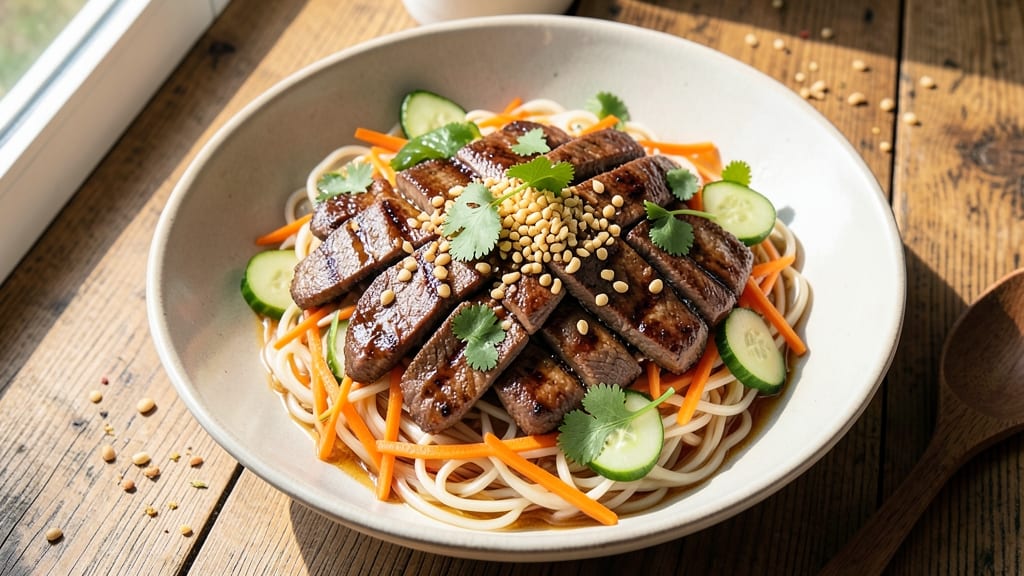
This Asian beef noodle salad recipe delivers the perfect balance of tender beef bites, crisp vegetables, and a sweet-chili dressing that ties everything together. The secret lies in thinly sliced beef marinated in a simple soy-ginger mixture, then quickly seared to lock in flavor while keeping it tender.
I developed this recipe after years of testing—it’s the one that finally convinced my family to eat more salads, especially when the weather’s too warm for heavy meals.
The foundation starts with rice noodles cooked just until al dente, then chilled in ice water to prevent overcooking. Thinly sliced flank steak or sirloin is the star, marinated in soy sauce, garlic, and a touch of brown sugar, then stir-fried to tender perfection.
The dressing—a zesty blend of sweet chili sauce, lime juice, and sesame oil—adds brightness without overpowering the beef’s natural richness.
What makes this salad shine is the crunch from shredded carrots, cucumber, and crushed peanuts, balanced by fresh herbs like cilantro or mint. The final touch? A drizzle of chili oil or a squeeze of lime before serving to elevate every bite.
This dish is restaurant-quality but simple enough for weeknight dinners—just assemble, taste, and adjust to your preference.
Serve it as a light main course or a refreshing side, and don’t forget the lime wedges for extra zing. The combination of textures—tender beef, chewy noodles, crisp veggies—makes it impossible to resist. Let’s get started!
Ingredients for asian beef noodle salad
Restaurant-quality crunch and tenderness in every bite—just eight simple ingredients transform into this addictive salad.
| Ingredient | Amount | Notes |
|---|---|---|
| Flank Steak 🥩 | 1 lb | Thinly sliced against grain |
| Rice Noodles 🍜 | 8 oz | Thin rice noodles, uncooked |
| Carrots 🥕 | 2 medium | Shredded with peeler |
| English Cucumber 🥒 | 1 whole | Thinly sliced or julienned |
| Crushed Peanuts 🥜 | ½ cup | Lightly toasted |
| Fresh Cilantro 🌿 | ½ cup | Stems removed, chopped |
| Fresh Mint Leaves 🌿 | ¼ cup | Chopped, optional |
| Sweet Chili Sauce 🍯 | ⅓ cup | Store-bought or homemade |
| Lime Juice 🍋 | ¼ cup | Freshly squeezed |
| Sesame Oil 🫒 | 1 tbsp | Toasted sesame preferred |
| Soy Sauce 🥢 | ¼ cup | Low-sodium preferred |
| Brown Sugar 🍚 | 1 tbsp | Light or dark |
| Garlic Cloves 🧄 | 3 cloves | Minced or grated |
| Ginger Root 🌿 | 1 tbsp | Freshly grated |
| Chili Oil 🌶️ | 1 tbsp | For garnish, optional |
| Lime Wedges 🍋 | 2 whole | For serving |
The beef is non-negotiable here. Flank steak or sirloin works best—look for a cut with good marbling for juiciness. Costco or Whole Foods carry pre-sliced versions, but if you're slicing yourself, freeze the meat for 30 minutes first to make it easier. The rice noodles? Thai Kitchen brand is my go-to—they cook perfectly every time. For the carrots and cucumber, organic produce makes a difference in flavor and texture. I always grab the carrots from the farmers market if possible—they're sweeter and crunchier.
No sweet chili sauce? Mix 2 tbsp soy sauce, 1 tbsp honey, and 1 tsp sriracha for a quick sub. Fresh ginger and garlic can be swapped for powdered, but fresh is always better. The peanuts should be crushed—not powdered—and lightly toasted in a dry pan for 3-4 minutes. For extra crunch, toast the crushed peanuts with a pinch of salt. If you're short on time, pre-shredded carrots from the bagged salad section work in a pinch, but they lack the freshness of a peeler-shredded version. The lime juice needs to be freshly squeezed—bottled just doesn't cut it.
This salad tastes even better the next day—5-6 days in the fridge, sealed tightly. The noodles absorb flavors over time, so it's worth making ahead. Store the dressing separately if you're prepping early, and toss everything together just before serving. The peanuts and herbs can be added fresh right before eating to keep them crisp. For leftovers, portion into containers with a little extra dressing to keep everything moist. Freezing isn't recommended—the noodles get mushy, but the dressing and beef mixture can be frozen separately for 3 months if you're really committed.
Why You'll Love This Recipe
- No-Fuss Assembly: The steak gets sliced thin—chef’s knife or food processor, no judgment—then tossed with pre-cut veggies and noodles. Honestly, the hardest part is remembering to soak the rice noodles while you marinate the beef.
- Umami Bomb: That quick sear on the flank steak? It’s the star—salty, caramelized edges with a tender center, all balanced by the tangy fish sauce and lime. The crushed peanuts add a crunch that makes every bite feel like a reward.
- Lunchbox Hero: Pack it cold or at room temp—it’s that reliable. I’ve sent this to work, shoved it in kids’ backpacks, and even served it at potlucks (yes, it holds up). The noodles stay chewy, the dressing clings, and no one bats an eye at the leftovers.
- Budget Flex: Flank steak stretches further than you’d think when sliced thin, and the rest of the ingredients? Carrots, cucumbers, peanuts—all shelf-stable or cheap staples. I’ve made this for under $10 per serving, and it still feels fancy.
Step-by-step instructions for Asian beef noodle salad
Here's how to create a perfectly balanced salad with tender beef and crisp vegetables.
Marinate and Cook the Flank Steak
In a bowl, combine the 0.25 cup soy sauce, 1 tbsp brown sugar, 3 cloves garlic cloves (minced), and 1 tbsp ginger root (grated) to create the marinade. Add the 1 lb flank steak (thinly sliced against the grain) and coat evenly. Let it marinate for at least 15 minutes—this ensures the beef stays tender and absorbs all those flavorful marinade notes.
Heat a skillet over medium-high heat and add 1 tbsp sesame oil. Cook the marinated steak for 2-3 minutes until it reaches 145°F internally and develops a light sear. Remove from heat and let it rest for 5 minutes before slicing thinly against the grain. This resting period prevents the meat from becoming tough when tossed with the other ingredients.
Prepare the Dressing and Sauce
In a small bowl, whisk together the 0.33 cup sweet chili sauce, 0.25 cup lime juice, and 1 tbsp chili oil until fully combined. Taste and adjust the balance of sweetness and heat—this is your dressing. Set it aside while you prepare the remaining ingredients. The sauce should be smooth and glossy, ready to bind everything together.
For the peanut crunch, lightly toast the 0.5 cup crushed peanuts in a dry skillet over medium heat for 2-3 minutes until fragrant. Watch closely—they should turn a deeper golden color but not burn. Remove from heat and set aside to cool slightly. This toasting enhances their nutty flavor and adds that satisfying crunch to the salad.
Cook and Prepare the Rice Noodles
Bring a pot of water to a rolling boil and add the 8 oz rice noodles. Cook according to package instructions—usually 4-5 minutes—until they're tender but still slightly firm. Drain and rinse under cold water to stop the cooking process and prevent them from becoming mushy. Toss the noodles with 1 tbsp sesame oil to keep them from sticking together.
While the noodles cook, shred the 2 medium carrots using a peeler for thin, delicate strips. Thinly slice the 1 whole English Cucumber into half-moons or julienne strips. Chop the 0.5 cup fresh cilantro and 0.25 cup fresh mint leaves (optional) into small pieces. These fresh ingredients will add brightness and texture to the salad.
Assemble the Salad
In a large bowl, combine the cooked rice noodles, shredded carrots, sliced cucumber, and chopped herbs. Drizzle the dressing mixture evenly over the top and toss gently to coat everything. Add the sliced flank steak and 0.5 cup crushed peanuts, tossing just until everything is well mixed. The salad should look vibrant with layers of color and texture.
Let the salad sit for 5-10 minutes before serving. This allows the flavors to meld together and the noodles to absorb the dressing. Serve immediately with the 2 whole lime wedges on the side for squeezing extra lime juice over each serving if desired. The contrast of warm, tender beef with cool, crisp vegetables and the crunch of peanuts makes this salad a perfect balance of textures and flavors.
Pro Tips For Making Asian Beef Noodle Salad
- Slice Against the Grain: Flank steak’s tough fibers need a fight—cut it thin (¼-inch max) and against the grain before cooking. I used to ignore this and ended up with chewy bites; now, the noodle salad has the perfect tender bite every time.
- Blanch Noodles First: Soak rice noodles until pliable, then drain and rinse with cold water. Toss them back in the pot with ½ cup hot broth for 30 seconds—this locks in texture without mush. I learned this after serving sad, limp noodles twice; now they stay al dente even when tossed with dressing.
- Skip the Overcrowded Pan: Cook the flank steak in batches if needed—high heat, 2-3 minutes per side max. Crowding steams the meat instead of searing, and that kills the flavor. I was skeptical until I tried it; the edges get that caramelized crust while staying juicy inside.
- Toast Peanuts Separately: Crush peanuts after lightly toasting in a dry pan for 3-4 minutes—just until fragrant. Untosted peanuts taste bland, and pre-crushing burns them fast. Do this step first while you prep veggies; it adds a nutty depth that cuts through the salad’s freshness.
Health benefits of asian beef noodle salad
Lean Protein Power
This salad delivers high-quality protein from the flank steak, making it a satisfying yet lighter alternative to heavy beef dishes. A 6-ounce serving provides about 40 grams of protein—perfect for muscle repair and keeping you full for hours.
The lean cut of beef used here is lower in saturated fat than many other cuts, while still delivering rich flavor. 💪
Digestive-Friendly Fiber
The rice noodles and shredded vegetables (carrots, cucumber) add soluble fiber that supports healthy digestion. The peeled carrots provide beta-carotene, which your body converts to vitamin A—great for eye health and immune function. I always use organic carrots when possible because they're sweeter and packed with more nutrients.
Healthy Fats Balance
The sesame oil and crushed peanuts contribute heart-healthy monounsaturated fats, which help lower bad cholesterol levels. Just 1 tablespoon of sesame oil provides about 14 grams of these beneficial fats. The peanuts also add plant-based protein and a satisfying crunch without the heaviness of fried foods. 🥜
Vitamin C Boost
Fresh lime juice and cilantro provide a vitamin C punch—one serving delivers over 50% of your daily needs. This vitamin supports collagen production, immune function, and helps your body absorb iron from the beef more efficiently.
I always squeeze the lime juice fresh because bottled versions lack that bright, zesty flavor and nutritional punch.
Antioxidant-Rich Herbs
The fresh cilantro and mint aren't just for flavor—they're packed with antioxidants that combat inflammation. Research shows cilantro may even help regulate blood sugar levels. I like to add mint because it gives a refreshing twist that balances the sweetness of the chili sauce.
These herbs also add vibrant color that makes the salad look as good as it tastes. 🌿
Low-Calorie Crunch
At just 30 calories per 2-tablespoon serving, the crushed peanuts provide satisfying crunch without excessive calories. They're also a great source of resveratrol, an antioxidant found in peanut skins that supports heart health.
I always toast them lightly to enhance their natural flavor and prevent them from becoming soggy in the dressing. 🥜
Nutrition facts
Frequently asked questions
Can I use chicken or shrimp instead of beef?
For chicken, use 1 lb boneless, skinless chicken breast or thigh, thinly sliced. Marinate it the same way (soy, garlic, ginger) for 20-30 minutes before cooking. Shrimp works beautifully too—just peel and devein 1 lb large shrimp, toss with the marinade for 10 minutes, then sauté for 1-2 minutes per side until pink. The cooking time differs because shrimp cooks much faster than beef.
How do I prevent the rice noodles from getting mushy?
Rinse the noodles immediately after cooking with cold water to stop the cooking process. Then toss them with 1 tbsp sesame oil while still damp to create a slight barrier. For extra insurance, undercook them by 30 seconds (they'll soften further when tossed with dressing). Never microwave rice noodles—they'll turn to mush instantly!
What's the best way to store leftovers?
Store in an airtight container for up to 5-6 days in the fridge. Keep the dressing separate if prepping ahead, and toss everything together just before serving. For freezing, separate the beef (cooked and cooled) and dressing—freeze these components for 3 months maximum. The noodles don't freeze well, but you can freeze just the beef mixture and fresh ingredients separately.
Can I make this gluten-free?
Yes! Use tamari or coconut aminos instead of soy sauce, and check your sweet chili sauce for gluten (many brands contain wheat). For extra crunch, substitute peanuts with toasted pumpkin seeds or crushed macadamia nuts. Rice noodles are naturally gluten-free, but always verify the package label. The rest of the recipe remains unchanged.
Why does my beef turn out tough?
This usually happens from overcooking or slicing against the grain incorrectly. Cook beef to 145°F max (it'll carryover cook to 150°F while resting). Always slice thinly against the grain—look for the muscle fibers and cut perpendicular to them. For extra tenderness, marinate for 30-60 minutes instead of just 15 minutes. The acid in the marinade breaks down muscle fibers.