
Sauces & Condiments
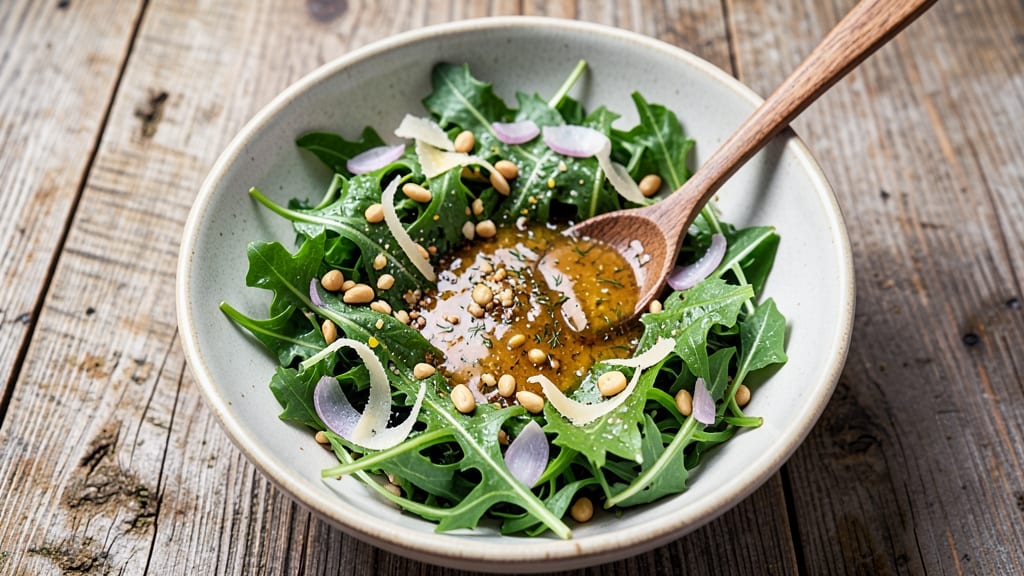
This arugula salad vinaigrette recipe delivers the perfect balance of bright acidity and herby freshness in just 5 minutes. The secret lies in a 3:1 oil-to-acid ratio with a touch of Dijon mustard to emulsify naturally, ensuring every leaf gets coated in zesty, tangy goodness.
I developed this after realizing store-bought dressings lacked the vibrant punch of homemade—especially for peppery arugula that needs bold flavors to shine.
The foundation is simple: high-quality olive oil, fresh lemon juice, and Dijon mustard create the base, while finely chopped fresh dill and garlic add depth. What sets this apart is the emulsification technique—whisking vigorously in a jar or bowl creates a dressing that clings to leaves without separating.
The lemon-dill combination cuts through arugula's natural bitterness while enhancing its peppery notes.
What you'll end up with is a dressing that transforms simple greens into a restaurant-worthy side—bright, tangy, and herbaceous with just the right amount of bite. The acidity from lemon keeps it fresh for up to a week in the fridge, making it perfect for meal prep.
This isn't just dressing; it's the secret weapon that elevates any salad.
Use it on arugula, spinach, or even as a marinade for grilled chicken. The versatility makes it worth keeping on hand year-round. Here's how to make it perfectly every time.
Ingredients for arugula salad vinaigrette
High-quality olive oil and fresh citrus form the vibrant base of this restaurant-worthy vinaigrette.
| Ingredient | Amount | Notes |
|---|---|---|
| Extra-Virgin Olive Oil 🫒 | ¾ cup | High quality, fruity variety |
| Fresh Lemon Juice 🍋 | ¼ cup | Freshly squeezed, strained |
| Dijon Mustard 🍯 | 1 tbsp | Mild or strong variety |
| Fresh Dill Leaves 🌿 | ¼ cup | Finely chopped, stems removed |
| Garlic Cloves 🧄 | 2 cloves | Finely minced, fresh preferred |
| Shallot 🧅 | 1 small | Mince finely, or substitute 1 tbsp onion |
| Diamond Crystal Kosher Salt 🧂 | ½ tsp | Adjust to taste |
| Freshly Ground Black Pepper 🌶️ | ¼ tsp | Freshly cracked preferred |
| Honey or Maple Syrup 🍯 | 1 tsp | For subtle sweetness balance |
| Ice Water 💧 | 2 tbsp | For emulsification technique |
The olive oil is non-negotiable—look for extra-virgin with fruity notes like California Avocado Ranch or Bertolli for that bright, peppery finish. Fresh dill matters too; buy it in small bunches and use within 3 days for maximum flavor. Shallots add depth that onions can't match, but if you're in a pinch, 1 tbsp finely minced red onion works. The Dijon mustard is key for emulsification—Maille or Colman's are my go-tos, but any good quality brand will do. For the lemon juice, use organic lemons when possible—they're brighter and less bitter than conventional varieties. The honey or maple syrup is optional but recommended for balancing the acidity, especially if your arugula is particularly peppery.
No fresh dill? Substitute with 1 tbsp dried dill, but reduce the amount by half since dried herbs are more concentrated. Running low on shallots? One tbsp minced red onion or leek provides a similar aromatic base. The ice water might seem odd, but it's crucial for stabilizing the emulsion—don't skip it if you want a dressing that clings to leaves instead of separating. For a sweeter profile, increase the honey to 1.5 tbsp or add 1 tsp agave nectar. If you prefer a stronger garlic flavor, add an extra clove and let it infuse for 5 minutes before whisking. This dressing works beautifully with other greens too—spinach, kale, or even roasted Brussels sprouts all benefit from its bright acidity.
Store any unused dressing in an airtight container in the fridge for up to 1 week, though it's best used within 3-4 days for peak freshness. The ice water helps extend shelf life by preventing bacterial growth. For meal prep, double the recipe and store in two separate jars—one for salads, one for grilled proteins. If the dressing thickens in the fridge, simply whisk in 1 tbsp water or lemon juice to restore consistency. This formula is versatile enough to use as a marinade for grilled chicken or fish, though you may want to reduce the salt by half for marinating purposes.
Why You'll Love This Recipe
- No-Fuss Assembly: I swear by this recipe because it’s the kind of dressing that doesn’t demand your attention—just toss in the olive oil, lemon juice, and mustard, then give it a quick whisk. The garlic and dill? Chop them roughly—no precision required—because the flavors are forgiving.
- Bright & Tangy: That first bite of arugula with this dressing? It’s the kind of bright, zesty punch you didn’t know you needed. The lemon cuts through the richness of the olive oil, while the Dijon mustard adds just enough depth to make it ridiculously good—no heavy cream, no fuss.
- Weeknight Workhorse: Honestly, this is my go-to when I’m scrambling for dinner ideas. Toss it with grilled chicken, roasted veggies, or even a simple charcuterie board—it elevates whatever’s already on the table. And if I make extra? It keeps for days in the fridge, ready to jazz up tomorrow’s lunch.
- Budget-Friendly Flex: Between us, this recipe uses pantry staples that won’t break the bank. A few cloves of garlic, a handful of dill, and a squeeze of lemon? That’s it. Plus, the vinaigrette stretches further than creamy dressings, so I’m always left with a backup for salads, sandwiches, or even drizzling over eggs. Smart, simple, and satisfying.
Step-by-step instructions for arugula salad vinaigrette
This bright, herbaceous dressing comes together in minutes with precision technique.
Prepare the Aromatics and Mustard Base
In a small bowl, combine the finely minced shallot, 2 cloves minced garlic, 1 tablespoon Dijon mustard, ½ teaspoon Diamond Crystal kosher salt, and ¼ teaspoon freshly ground black pepper. Mix thoroughly with a fork until the shallot and garlic are completely integrated and the mustard is smooth. This step develops the foundational flavor profile—don't skip the thorough mixing, as any unincorporated garlic will create a bitter bite in the final dressing.
The mustard acts as an emulsifier here, helping to bind the oil and vinegar later. If you notice the mixture separating slightly, simply stir again—this is normal and will resolve when you add the wet ingredients. Let this mixture sit at room temperature while you prepare the remaining components; this allows the flavors to meld slightly before emulsification.
Whisk in Lemon Juice and Honey
In a separate, larger bowl, combine the ¼ cup fresh lemon juice and 1 teaspoon honey or maple syrup. Whisk vigorously for 30 seconds until the honey is completely dissolved and the mixture is uniform. The acidity of the lemon juice will begin to brighten immediately—you'll notice a sharp, citrusy aroma that signals the dressing is on its way to becoming vibrant.
This is where the balance of flavors begins to take shape. The honey or maple syrup adds just enough sweetness to complement the acidity without overpowering it. If you're using maple syrup, note that it has a deeper flavor profile, which may require slight adjustments to the salt balance later. Taste the mixture now—it should be pleasantly tart with a touch of sweetness, but not cloying.
Gradually Emulsify with Olive Oil
With the whisk moving continuously, begin adding the ¾ cup extra-virgin olive oil in a slow, steady stream. Start with just a few drops, then gradually increase to a thin stream as the mixture begins to thicken. This gradual approach is critical—adding oil too quickly will cause the dressing to separate. You're aiming for a smooth, velvety texture that clings to arugula leaves without pooling.
Continue whisking for 1-2 minutes after all the oil is incorporated. The dressing should now have a glossy sheen and coat the back of the spoon evenly. If it appears slightly thick, that's normal—the ice water will adjust the consistency in the next step. The olive oil should be fully emulsified, creating a homogeneous mixture without any visible separation. This is the moment where the dressing transforms from a simple mixture into a cohesive, restaurant-quality vinaigrette.
Incorporate Fresh Dill and Finish with Ice Water
Gently fold in the ¼ cup finely chopped fresh dill leaves using a rubber spatula. The dill adds a bright, herbal note that cuts through the richness of the olive oil. Be careful not to overmix—just enough to distribute the dill evenly throughout the dressing. The leaves should be dispersed but still visible, adding both texture and flavor.
Now, add the 2 tablespoons ice water one tablespoon at a time while whisking continuously. The water acts as a stabilizer, helping to create a lighter, more pourable consistency that's perfect for tossing with arugula. Whisk for an additional 30 seconds after adding the water to ensure everything is fully combined. The dressing should now be silky, with a balance of tangy, herbal, and slightly sweet notes. Taste and adjust the seasoning if needed—you may want to add a pinch more salt or a splash of lemon juice to refine the flavor.
Rest and Serve Immediately
Transfer the dressing to a clean jar or airtight container and let it rest for 5-10 minutes at room temperature. This brief resting period allows the flavors to fully meld and the emulsion to stabilize. The dressing will thicken slightly as it sits, which is ideal for tossing with arugula—it clings beautifully without making the leaves soggy.
Before serving, give the dressing one final whisk or stir to ensure uniformity. The bright lemon-dill flavor should now be fully developed, with a perfect balance of acidity, herbal notes, and subtle sweetness. This vinaigrette holds up well in the refrigerator for 3-4 days, making it an excellent make-ahead option. For best results, bring it to room temperature before tossing with fresh arugula and other salad ingredients—this ensures the flavors are at their peak.
Pro Tips For Making Arugula Salad Vinaigrette
- Whisk in stages: DESCRIPTION: Start with the mustard and lemon, then slowly drizzle in the oil—this emulsifies the dressing properly. I learned this the hard way after making a gloppy mess that separated halfway through my salad toss.
- Use cold garlic: DESCRIPTION: Mince the garlic cloves right before mixing and keep them in the fridge until the last second. Raw garlic mellows when cold, so it won’t overpower the bright lemon and dill.
- Salt the mustard: DESCRIPTION: Mix a pinch of salt into the Dijon before adding liquids—it balances the sharpness and helps the dressing cling to the arugula. Skip this, and you’ll taste the raw bite of mustard in every bite.
- Pulse the dill: DESCRIPTION: Roughly chop the dill leaves and give them a quick pulse in a food processor instead of chopping by hand. This releases more flavor without turning the dressing into a green slurry. (Yes, even if you’re impatient like me.)
Serving suggestions for arugula salad vinaigrette
With Grilled Proteins
This vinaigrette transforms grilled chicken or salmon into a restaurant-quality meal. Toss 6-8 oz grilled chicken breast with 2 tablespoons dressing and let it marinate for 5 minutes before serving. The lemon-dill combination complements grilled proteins beautifully, adding brightness that cuts through any charred flavors.
I love serving this with garlic butter shrimp skewers—the acidity balances the richness perfectly. 🍗
As a Pasta Sauce
Use this dressing as a quick pasta sauce for linguine or spaghetti. Toss 8 oz cooked pasta with 3 tablespoons vinaigrette and finish with ¼ cup grated Parmesan. The dressing clings to the pasta without making it soggy, creating a light yet flavorful sauce.
Add chopped sun-dried tomatoes or white beans for extra texture and protein. This works especially well with whole wheat pasta for a heartier dish. 🍝
For Roasted Vegetables
Drizzle this vinaigrette over roasted vegetables like asparagus, Brussels sprouts, or sweet potatoes after roasting. The acidity enhances the natural sweetness of vegetables while adding a fresh herbal note. Toss 1 lb roasted vegetables with 2 tablespoons dressing and 1 tablespoon olive oil for extra richness.
The lemon-dill flavor pairs exceptionally well with roasted carrots and beets, balancing their earthy sweetness. 🥕
With Cheese Boards
This dressing elevates any cheese board by providing a refreshing contrast to rich cheeses. Serve it in a small bowl alongside aged cheddar, brie, and goat cheese. The bright acidity cuts through the creaminess of soft cheeses while complementing the sharpness of aged varieties.
Add crackers, nuts, and fresh fruit to complete the board. I often include proscuitto or salami for a salty-sweet balance that works beautifully with the dressing. 🧀
As a Dipping Sauce
Use this vinaigrette as a dip for crudités or pita chips. The herby, tangy flavor pairs perfectly with carrot sticks, cucumber slices, and bell pepper strips. For extra crunch, serve with toasted pita triangles or water crackers.
The dressing's light consistency makes it ideal for dipping without overwhelming the vegetables. It's a great way to get kids to eat more veggies too! 🥕
With Breakfast Dishes
Add this dressing to breakfast dishes like avocado toast or scrambled eggs for a bright, herby twist. Drizzle 2 tablespoons over toasted sourdough topped with mashed avocado and everything bagel seasoning. The acidity balances the creaminess of the avocado while adding a fresh start to your day.
It also works wonderfully with poached eggs on toast, adding a pop of flavor that elevates the dish. 🍳
Nutrition facts
Frequently asked questions
Why does my vinaigrette separate after making it?
Separation happens when oil and acid aren't properly emulsified. The key is adding oil very slowly while whisking continuously. If it separates, simply whisk vigorously again or add 1 teaspoon ice water to help re-emulsify. For future batches, ensure your Dijon mustard is fresh—it acts as the natural emulsifier.
Can I make this dressing without fresh dill?
Yes! Substitute with 1 tablespoon dried dill or 1 teaspoon dried oregano for a similar herbal note. If using dried herbs, reduce the amount by half since they're more concentrated. For a different flavor profile, try 1 teaspoon finely chopped tarragon or ½ teaspoon dried thyme—both work beautifully in this bright dressing.
How much dressing should I use for arugula salad?
Start with 2-3 tablespoons per 5 cups of arugula—just enough to lightly coat the leaves. Since arugula is peppery, the dressing should brighten without overwhelming. Taste as you go! For heartier salads with nuts/seeds, reduce to 1-2 tablespoons to prevent sogginess. Remember, you can always add more dressing later.
Will this dressing work with other greens besides arugula?
This lemon-dill vinaigrette works perfectly with spinach, kale, or mixed greens. For delicate greens like spinach, use slightly less dressing (1-2 tablespoons per 5 cups) since they wilt easily. The bright acidity also pairs well with roasted Brussels sprouts or grilled asparagus—just toss after cooking while everything's still warm.
Can I make this dressing ahead of time?
Yes, but with one important tip: store it in an airtight container in the fridge for up to 1 week. Before using, whisk or shake vigorously to re-emulsify. For best flavor, use within 3-4 days. If it thickens in the fridge, thin with 1 teaspoon water or lemon juice before serving. The ice water in the recipe actually helps extend freshness!