
Salads
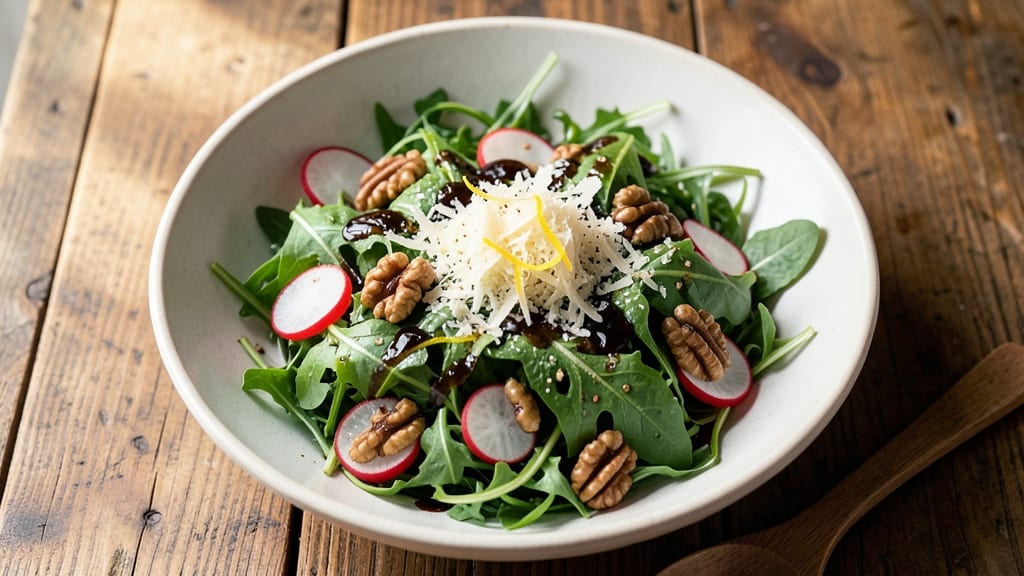
This arugula salad recipe with balsamic vinegar transforms simple greens into a vibrant, restaurant-quality dish in just 10 minutes. The peppery bite of arugula pairs perfectly with the sweet-tangy punch of balsamic, creating a salad that's fresh, balanced, and impossible to resist.
I developed this recipe after realizing how often store-bought dressings fell flat—this version delivers depth without overpowering the natural flavors.
The secret lies in the dressing: a simple yet sophisticated blend of balsamic vinegar, olive oil, Dijon mustard, and a touch of honey. Tossed with crisp radishes, creamy shaved parmesan, and toasted walnuts, this salad offers texture contrast in every bite—crunchy, creamy, and fresh all at once.
It's the kind of dish that feels special without requiring effort, making it perfect for weeknight dinners or impressive gatherings.
What sets this salad apart is how the balsamic dressing evolves as it sits—starting bright and tangy, then deepening into a rich, caramelized glaze that clings to the greens. The result is a salad that's as visually stunning as it is delicious, with glossy leaves and golden-brown walnuts scattered throughout.
Serve it immediately for the freshest crunch, or let it sit for 10 minutes to let the flavors meld.
For extra protein, add grilled chicken or chickpeas, but the vegetarian version stands strong on its own. The key to success? Using the freshest arugula and letting the dressing shine. Here’s how to assemble it perfectly every time.
Ingredients for arugula salad recipe balsamic vinegar
Fresh arugula and aged balsamic create a vibrant, restaurant-quality salad in minutes.
| Ingredient | Amount | Notes |
|---|---|---|
| Baby Arugula 🌿 | 6 oz | Fresh, vibrant, stems trimmed |
| Radishes 🍅 | 1 cup | Thinly sliced, any variety |
| Walnuts 🥜 | ½ cup | Toasted, roughly chopped |
| Parmesan Cheese 🧀 | ½ cup | Freshly shaved, aged preferred |
| Balsamic Vinegar 🍷 | 3 tbsp | High-quality aged variety |
| Extra-Virgin Olive Oil 🫒 | ½ cup | Light, fruity flavor preferred |
| Dijon Mustard 🌶️ | 1 tsp | Mild or strong, as preferred |
| Honey 🍯 | 1 tsp | Wildflower or clover preferred |
| Lemon Juice 🍋 | 1 tbsp | Freshly squeezed |
| Garlic Cloves 🧄 | 1 clove | Minced, for dressing depth |
| Salt 🧂 | ½ tsp | Diamond Crystal preferred |
| Black Pepper 🌶️ | ¼ tsp | Freshly ground |
The arugula is non-negotiable here—organic baby arugula from Whole Foods or your local farmers market delivers the brightest peppery bite. Look for leaves that are deep green, not wilted or yellowing, and avoid any with brown spots. Radishes add that crisp contrast, so cherry or daikon varieties work beautifully. For the walnuts, toast them in a dry skillet for 3-4 minutes until golden—this enhances their natural nuttiness. The Parmesan should be aged at least 12 months for optimal flavor; shave it yourself for the best texture.
No balsamic glaze? Simmer 3 tbsp balsamic vinegar with 1 tsp honey for 5 minutes to create a quick substitute. Short on Dijon? Yellow mustard at half the amount works in a pinch, though the flavor will be milder. The honey can be swapped for maple syrup if you're avoiding it, but the floral notes differ slightly. For extra depth, add a pinch of red pepper flakes to the dressing. If you're using pre-shaved Parmesan, pulse it in a food processor to break up clumps—it won't be as creamy, but it'll work. The garlic is optional but recommended; it adds a subtle complexity that elevates the dressing.
Arugula wilts fast, so store it in a damp paper towel-lined container for up to 3 days. The walnuts keep for 2 weeks in an airtight container, while the Parmesan lasts 3 months in the fridge. The dressing components can be prepped ahead and stored separately—combine everything just before tossing. This salad holds beautifully for 1 hour if refrigerated, allowing the balsamic to develop its signature caramelized richness. For extra protein, add grilled chicken or marinated chickpeas—both work equally well with this vibrant base.
Why You'll Love This Recipe
- No-Chop Struggle: I toss in pre-sliced radishes and baby arugula straight from the bag—no knife skills required. The walnuts? Just toast them in the same pan you use for lunch. Five minutes, tops.
- Balsamic Magic: That first drizzle of aged balsamic vinegar—oh man—turns the peppery arugula into something rich and tangy. The Parmesan shavings add this salty crunch that makes it taste like a fancy appetizer, not just greens.
- Lunch or Side: Make it for a quick weekday lunch, or double the batch to serve alongside grilled chicken at dinner. My roommates actually asked for seconds when I brought it to our game night—no one expected a salad to steal the show.
- Budget Power Move: Arugula and radishes last ages in the fridge, and walnuts keep for weeks. I’ve made this salad for three lunches with what’s left over, and the balsamic? A little goes a long way. Good food doesn’t have to break the bank.
Step-by-step instructions for arugula salad with balsamic dressing
This method delivers vibrant greens, crisp radishes, and a perfectly balanced dressing every time.
Toast the Walnuts for Nutty Depth
Place the 0.5 cup walnuts in a dry skillet over medium heat. Toast them for 3-4 minutes, stirring constantly, until they release their aroma and turn a rich, golden brown. Watch carefully—they'll darken quickly. Remove from heat immediately and transfer to a plate to cool completely. This toasting enhances their natural oils and creates a satisfying crunch that contrasts beautifully with the tender arugula.
While the walnuts toast, I like to set aside a small handful to chop slightly finer than the rest. These will be sprinkled on top at the end for both visual appeal and texture variation. Let them cool completely before handling to prevent burning your fingers.
Prepare the Balsamic-Honey Dressing
In a small bowl, whisk together the 3 tbsp balsamic vinegar, 1 tsp honey, 1 tbsp lemon juice, 1 tsp Dijon mustard, and the minced 1 clove garlic. The mixture should begin to emulsify slightly as you whisk. Gradually drizzle in the 0.5 cup extra-virgin olive oil while continuing to whisk vigorously. This creates a stable emulsion that won't separate in your salad.
Season with the 0.5 tsp salt and 0.25 tsp black pepper. Taste and adjust—you want a balance of sweetness from the honey, tang from the balsamic and lemon, and just a hint of mustard's sharpness. The dressing should coat the back of a spoon but remain pourable. If it thickens too much, add 1 tsp water to reach your desired consistency.
Assemble the Salad Components
In a large bowl, gently combine the 6 oz baby arugula and 1 cup thinly sliced radishes. Use your hands to create a loose nest shape rather than chopping—this maintains the salad's natural texture. The radishes should be evenly distributed but still visible, adding both color and a crisp bite. Avoid overmixing at this stage to preserve the leaves' delicate structure.
Add the cooled, toasted walnuts to the bowl and toss everything together just until the greens are evenly coated. The walnuts should be distributed throughout but still visible as focal points. I find that using two large spoons—one to hold the greens and one to distribute the walnuts—gives me better control than forks alone.
Finish with Parmesan and Dressing
Just before serving, sprinkle the 0.5 cup freshly shaved Parmesan cheese evenly over the salad. The shavings should be thin and even—this creates a snowy effect that contrasts beautifully with the dark greens. Immediately drizzle the dressing over the top, allowing it to pool slightly in the bowl. The acidity of the dressing will begin to wilt the arugula slightly, which is perfect—it softens the leaves just enough to make them more tender without sacrificing their natural crunch.
Gently toss the salad one final time, just until the dressing is evenly distributed. The ideal serving moment is when the arugula has softened slightly but still maintains its vibrant color. Serve immediately while the dressing is at its peak flavor and the radishes remain crisp. For best results, assemble the salad no more than 5 minutes before serving to maintain optimal texture.
Pro Tips For Making Arugula Salad Recipe Balsamic Vinegar
- TOSS DRY Arugula: Baby arugula wilts fast when wet—pat it thoroughly with paper towels before dressing, or you’ll end up with sad, soggy leaves. I learned this the hard way after tossing it straight from the bag into a pool of balsamic.
- ROAST Walnuts First: Toast walnuts in a dry pan over medium heat for 3–4 minutes until fragrant and just golden—no need to watch them like a hawk. This cuts the bitterness and makes them taste like they’re from a $20 salad bar.
- SHRED Parmesan Fresh: Pre-grated Parmesan has anti-caking agents that turn your salad dressing into a paste. Grab a microplane or cheese grater and shred your own—it melts better and adds real depth to the flavor.
- REDUCE Balsamic Slowly: Simmer balsamic vinegar in a small saucepan for 5–7 minutes until it thickens to a syrupy glaze—no peeking or stirring. This balances the peppery arugula without overpowering it, and it’s way more elegant than dumping straight vinegar.
Essential equipment for this recipe
Knife Essentials
Start with a sharp chef's knife (I swear by the Victorinox Fibrox 8-inch) for slicing radishes and trimming arugula stems—dull knives crush greens, ruining texture. A small paring knife (like Mercer Culinary Genesis) handles garlic mincing and precise Parmesan shaving.
Keep both honed regularly—a Wüsthof whetstone works wonders for maintaining that razor edge. 🔪
Mixing Tools
A stainless steel whisk (I use OXO Good Grips) is non-negotiable for emulsifying the balsamic dressing—its fine wires create a stable emulsion that won't separate. For tossing the salad, two large salad tongs (like Zyliss 10-inch) work better than forks—they grip greens without bruising.
A small mixing bowl (preferably glass or ceramic) prevents metal from reacting with acidic ingredients.
Skillet for Toasting
Toast walnuts in a 10-inch cast-iron skillet (my Lodge Pre-Seasoned)—it distributes heat evenly and develops a natural non-stick patina over time. Avoid non-stick pans here; they can't handle the high heat needed for proper nut toasting.
A heat-resistant spatula (like OXO Good Grips) helps transfer toasted nuts without burning your fingers. 🥜
Cheese Tools
Freshly shaved Parmesan transforms this salad—use a microplane (I prefer Barbagroup) for ultra-fine, snow-like shavings. If you lack one, a sharp vegetable peeler works in a pinch. Store pre-shaved cheese in an airtight container with a paper towel to absorb moisture and prevent clumping.
For extra efficiency, pulse pre-shaved cheese in a food processor for 2-3 seconds to break up any clumps.
Storage Containers
Keep arugula fresh in a glass salad spinner (like OXO Good Grips) to remove excess water after washing—this prevents soggy greens. Store components separately in amber glass containers (I use Le Parfait) to block light, which preserves flavor.
The dressing can be prepped ahead in a small glass jar with a tight-sealing lid, ready to whisk with olive oil when needed. 🌿
Nutrition facts
Frequently asked questions
Can I use regular vinegar instead of balsamic?
While it won't taste the same, you can substitute with a mix of apple cider vinegar and a touch of honey (1:1 ratio) for tangy sweetness. However, balsamic's deep, caramelized notes are irreplaceable—they develop as it sits, creating that signature richness. For best results, stick with aged balsamic vinegar for that authentic flavor profile.
How do I prevent arugula from getting soggy?
Wash greens just before using and dry them thoroughly with a salad spinner or paper towels. Avoid adding dressing too early—toss it on right before serving. For extra crunch, store components separately and assemble only when ready to eat. If using pre-cut veggies, add them last to maintain crispness.
What's the best way to make the dressing thicker?
For a thicker dressing, reduce the olive oil slightly (0.4 cup instead of 0.5 cup) or add 1 tsp cornstarch mixed with 1 tsp water to the balsamic mixture before whisking. Let it sit for 5 minutes to thicken naturally. The ideal consistency coats the back of a spoon but remains pourable—adjust to your preference.
Can I make this salad ahead of time?
Prep components separately and store them in airtight containers. Assemble the salad just before serving to preserve texture. The dressing can be made up to 2 days ahead—store it separately and whisk with fresh olive oil before tossing. For best flavor, let the salad sit for 10 minutes before serving to allow the balsamic to develop its signature caramelized depth.
What are good protein additions?
Grilled chicken breast, poached shrimp, or marinated chickpeas work beautifully. For vegetarian options, add toasted pumpkin seeds or crumbled feta. Keep protein portions balanced—3-4 oz per serving maintains the salad's light, fresh character. Add proteins just before serving to prevent sogginess.