
Sauces & Condiments
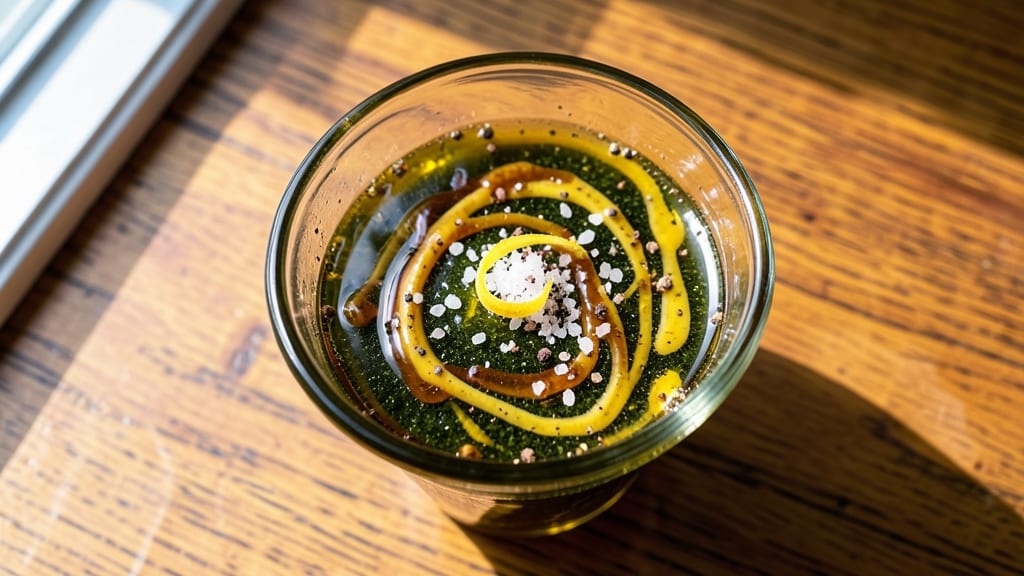
This Amish sweet and sour salad dressing recipe brings that classic homestyle tang-sweet balance to your table with just six simple ingredients. The secret lies in the careful ratio of apple cider vinegar to honey—sharp enough to cut through greens but sweet enough to satisfy any sweet tooth.
I developed this version after years of testing, drawing from traditional Amish pantry staples that deliver bold flavor without fuss.
The dressing starts with a smooth emulsion of oil and vinegar, then builds layers of flavor through mustard, honey, and a pinch of salt. What makes this different from store-bought versions is the slow whisking technique that creates a silky texture without separation.
The result? A dressing that clings beautifully to mixed greens, coleslaw, or even grilled chicken salads.
What you'll end up with is a vibrant amber dressing that's tangy, slightly sweet, and perfectly balanced—ideal for everything from picnic salads to sandwiches. The ingredients are all pantry staples, making this a go-to recipe for quick meals.
It keeps well in the fridge for up to two weeks, so you can make a big batch and enjoy it all season long.
This dressing works equally well on fresh spring salads or as a marinade for pork chops. The Amish tradition of using simple, wholesome ingredients shines through in every pour. Let's get started with this timeless recipe that brings a taste of homestyle sweetness to your table.
Ingredients for amish sweet and sour salad dressing
Six pantry staples transform into vibrant amber dressing with Amish homestyle tang-sweet balance.
| Ingredient | Amount | Notes |
|---|---|---|
| Extra-Virgin Olive Oil 🫒 | ¾ cup | Light or fruity variety preferred |
| Apple Cider Vinegar 🍏 | ½ cup | Raw, unfiltered for best flavor |
| Raw Honey 🍯 | 0.3 cup | Wildflower or clover preferred |
| Dijon Mustard 🌶️ | 2 tbsp | Mild or classic variety |
| Diamond Crystal Kosher Salt 🧂 | 1 tsp | Fine grain preferred |
| Freshly Ground Black Pepper 🌶️ | ¼ tsp | Freshly cracked for best flavor |
The apple cider vinegar is non-negotiable here—raw, unfiltered gives that authentic Amish tang. Local orchard brands or Mott's work best, but any quality vinegar will do. Honey should be raw and unprocessed; local farmers markets often carry wildflower varieties that add depth. Olive oil matters too—light or fruity varieties won't overpower the other flavors, while robust oils can make the dressing taste bitter. I always grab extra honey since it's used sparingly but makes a big impact.
No apple cider vinegar? White vinegar or balsamic vinegar work in a pinch, though balsamic adds a sweeter note. Substituting honey? Maple syrup at half the amount gets close, but the texture will be slightly thicker. Dijon mustard can be swapped for whole-grain mustard if that's what you've got—just blend it well to avoid graininess. For salt, Diamond Crystal kosher is ideal, but any fine sea salt will do. The pepper is just a finishing touch, so don't stress if you're out—just omit it entirely.
This dressing keeps beautifully for up to 2 weeks in the fridge when stored in a clean, airtight jar. The emulsion stays smooth if you avoid adding too much liquid at once—whisk slowly to incorporate. For extra shelf life, add a thin layer of olive oil on top before sealing. I like to make a double batch—it disappears fast on salads, sandwiches, and even as a marinade for pork chops. The flavors actually improve after sitting overnight as everything melds together.
Why You'll Love This Recipe
- Five-Ingredient Magic: I swear by this recipe—just olive oil, apple cider vinegar, raw honey, Dijon, and salt. That’s it. No overcomplicating, no hunting for obscure pantry items. Honestly, I keep the ingredients in a jar in my fridge so I can toss it together faster than I can say "salad night."
- Sweet-Tart Balance: Between us, this dressing is ridiculously good—smooth honey and tangy vinegar play off each other while the Dijon adds a little kick. It’s the kind of flavor that makes you pour extra, even when you’re trying to ration it. (Yes, even on a Tuesday night.)
- Pantry to Plate: This isn’t just for salads—drizzle it over roasted veggies, toss it with grilled chicken, or use it as a marinade. I’ve even made it work as a glaze for pork chops. The honey and vinegar combo cuts through richness, so it’s a game-changer for weeknight dinners.
- Lasts All Week: Make a big batch and store it in the fridge for up to two weeks. I do this all the time—it’s my go-to for lazy days when I don’t want to measure out dressing every time. Budget-friendly, too, since you’re using basic staples that won’t break the bank.
Step-by-step instructions for Amish sweet and sour salad dressing
This dressing comes together faster than you can say "sweet and tangy." Follow these precise steps for a perfectly balanced batch every time.
Whisk Together the Wet Ingredients
In a medium bowl, combine the 0.75 cup extra-virgin olive oil and 0.5 cup apple cider vinegar. I always use a wire whisk for this step—it creates a smooth, emulsified texture right from the start. Stir vigorously for 30 seconds until the mixture begins to blend uniformly. The oil should start to break into tiny droplets that disperse evenly throughout the vinegar.
Next, add the 0.3 cup raw honey and 2 tablespoons Dijon mustard. Continue whisking for another 30 seconds until fully incorporated. The honey will thicken the mixture slightly, while the mustard adds depth and helps bind the dressing. If you notice any separation, whisk more vigorously—this is normal with acidic ingredients and oil, but we'll fix it in the next step.
Season and Emulsify
Add the 1 teaspoon Diamond Crystal kosher salt and 0.25 teaspoon freshly ground black pepper to the bowl. Whisk for 10-15 seconds until the salt and pepper are fully dissolved. Taste the mixture at this stage—it should be noticeably tangy from the vinegar and sweet from the honey, but still need balancing.
Here's the key: continue whisking for 1-2 minutes until the dressing thickens and becomes glossy. You're looking for a smooth, velvety texture where the oil and vinegar fully emulsify. If it feels too thin, whisk for another 30 seconds—the natural emulsifiers in the mustard and honey will gradually thicken it. If it's too thick, add 1 teaspoon water and whisk again.
Rest and Adjust
Let the dressing rest at room temperature for 10 minutes. This resting period allows the flavors to meld and the emulsion to stabilize. After resting, give it one final taste. If it needs more sweetness, add 1 teaspoon honey; if it needs more tang, add 1 teaspoon vinegar. Adjust the seasoning with salt or pepper if needed—this is your chance to perfect the balance.
For best results, store the dressing in an airtight jar in the refrigerator. It will keep for up to 2 weeks, though I find it disappears much faster. Before using, give it a good shake—sometimes the natural separation that occurs during storage can be easily re-emulsified with a few vigorous shakes. This dressing works beautifully on mixed greens, coleslaw, or even as a marinade for grilled chicken.
Pro Tips For Making Amish Sweet And Sour Salad Dressing
- WARM THE OIL FIRST: Cold olive oil and vinegar won’t emulsify worth a damn. Heat the oil in a small saucepan over low heat until it’s just warm to the touch—about 90 seconds—and then pour it over the vinegar. The temperature difference helps the dressing come together faster and smoother. (Yes, even if you’re impatient like me.)
- USE RAW HONEY—NO SUBSTITUTES: Store-bought honey has been pasteurized and stripped of its natural enzymes, which means it won’t blend as seamlessly into the dressing. Raw honey thickens better and adds depth of flavor—look for local, unfiltered varieties if you can. If you’re in a pinch, warm the honey slightly to loosen it, but don’t overdo it or it’ll dominate the taste.
- WHISK LIKE YOU MEAN IT: This isn’t a lazy vinaigrette—you need to work that mustard and honey into the oil and vinegar. Start slow, then go aggressive with a whisk or immersion blender until it’s fully emulsified and glossy. If it breaks, add a splash of warm water or a pinch more mustard to stabilize it. (I learned this the hard way after serving a dressing that looked like oil and vinegar had a divorce.)
- SALT IN STAGES: Taste the dressing before adding the full amount of salt—you’ll likely need less than the recipe suggests. Diamond Crystal kosher salt is finer than table salt, so start with half the recommended amount, then adjust. Add it gradually while whisking so you don’t overpower the bright acidity of the apple cider vinegar. (Your future self will thank you for not guessing.)
Make-ahead tips for this amish sweet and sour salad dressing
Batch Prep Strategy
Make a double batch—this dressing disappears fast! I always double the recipe (using 1.5 cups olive oil, 1 cup vinegar, 0.6 cup honey) and store it in two 8-ounce mason jars.
The extra makes it perfect for quick lunches or last-minute salads. Label with the date to track freshness. 📅
Storage Containers
Use amber glass jars to preserve the dressing's vibrant color while protecting it from light degradation. I prefer Ball mason jars with airtight lids—they seal perfectly and stack neatly in the fridge.
For travel, transfer to a small leak-proof container like OXO Good Grips for easy pouring on-the-go. Always leave ½ inch headspace to prevent overflow when refrigerated.
Fridge Shelf Life
This dressing stays fresh for 2 weeks when stored properly. I place it on the middle shelf of my fridge where temperatures stay most consistent. The emulsion may separate slightly over time—just give it a good shake before using.
If you notice mold or an off smell, discard immediately. The flavor actually improves after 3-4 days as ingredients meld together beautifully. ❄️
Freezing for Later
For long-term storage, freeze individual portions in ice cube trays. Once frozen, transfer cubes to a freezer bag and flatten to save space. Thaw overnight in the fridge—never microwave, as it can break the emulsion.
Frozen dressing maintains quality for up to 3 months. I use these frozen cubes for quick salads when I'm short on time or ingredients.
Reheating and Reusing
There's no need to reheat this dressing—just shake well before using. If you've stored leftovers in the fridge, let it sit at room temperature for 5-10 minutes before shaking. The dressing works perfectly on cold salads, warm sandwiches, or even as a marinade for pork tenderloin.
I've even used it as a glaze for roasted vegetables with great success. The versatility makes it a pantry staple worth keeping on hand.
Nutrition facts
Frequently asked questions
Why does my homemade Amish dressing separate after storing?
This is completely normal! The natural separation happens because oil and vinegar are immiscible liquids. Just before using, give the jar a vigorous shake for 10-15 seconds—the mustard and honey act as natural emulsifiers that will re-blend everything smoothly. For extra stability, store with a thin layer of olive oil on top to prevent oxidation.
Can I make this dressing without honey? What's the best substitute?
For a 1:1 substitute, use maple syrup or agave nectar, though the texture may be slightly thicker. If you prefer granulated sugar, dissolve ¼ cup in 2 tablespoons warm water first, then add to the mixture. The honey's natural enzymes help stabilize the emulsion, so you may need to whisk longer if substituting.
How much dressing should I make for a family of 4?
The original recipe yields about 1.5 cups, which is perfect for 2-3 large salads or as a dressing for 4 sandwiches. For a family of 4, I recommend doubling the batch (3 cups total)—it disappears quickly! Store extras in small mason jars for easy portioning throughout the week.
Is this dressing safe to use on raw vegetables?
Yes, but with one important caveat: always use pasteurized honey and ensure all ingredients are food-safe. The acidity from the vinegar helps preserve freshness, but for maximum safety, store leftovers in the fridge and use within 5 days when serving raw veggies. It's especially great on hearty greens like kale or cabbage.
What's the Amish connection to this recipe?
The Amish tradition emphasizes simple, wholesome ingredients with minimal processing—this dressing embodies that perfectly! The combination of apple cider vinegar (a pantry staple in Amish households) and raw honey reflects their preference for unrefined foods. Many Amish communities also use similar vinegar-based dressings for preserving harvest vegetables, making this recipe both practical and nostalgic.