
Salads
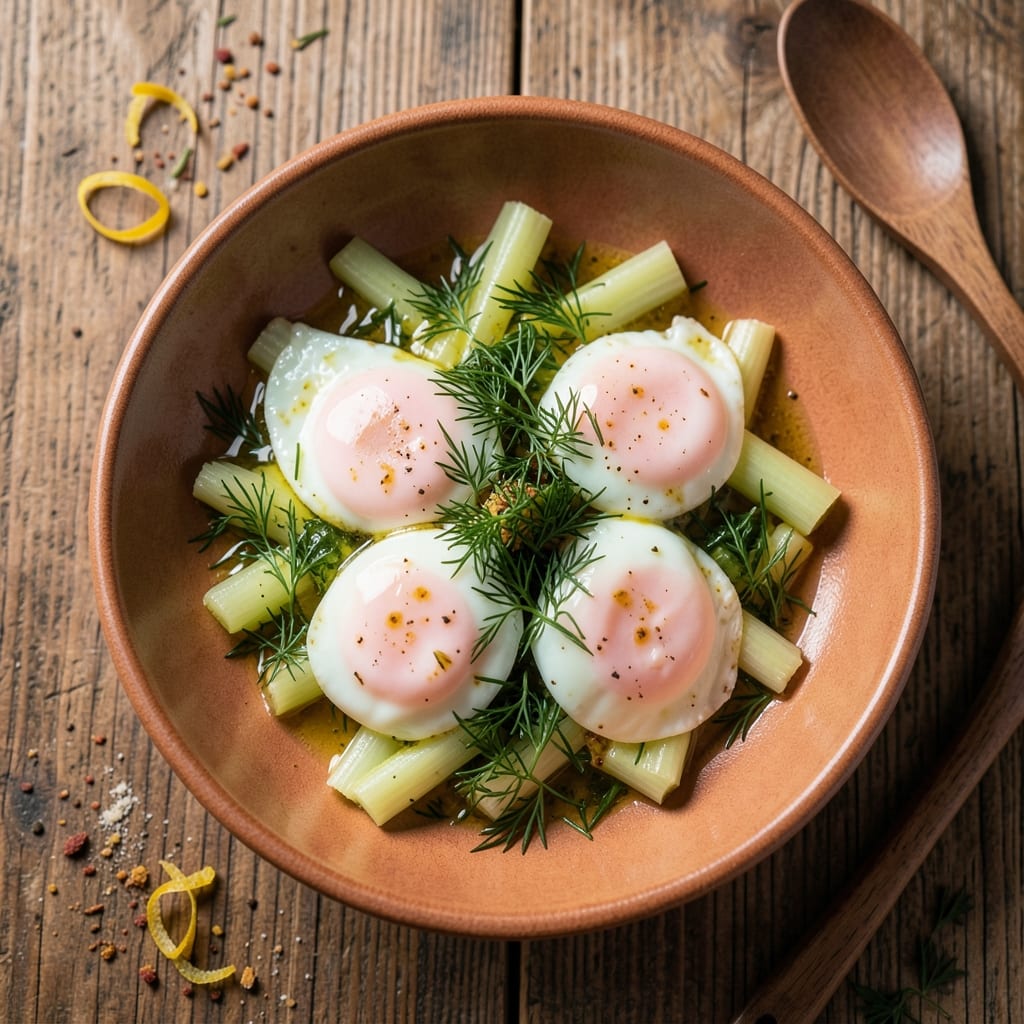
Step back to 1908 with this authentic celery-dill salad that defined early 20th-century dining tables—crisp, tangy, and completely mayo-free. This recipe captures the era's love for fresh herbs, crunchy vegetables, and simple dressings that relied on vinegar and oil rather than modern mayonnaise. The original version was a staple in American households, prized for its refreshing contrast and ability to elevate any meal without overpowering it.
What makes this salad historically accurate is its reliance on celery, dill, and hard-boiled eggs—ingredients that were abundant and affordable in the early 1900s. The dressing, a bright blend of vinegar and oil, was a common choice for salads of the time, offering a sharp tang that cut through rich dishes like roasted meats or fried chicken. The absence of mayo aligns with the era’s culinary trends, where freshness and simplicity were valued over richness.
Today, this salad remains a foolproof classic—easy to prepare yet undeniably elegant. The crisp celery and dill provide a satisfying crunch, while the vinegar-oil dressing adds a zesty brightness that balances heartier meals. It’s a dish that transports you to another time while still feeling fresh and relevant in modern kitchens.
Perfect for pairing with grilled fish, roasted poultry, or even as a standalone lunch, this salad is a testament to how timeless good food can be. Let’s bring a piece of 1908 into your kitchen—no mayo required.
Ingredients for 1908 salad
Crisp celery, fresh dill, and hard-boiled eggs—this 1908 salad delivers old-world charm with zero mayo.
| Ingredient | Amount | Notes |
|---|---|---|
| Fresh Celery Stems 🧅 | 3 cups | Thinly sliced, crisp variety |
| Fresh Dill Weeds 🌿 | ½ cup | Finely chopped, stems removed |
| Large Eggs 🥚 | 4 whole | Hard-boiled, peeled, chopped |
| White Vinegar 🍶 | ½ cup | Distilled or apple cider |
| Extra-Virgin Olive Oil 🫒 | ½ cup | Light, fruity variety |
| Granulated Sugar 🍚 | 1 tbsp | White or raw cane |
| Diamond Crystal Kosher Salt 🧂 | ½ tsp | Fine grain preferred |
| Black Peppercorns 🌶️ | ¼ tsp | Freshly cracked |
| Red Wine Vinegar 🍷 | 1 tbsp | For depth, optional |
| Fresh Lemon Juice 🍋 | 1 tbsp | From 1 small lemon |
The celery is the backbone here—look for crisp, pale green stalks with no browning. Most grocery stores carry good celery, but Whole Foods or local farmers markets often have fresher varieties. The dill should be vibrant green, not wilting—those little plastic containers at the store work, but if you can find a bunch with roots, it'll last longer. For the eggs, organic or free-range makes a difference in flavor, but any large eggs will do. Hard-boil them right before assembling to keep them perfectly firm. The vinegar matters too—distilled white vinegar is classic, but apple cider adds a subtle sweetness if you prefer.
No fresh dill? Dried dill at one-third the amount works in a pinch, but it won’t have the same bright punch. Short on vinegar? Lemon juice at double the amount gives a similar tang, though the flavor will be slightly milder. The red wine vinegar is optional but adds that authentic 1908 depth—substitute with extra white vinegar if needed. For the dressing, taste as you go: if it needs more sweetness, add a pinch of sugar; if it’s too sharp, a drizzle of olive oil smooths it out. The eggs can be chopped fine or left in larger pieces—it’s all about preference, but the original recipe called for a generous chop to mimic early 20th-century presentation.
This salad keeps best when made fresh, but the dressing can be prepped 1 day ahead—just store it separately. The celery will stay crisp for 3-4 days in the fridge if wrapped in a damp paper towel, and the hard-boiled eggs hold up for 5 days peeled. For a true period touch, serve in a ceramic bowl or glass dish—it’s all about that vintage presentation. Leftovers? Toss with a little extra dressing and serve cold over greens for a quick lunch the next day.
Why You'll Love This Recipe
- No Chopping Needed: I swear by this trick—just rough-chop the celery into bite-sized pieces, no fancy dicing. The dill stays whole so it releases that bright, herby punch without turning to mush.
- Eggs So Good: That crispy-yet-creamy egg is the star here, and it’s foolproof. Hard-boil a batch ahead, slice them thin, and the vinegar dressing keeps them from getting rubbery.
- Potluck Hero: Between us, this salad travels perfectly—no soggy greens, no wilted herbs. Bring it to a picnic, BBQ, or even a last-minute dinner party. It’s the one dish everyone actually eats.
- Pantry Staple Magic: Honestly, I make this when I’m out of everything. Celery lasts forever, eggs are cheap, and a splash of vinegar and olive oil turns it into something special. Minimal cost, maximum flavor.
Step-by-step instructions for celery-dill crunch without mayo
This vintage-inspired salad comes together faster than you can say "1908" - crisp, tangy, and packed with fresh flavors.
Hard-Boil and Chop the Eggs
Place the 4 whole large eggs in a small saucepan and cover them with cold water by about 1 inch. Bring to a rolling boil over high heat, then immediately reduce to a gentle simmer. Cook for exactly 10 minutes - set a timer, this is critical. The eggs are perfectly done when they're firm but not rubbery.
Transfer the eggs to an ice bath for 5 minutes to stop the cooking process. Peel them carefully under running water to remove any remaining shell fragments, then chop them into small, even pieces. I like mine about ¼-inch cubes - this size gives you nice texture without overwhelming the salad. Keep them in a bowl until ready to use.
Prepare the Celery and Dill
Take the 3 cups of fresh celery stems and slice them into thin, uniform matchsticks using a sharp chef's knife. For best results, use crisp celery varieties like Utah or Pascal. The thinner you slice, the more satisfying the crunch will be in each bite. Place the sliced celery in a large mixing bowl.
Add the 0.5 cup of finely chopped fresh dill weeds to the bowl with the celery. The dill should be bright green with no stems - this ensures maximum flavor without bitterness. Give everything a gentle toss with a wooden spoon to combine. The fresh herbs will release their aromatic oils as you work, filling your kitchen with that classic garden-fresh scent.
Whisk the Dressing Components
In a separate bowl, combine the 0.5 cup of extra-virgin olive oil with the 0.5 cup of white vinegar. Add the 1 tablespoon of granulated sugar, 0.5 teaspoon of diamond crystal kosher salt, and 0.25 teaspoon of freshly cracked black peppercorns. Whisk vigorously for about 30 seconds until the sugar and salt completely dissolve.
Add the 1 tablespoon of red wine vinegar and 1 tablespoon of fresh lemon juice. Continue whisking until everything is perfectly emulsified. The dressing should have a smooth, velvety texture with no visible separation. Taste and adjust seasoning if needed - I usually find this balance just right, but you might prefer it slightly sweeter or more acidic.
Assemble and Marinate
Pour the dressing over the celery and dill mixture in the mixing bowl. Add the chopped hard-boiled eggs and gently fold everything together with a spatula. The eggs will immediately begin to absorb the dressing, creating that signature creamy texture without any mayo.
Let the salad sit at room temperature for at least 15 minutes before serving. This allows all the flavors to meld together beautifully. The celery will remain crisp, the dill will soften just enough to release its oils, and the eggs will absorb the tangy dressing perfectly. For best results, serve within 1 hour of preparation.
Final Adjustments and Serving
Before serving, give the salad one final taste and make any necessary adjustments. If it needs more crunch, add a few extra celery sticks. If it needs more tang, add a splash of additional lemon juice. The salad should have a perfect balance of crisp vegetables, herby freshness, and creamy eggs.
Serve immediately while the celery remains crisp and the flavors are at their peak. This salad pairs beautifully with grilled meats, sandwiches, or even as a light lunch on its own. The vintage-inspired dressing keeps everything fresh without any mayo - just pure, bright flavors that transport you back to early 20th century dining rooms.
Pro Tips For Making 1908 Salad
- CHOP CELERY SMALLER THAN YOU THINK: I used to slice celery into thick half-moons, thinking it looked better—until I realized the crunch was half the salad’s charm. Dice it into ¼-inch cubes so every bite has that satisfying texture. (Yes, it’ll disappear faster, but that’s the point.)
- DILL STEMS MATTER: Skip the stems? Big mistake. The tougher parts add depth and fiber—chop them separately and finely, then toss in last. They’ll soften just enough to blend into the dressing without turning mushy. (Trust me, your salad will taste like it came from a 1908 cookbook.)
- VINEGAR FIRST, THEN OIL: Pour the vinegar into the bowl before adding eggs or oil—this keeps the dressing from separating. Whisk it in thoroughly, then fold in the eggs and oil gently. (If you mix oil first, you’ll end up with a greasy, sad pile of ingredients.)
- EGGS AT ROOM TEMP: Cold eggs from the fridge will turn rubbery when sliced. Let them sit in warm water for 5 minutes before peeling—just enough to make them pliable. (I learned this after my first batch of eggs crumbled like wet cardboard.)
Creative variations of these flavors
Victorian Tea Party Twist
Transform this salad into a Victorian-era tea party centerpiece by adding 1 cup sliced cucumber (peeled and thinly sliced) and ¼ cup chopped chives for a delicate, floral touch. Serve in a glass bowl with tiered layers—celery-dill mix on the bottom, eggs on top—then garnish with edible flowers like nasturtiums. The British loved elaborate presentations, and this version fits perfectly with afternoon tea. 🌸
Smoked Salmon Upgrade
For a 1920s-inspired variation, swap the hard-boiled eggs for 6 oz smoked salmon, thinly sliced and flaked. The smoky depth complements the celery and dill beautifully, while the vinegar dressing cuts through the richness. Add 1 tbsp capers for a briny kick—this was a common addition in early 20th-century Jewish deli salads. Serve with blini or rye crackers for a full retro brunch. 🍣
Herb-Forward Variations
Swap dill for tarragon or chervil to match the French-inspired salads of the 1910s. Tarragon adds a licorice-like sweetness, while chervil brings a milder, parsley-like freshness. For a Southern U.S. twist, mix in 1 tbsp chopped parsley and add ½ tsp smoked paprika to the dressing—this was a common regional adaptation in the early 1900s. Both versions keep the same crisp texture but offer new flavor dimensions. 🌿
No-Egg Alternative
Make this salad vegetarian-friendly by omitting the eggs and adding ½ cup chopped walnuts or pecans for crunch. Toast the nuts in a dry pan for 2 minutes until fragrant, then toss them into the salad just before serving. The nuts mimic the texture of chopped eggs while adding a nutty depth that balances the vinegar dressing. This version was popular in health-conscious circles of the early 1900s. 🌰
Sweet and Tangy Dressing
For a 1930s Depression-era twist, sweeten the dressing further by adding 1 tbsp honey (instead of sugar) and 1 tsp grated apple to the vinegar-oil mix. The honey softens the acidity, making it more approachable for families who preferred milder flavors during the Great Depression. This version was common in homesteading communities where ingredients were often stretched thin. 🍯
Modern Fusion Twist
Give it a 21st-century update by adding ½ cup diced avocado and a pinch of chili flakes to the dressing. The creamy avocado replaces the eggs while adding healthy fats, and the chili flakes introduce a subtle heat that was unheard of in 1908 but pairs beautifully with the vintage flavors. Serve with toasted sourdough croutons** for extra crunch—this fusion keeps the original spirit while making it feel fresh. 🌶️
Nutrition facts
Frequently asked questions
Why does this 1908 salad recipe avoid mayonnaise?
Early 20th-century salads relied on vinegar-based dressings rather than mayo for freshness and simplicity. The bright acidity of vinegar and oil preserved ingredients better in the pre-refrigeration era, while keeping the salad light enough to complement rich main dishes like roasted meats. This dressing method also aligns with the era's preference for clean, uncluttered flavors.
Can I use dried dill instead of fresh in this vintage recipe?
Yes, but use only ⅓ the amount of dried dill (about 1½ teaspoons) and add it to the dressing rather than the salad. Fresh dill provides the most authentic flavor, but dried works in a pinch. For best results, crush the dried dill between your fingers to release its oils before adding to the vinegar-oil mixture.
How long will the hard-boiled eggs stay fresh in the salad?
The eggs will maintain their quality for 3-4 days when stored properly in an airtight container in the fridge. For maximum freshness, prepare the salad just before serving. If the eggs start to smell or develop a sulfurous odor, discard them immediately—this was a common safety concern in the early 1900s when refrigeration wasn't as reliable.
What makes this salad different from modern celery salads?
This 1908 version skips mayo entirely and uses a vinegar-oil dressing with sugar and herbs for balance. Modern celery salads often include mayo or creamy dressings, while this recipe focuses on crisp textures and bright acidity. The hard-boiled eggs add protein that was more common in early 20th-century salads than in today's lighter versions.
Can I make this salad ahead of time?
Prepare the dressing 1 day ahead and store it separately from the celery and eggs. Combine everything just before serving to maintain crispness. The celery will stay fresh for 3-4 days if wrapped in a damp paper towel, while the eggs hold up for 5 days when peeled and refrigerated properly.